Linda Remijn Nelissen
Symptomatic treatment of myasthenia gravis
3 september 2026
Universiteit Leiden
Open Ebook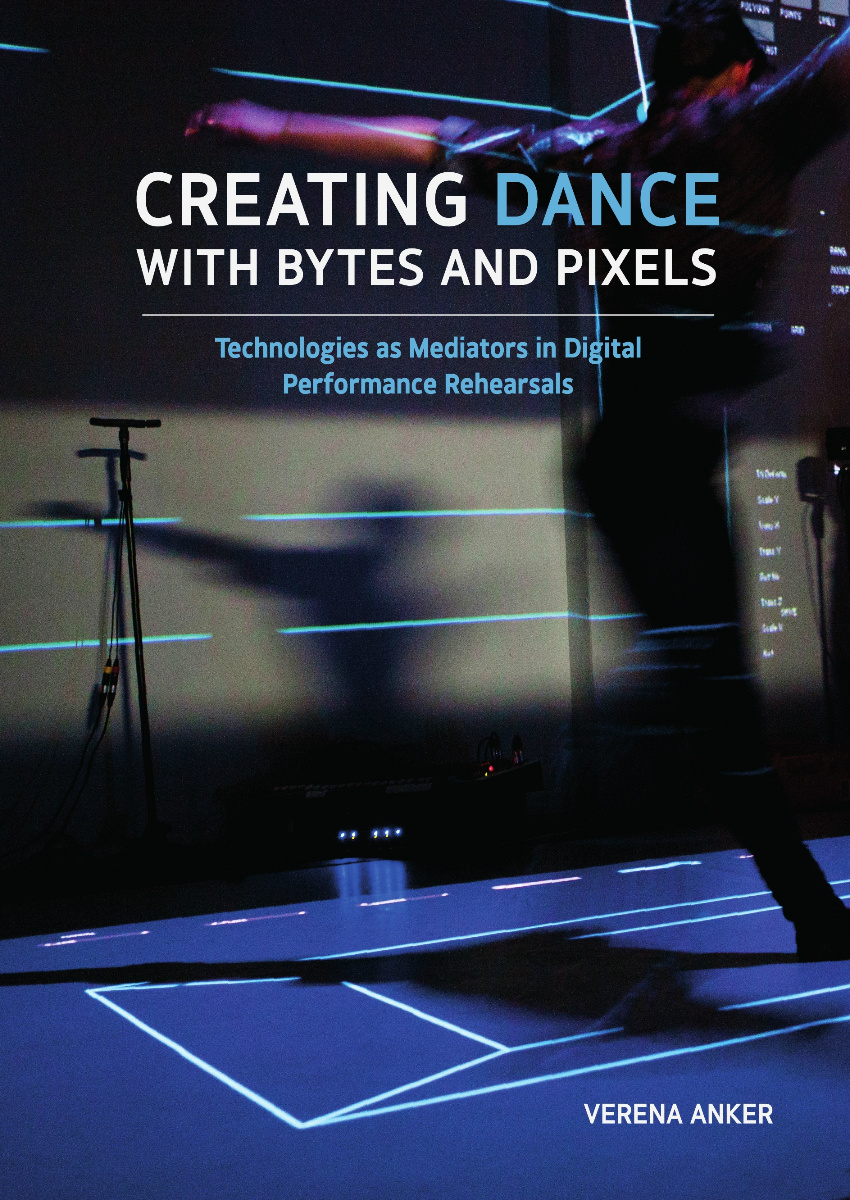
Share this project
Summary
In this thesis I study processes of digital dance creation through the lens of technological mediation theory. With this approach I intend to draw an alternative view on choreo-technological constellations that differs from conventional positions in which the relations between dance and digital media are described in terms of opposition and domination. In this sense I follow selected researchers in the digital performance field who propose to avoid one-sided accounts on digital dance with the help of a more relational understanding of technology. The questions that this study ultimately sets out to answer are: How do dance artists and digital media collaborate in the creation of digital dance performances? What is technology’s role in these processes? And how can the dynamics of these procedures be qualified? Instead of departing from perspectives of separation and alterity between dance art on the one hand and media on the other, I focus on their interwoven and situative condition. I therefore base my study on a definition of (digital) technology that derives from the field of Science and Technology Studies (STS). In STS, technology is not understood in terms of material artefacts only, but also in terms of socio-technical constellations. This means that scholars in STS consider technology as already being embedded in socio-cultural contexts. In this view, technologies thus cannot be clearly separated from human and social processes. Here, STS-related theories on technology’s mediating character lead me to suggest that understanding digital dance making as processes of mediation allows to closely examine the complex dynamics of virtual performance. In this research project I thus propose to relate selected approaches of mediation from the field of STS, such as Actor-Network Theory and postphenomenology, and concepts form performance studies to the current scholarship on digital performance.
This project embraces digital dance’s empirical reality by looking at concrete practices in which dance artists and virtual tools enter in contact, negotiate and finally mingle. It focuses on the making of two virtual performance artworks: loopdiver (2009) by the American dance group Troika Ranch, and Habitat (2010), a production by the German artistic collective LaborGras. By delving into how digital dance artists negotiate the grey zones between dance and new media, this thesis addresses the concrete challenges digital dance makers are confronted with when they develop, rehearse and perform digital performance productions. Moving between the detailed and material processes of the pieces’ makings and my interdisciplinary theoretical tools, in this thesis I develop empirically sensitive models to understand technology’s role in digital dance production. Guided by the urgency and relevance in both artistic practice and digital dance discourse, I specifically focus on the creative dynamics between dance artists and digital tools as well as on the formation of the dancers’ physical experience in their interaction with digital media. In the context of the first focal point, I formulate the following sub-questions: In which ways can technological tools engage in the artistic dynamics of dance creation? And how precisely can this involvement co-shape artistic intentions and the resulting performances? To explore the second centre of interest, I ask: How do media integrate bodily experience in (digital) dance?
Exploring how dance artists deal with virtual media in virtual performance making, this dissertation takes an empirical approach. I specifically conducted ethnographic research methodologies like interviewing and participant observation in a technographic perspective. This means that I not only followed the human actors such as dance artists, multimedia programmers or technicians but I also examined in which ways the technological tools were relating to the observed activities.
After introducing the field of digital dance and the research design, I will show in chapter 2 that both digital performance practitioners and scholars demonstrate biased stances concerning technology’s role in virtual performance creation. These perspectives, I argue, are incompatible with the empirical reality of digital dance making because they do not recognize any creative agency to digital devices. To develop a differentiated conceptual view on how digital media integrate the artistic aspects of digital dance production, I start with the notion of collective dance creation which acknowledges that a choreographic artwork is the result of several contributors instead of one single genius. However, here only humans have hitherto been granted the status of creative co-producers. I therefore propose to enlarge this human-centered scope to material actors with the help of Actor-Network-Theory (ANT). I explain that ANT allows to consider digital dance creation as a process in which human and non-human actors co-determine the course of a choreographic artwork’s production by engaging with each other. This leads me to develop an analytical framework by referring to selected ANT-related concepts. The conceptual grid makes possible to trace the ways in which human and non-human participants, and thus also digital media, engage in dance-making procedures and co-shape the evolving dynamics, artistic intentions and results. It therewith permits to describe virtual media’s creative agency in digital dance production.
Chapter 3 leads us to the rehearsal spaces of Habitat and loopdiver. Here I trace the evolution of these two digital dance productions by focusing on the formative role of virtual technologies in the rehearsal procedures. Recurring to the ANT-informed framework developed in chapter 2, I examine the dynamics in which the software programs Isadora (loopdiver) and Kalypso (Habitat) engage with the other (non-)human participants involved in the respective creative processes. I show that the tools’ interactions with the other engaged actors generate diverse unexpected dynamics and frictions that directly and indirectly shape the artworks’ development and final form on different levels. I also demonstrate that the technological tools themselves are equally affected during the creative process in different ways. My analysis therewith discloses an alternative perspective to dualistic viewpoints as it indicates that the rehearsal and creative procedures rather resemble moments of negotiation and continuous transformation in which neither of the participating actors remain the same.
Chapter 4 focuses on the status of new media in the bodily experience of digital dancers. I demonstrate that the relation between dancing bodies and (digital) technologies is often conceived in terms of domination, and that this binary understanding dates back to dualistic legacies of thought that emerged during earlier choreo-technical experiments in the 20th century. Claiming that these one-sided views do not allow to grasp the complexity of digital dancers’ concrete physical sensations, I present a current alternative position that understands performing bodies and virtual media as comprised in processes of “relational dynamics”. Scholars of this approach consider that contemporary dancing bodies find themselves in a fluctuating mode in which dancers’ work with digital tools interferes with and reconfigures the performers’ physical perceptions and movement sensations. While this physical condition is presented as a rather fluid procedure, I refer to dancers’ reports to add that these “relational dynamics” include series of frictions and physical destabilization that emerge through the dancers’ interaction with digital media. I identify these situations as significant because they generate the performers’ bodily negotiation with the digital tools, and these learning procedures consequentially shape the dancers’ physical experience. To render the notion of “relational dynamics” operable on a theoretical level, I subsequently develop a conceptual framework from theoretical approaches deriving from dance studies and postphenomenology that deal with the formation of dancing bodies, human-technology relations and the ways in which technologies infiltrate in bodily experience. The resulting interdisciplinary analytical toolkit, I argue, allows to describe situations of friction between dancing bodies and new media during digital dance rehearsals, to investigate the dancers’ consequent negotiations with digital tools, and to explore how these learning procedures impact on the performers’ physical sensations. I claim that articulating these processes makes possible to formulate the “relational dynamics” in digital dance and therewith to define a technology-inclusive understanding of bodily experience in virtual performance.
In chapter 5, we return to loopdiver’s and Habitat’s dance studios to examine how the digital performers concretely learn to dance with their digital devices. Here I specifically concentrate on the moments of friction between dancing bodies and virtual media to find out how the performers’ physical disorientation is brought about, and on the consequences these situations of conflict have for the dancers’ subsequent rehearsal activities and their bodily experiences. In Habitat and loopdiver, the performers undergo moments of disorientation while being confronted with digitally manipulated video reflections of their own bodies. With the help of the interdisciplinary conceptual toolkit elaborated in chapter 4, I show that during the subsequent rehearsal phases, the dancers undertake various activities to realign their inner bodily sensations and motoric capacities with their digitally modified video reflections. The two examples illustrate that these realignment strategies are influenced by the technologies’ specific characteristics. By presenting and analyzing the performers’ particular readjustment activities, I find out that the employed media are involved on an imaginative, a didactic and perceptive-kinaesthetic level in the dancers’ bodily work and experience. I furthermore discover that also the tools themselves are adapted to the performers’ physical and cognitive needs. Following the impact of these procedures, I notice that the moments of conflict and the ensuing negotiations with the technological devices impact on the performers’ physical experience in the sense that they expand the dancers’ bodily sensitivity, their movement vocabulary and bring the performers to develop new motoric capacities. Describing the “relational dynamics” in digital dance therewith allows to disclose different ways in which digital technologies can mediate physical experience in virtual performance, which I argue presents an alternative perspective to dualistic viewpoints in which digital media and dancing bodies are considered to dominate each other.
Chapter 6 finally concludes by discussing the findings of this research project and providing a perspective for further investigations in the field of digital dance and performance studies in general.