Wouter van der Waal
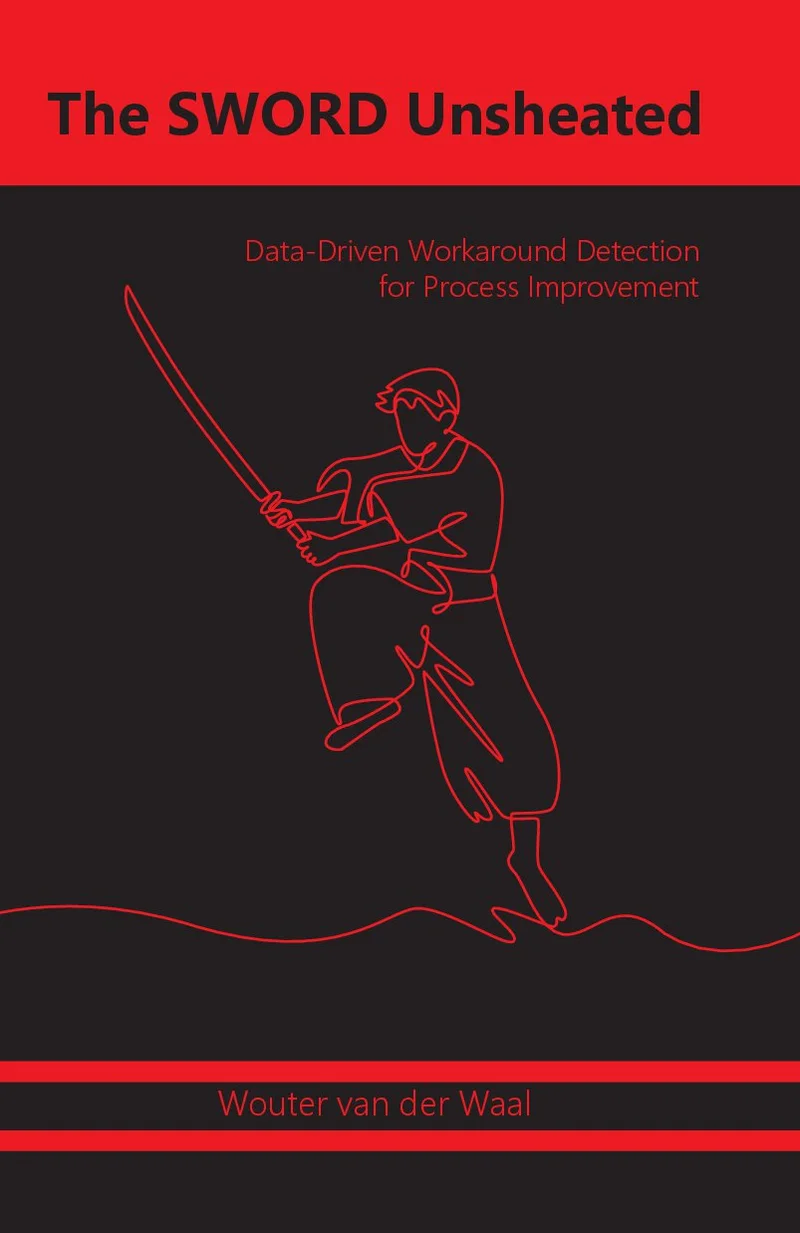


The SWORD Unsheathed
Organizations often use specialized information systems to streamline complex processes and support workers. However, when the information system does not support the day-to-day processes well, workers may start to work around the system. These workarounds, defined as intentional deviations from the prescribed process, allow workers to perform their job even when they encounter unforeseen obstacles. As such, workarounds reveal both issues workers encounter in their work and alternative paths that may be used as a solution. While process managers can therefore use workarounds to improve processes, many workarounds are unknown to them. In the current state of the art, workarounds are usually discovered by observing and interviewing domain experts. However, they may be unable, or even unwilling, to discuss parts of their work where they find difficulties following the prescribed process. Consequently, this approach requires a lot of time from already busy domain experts to discover workarounds that they are willing to share. In this dissertation, we use process data from information systems to mine workarounds in a more data-driven manner and to reduce the burden on domain experts. With this, we contribute to both practice and scientific literature by: 1) developing a novel, data-driven workaround detection approach through the Semi-automated WORkaround Detection (SWORD) framework, 2) enabling the discovery and quantification of workarounds over extended periods with very limited effort required from domain experts, and 3) providing new theoretical insights into the dynamics of workaround emergence, evolution, and adoption patterns based on actor roles.
| Publicatiedatum | 28 oktober 2026 |
| Universiteit | Universiteit Utrecht |
| Auteur | Wouter van der Waal |
| ISBN nummer | 978-94-6534-652-6 |
| DOI nummer | 10.33540/3693 |