Wenke Moris
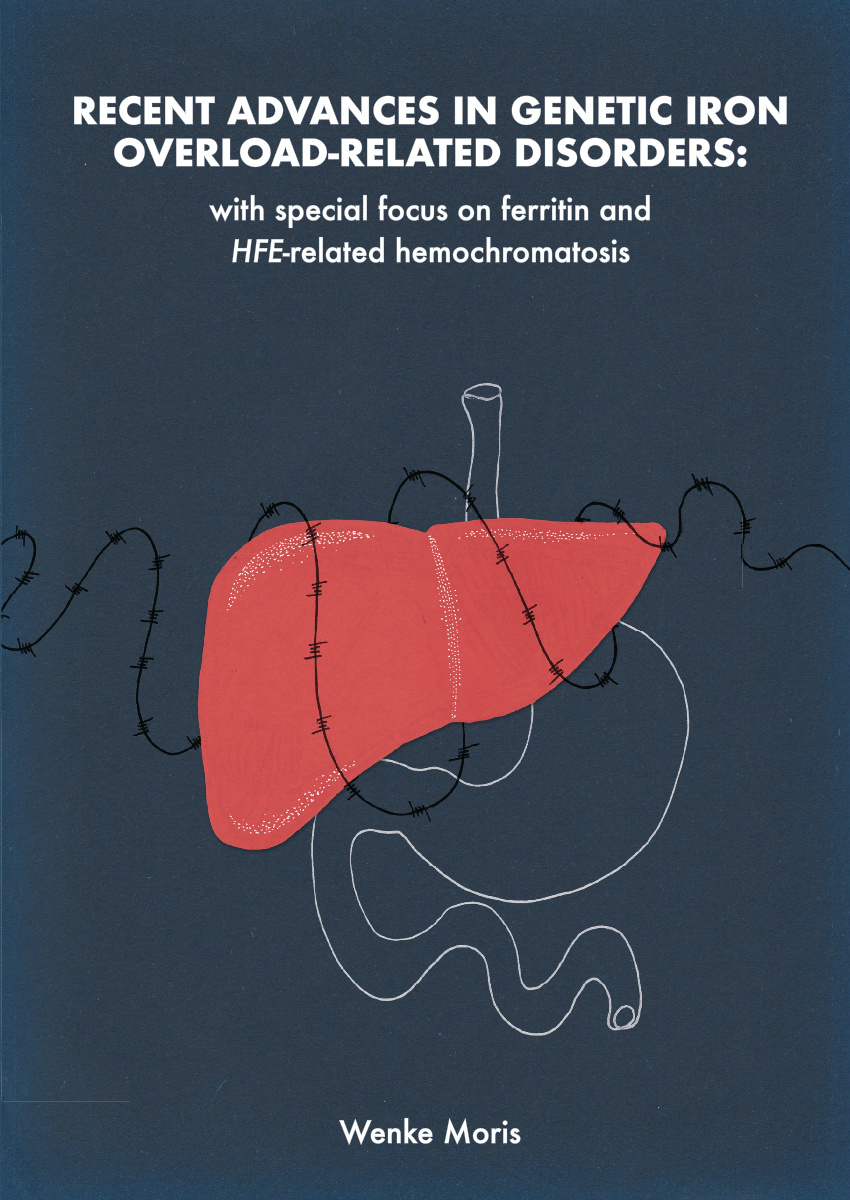


Recent advances in genetic iron overload-related disorders
Ferritine is een van de meest verrichte testen in het bloed in zowel de eerstelijns- als de tweedelijnsgezondheidszorg. Ferritine is een eiwit waarin ijzer in de cel wordt opgeslagen en om die reden is het een betrouwbare marker om te bepalen wat de ijzervoorraad van het lichaam is. Een verlaagd ferritine in het bloed is een bewijs voor een ijzertekort echter een verhoogd ferritine (hyperferritinemie) in het bloed is niet erg specifiek voor een overschot aan ijzer. Dit komt omdat ferritine ook zal stijgen in de aanwezigheid van een infectie, kanker of ontsteking. Ferritine spiegels worden gedefinieerd als verhoogd wanneer ze bij vrouwen boven de 200 µg/L zijn en bij mannen boven de 300 µg/L. In 12% van de algemene bevolking wordt een verhoogd ferritine aangetroffen. Omdat deze verhoogde waarde meerdere oorzaken kan hebben en niet altijd op een overschot aan ijzer duid, is het vaak een uitdaging voor artsen om de juiste verklaring te vinden. Dit proefschrift is opgedeeld in twee delen. In het eerste deel wordt de nadruk gelegd op de moeilijkheden bij de diagnostiek van een verhoogd ferritine. In het tweede deel wordt gefocust op een erfelijke ijzerstapelingsziekte genaamd hemochromatose, een vaak voorkomende verklaring van een verhoogd ferritine en gekarakteriseerd door ijzeroverschot. Dit proefschrift focust op de meest voorkomende ijzerstapelingsziekte genaamd HFE-gerelateerde hemochromatose, veroorzaakt door een mutatie (genaamd p.Cys282Tyr) in het HFE-gen. Dit is de meest voorkomende autosomaal, recessief genetische aandoeningen binnen de Kaukasische populatie. In de Noord-Europese populatie komt de aandoening het meest voor met een prevalentie van 1 per 200-250 mensen. Hemochromatose wordt gekenmerkt door lage waarden van het hormoon hepcidine, de belangrijkste regulator van het ijzerhuishouding in het lichaam. Hierdoor zal de opname van ijzer in de darm niet meer worden verminderd wanneer er reeds genoeg ijzer in het lichaam aanwezig is. Uiteindelijk resulteert dit in een ophoping van ijzer in het lichaam, met name in de lever, alvleesklier, gewrichten, het hart en de huid. Uiteindelijk kan dit resulteren in beschadiging van deze organen en kan het zorgen voor een verlittekening van de lever (levercirrose), leverkanker, gewrichtsklachten, hartfalen en suikerziekte. Om deze complicaties te voorkomen en te zorgen dat patiënten een normale levensverwachting behouden is het nodig om deze aandoening tijdig op te sporen en te behandelen. Deel 1- Het begrijpen en interpreteren van hyperperferritinemie Hyperferritinemie wordt vaak aangetroffen bij patiënten met een niet-alcoholische leververvetting (NAFLD), de meest voorkomende leveraandoening in de westerse samenleving. In ongeveer 30% van patiënten met NAFLD wordt een hyperferritinemie gevonden, toch is de onderliggende oorzaak van het verhoogd ferritine vaak een onderwerp van discussie. De aard van de behandeling is sterk afhankelijk van de oorzaak van de hyperferritinemie dus voor een behandeling gestart kan worden is het belangrijk om de oorzaak duidelijk te krijgen. In hoofdstuk 2 werd een uitgebreid literatuuronderzoek verricht om te onderzoeken of hyperferritinemie bij NAFLD een uiting is van ijzeroverschot of van ontsteking. Hieruit bleek dat in de meerberheid van de gevallen hyperferritinemie bij NAFLD gerelateerd is aan ontsteking. In een kleinere groep wordt het eveneens aan ontsteking gerelateerd maar gecombineerd met een mild ijzeroverschot in de afwezigheid van genetische mutaties die dit ijzeroverschot kunnen verklaren. In de kleinste groep is hyperferritinemie bij NAFLD gerelateerd aan genetische mutaties binnen de ijzerhuishouding zoals HFE-gerelateerde hemochromatose. Er werden alleen aderlatingen geadviseerd in de laatste groep, de genetische mutaties in het ijzerhuishouding. In de eerste twee groepen, beide gerelateerd aan ontsteking worden geen aderlatingen maar leefstijladviezen zoals gewichtsreductie geadviseerd. Vanwege de vele verschillende oorzaken van hyperferritinemie is het een uitdaging om de juiste verklaring vast te stellen. Wanneer een algemene klinische analyse en aanvullend laboratorium onderzoek geen uitsluitsel kunnen geven over de diagnose, kan de lever ijzer concentratie (LIC) worden gemeten. Vroeger werd de LIC bepaald aan de hand van een weefselmonster van de lever verkregen via een leverbiopsie. Een leverbiopsie is echter een invasieve procedure met een risico op ernstige complicaties. Daarom wordt tegenwoordig de LIC gemeten met behulp van een MRI scan waarbij een specifiek ijzerprotocol wordt gebruikt. De LIC wordt beschouwd als de beste methode om de ijzerbelasting van het lichaam nauwkeurig te bepalen, aangezien de lever ≥70% van de ijzerreserves van het lichaam bevat. De interpretatie van de LIC kan echter moeizaam zijn. De afkapwaarde van ≥36 µmol/g is laag en blijkt vaak verhoogd bij patiënten met bijvoorbeeld overmatig alcoholgebruik of obesitas zonder dat er een evident ijzeroverschot aanwezig is. Eerder werd de lever ijzer index (LII) geïntroduceerd, berekend door de LIC (gemeten via een leverbiopt), te delen door de leeftijd van de patiënt (in jaren). De factor leeftijd wordt ingevoerd omdat ijzerstapeling bij hemochromatose een dynamisch proces is waardoor in de loop van het leven het overschot aan ijzer zal toenemen. Patiënten met HFE-gerelateerde hemochromatose nemen jaarlijks ongeveer 1 gram meer ijzer op dan het lichaam nodig heeft. In dit kader zal dus in patiënten met hemochromatose, vergeleken met andere oorzaken voor milde ijzerstapeling, ook op vroegere leeftijd een groter ijzeroverschot gezien worden. Er wordt een goede correlatie gevonden tussen de LIC gemeten via leverbiopt en via een MRI-scan. Om die reden was het doel van de studie om te onderzoeken of de LII afgeleid van de LIC gemeten middels MRI ook betrouwbaar is om te differentiëren tussen evident ijzeroverschot en geen of mild ijzeroverschot. In hoofdstuk 3 wordt een retrospectieve cohortstudie beschreven bij hyperferritinemie patiënten die zowel HFE-gen analyse als een MRI volgens het ijzerprotocol ondergingen. Middels deze studie werd bevestigd dat patiënten met hyperferritinemie en een LII-MRI ≥2 significant meer ijzer overschot hebben, dit werd gebaseerd op de bevinding dat bij patiënten met een LII-MRI ≥2 significant meer ijzer verwijderd moest worden om een normale ijzervoorraad te bereiken. Daarnaast werden bij patiënten met een LII-MRI <2 significant vaker componenten van het metabool syndroom gevonden. Het metabool syndroom is een stofwisselingsstoornis waarbij minimaal drie van de volgende kenmerken aanwezig zijn: een te hoog cholesterolgehalte, een hoge bloeddruk, overgewicht, een grote buikomtrek of een hoge bloedsuikerspiegel. Er werd geconcludeerd dat de LII-MRI een effectieve methode is om te helpen bij het differentiëren tussen evident en geen of mild ijzeroverschot bij patiënten met een hyperferritinemie. Deel 2 – De huidige klinische aspecten van HFE-gerelateerde hemochromatose en het ijzer metabolisme Hoewel HFE-gerelateerde hemochromatose vaak voorkomt, is de fenotypische expressie laag. Dit wilt zeggen dat niet alle patiënten ijzeroverschot hebben en dus niet allen een behandeling nodig hebben. In hoofdstuk 4 wordt een overzicht gegeven van alle patiënten met HFE-gerelateerde hemochromatose in Zuid-Limburg. Gegevens van alle geïdentificeerde personen met deze aandoening werden verzameld. Het voordeel van Zuid-Limburg is dat dit geografische gebied ingesloten wordt door België en Duitsland en een lage migratiegraad heeft. Het doel van de studie was een beter inzicht te krijgen in de epidemiologie, fenotypische expressie, ziekte manifestaties en complicaties van HFE-gerelateerde hemochromatose en om bewustwording te creëren zodat de aandoening tijdig wordt erkent en onomkeerbare orgaanschade voorkomen kan worden. Het cohort bevat 360 patiënten, die gedurende een mediane periode van 9.9 jaar na de diagnose werden gevolgd. Een opvallende bevinding was dat er minder orgaanbetrokkenheid werd gerapporteerd in vergelijking met wat eerder werd gerapporteerd, waarschijnlijk als gevolg van vroegtijdige diagnose en behandeling. Bovendien werd het voorkomen van leverkanker in onze hemochromatose populatie gerapporteerd, er werden 20 patiënten met leverkanker gediagnosticeerd waarvan 14 in een lever zonder cirrosekenmerken. Dit is in tegenstelling met eerdere publicaties waarin leverkanker bijna uitsluitend in patiënten met levercirrose werd gevonden. De behandeling van hemochromatose bestaat uit twee fasen. De eerste fase wordt de depletiefase genoemd, waarin het ijzer overschot uit het lichaam wordt verwijderd. Tijdens de tweede fase, de onderhoudsfase wordt het opnieuw opbouwen van een ijzeroverschot voorkomen. De meest gebruikte behandelmethode zijn aderlatingen. Tijdens elke sessie wordt 500 ml bloed afgenomen, vergelijkbaar met de hoeveelheid die voor bloeddonatie wordt afgenomen. In de depletiefase worden wekelijks aderlatingen uitgevoerd totdat het ferritine gehalte onder de 100 µg/L ligt of onder de 50 µg/L in geval van een transferrine verzadiging boven de 70%. Het aantal aderlatingen dat in de depletiefase nodig is, varieert erg en is afhankelijk van de grootte van het ijzer overschot. Het aantal aderlatingen in de onderhoudsfase kan wisselen van nul tot zes per jaar. Een alternatieve behandeling is erytrocytaferese, hierbij worden per procedure meer rode bloedcellen verwijderd en kunnen belangrijke bloedbestanddelen zoals bloedplaatjes en stollingsfactoren aan de patiënten worden teruggegeven. Met deze techniek is het mogelijk per procedure meer rode bloedcellen en dus ijzer te verwijderen. Wel wordt deze procedure minder vaak toegepast en kan het alleen in gespecialiseerde centra uitgevoerd worden. Bij patiënten met een ernstig overschot zou dit echter een goed alternatief kunnen zijn. Vanwege de variabiliteit in fenotypische expressie is het moeilijk om patiënten te identificeren die een onderhoudsbehandeling nodig hebben, en hoe vaak de behandeling toegepast zal moeten worden. In hoofdstuk 5 zijn retrospectief HFE-gerelateerde hemochromatose patiënten in de onderhoudsfase onderzocht om te onderzoeken hoe het fenotype van de patiënt voorspeld kan worden en of daarmee de behandeling geïndividualiseerd kan worden. De gemodificeerde ijzer aviditeit index (mIAI) werd ontwikkeld, deze wordt berekend door de ferritine spiegels bij diagnose te delen door de leeftijd bij diagnose min 20 als het om mannen gaat, en plus 20 als het om vrouwen gaat. Bij HFE-gerelateerde hemochromatose patiënten die geen protonpompremmers (PPIDs) gebruiken, lijkt the mIAI een vrij goede voorspeller, om de patiënten te onderscheiden die ≥3 onderhoud aderlatingen per jaar nodig hebben. Om die reden zou deze index kunnen helpen om patiënten te selecteren die baat hebben bij een alternatieve, minder frequente therapie zoals erytrocytaferese. Deze index is niet betrouwbaar bij patienten die PPIDs gebruiken, omdat PPI’s het aantal benodigde aderlatingen per jaar verminderden, door het verlagen van de ijzeropname in het spijsverteringskanaal. Het is opmerkelijk dat patiënten zonder HFE-gerelateerde hemochromatose die chronisch PPIDs gebruiken niet vaak een ijzertekort hebben. In hoofdstuk 6 werd een proof of concept studie uitgevoerd waarin serum ijzer en hepcidine spiegels werden gemeten na een farmacologische dosis van 50 mg ijzer polymaltose (Fe3+) bij patiënten met HFE-gerelateerde hemochromatose en bij gezonde personen. Deze metingen werden herhaald na een behandeling met PPI’s gedurende zeven dagen. Met deze studie werd de vermindering van de ijzeropname gedurende het gebruik van PPIDs bij HFE-gerelateerde hemochromatose patiënten in tegenstelling tot gezonde personen bevestigd. De veronderstelling dat een daling van de hepcidine spiegels bij gezonde personen in reactie op verlaging van de maagzuurgraad door de PPI, het verschil in ijzerabsorptie tussen deze groepen kan verklaren, kon niet worden bevestigd, waarschijnlijk vanwege een te kleine onderzoekspopulatie. HFE-gerelateerde hemochromatose wordt gekarakteriseerd door lage hepcidine spiegels die resulteren in aanhoudende opname van ijzer in de darm onafhankelijk van de ijzervoorraad in het bloed. Dit resulteert in hoge ferritine en ijzer spiegels in het bloed. In hoofdstuk 7 werd een casus gepresenteerd van een patiënt met HFE-gerelateerde hemochromatose met onverwacht verhoogde hepcidine en normale ijzer spiegels tijdens een periode waarin hij een infectie/ `griep` doormaakte. Bij het overmeten van de spiegels, een jaar na zijn herstel, werden lage hepcidine spiegels en hoge ijzerspiegels gevonden, meer naar verwachting bij een patiënt met HFE-gerelateerde hemochromatose. Er werd gesuggereerd dat bij een slecht functionerend HFE eiwit, tijdens een periode van ijzeroverschot de BMP/SMAD-route wordt geblokkeerd resulterend in een verlaagd hepcidine en aanhoudende ijzeropname. Maar dat ondanks een slecht functionerend HFE eiwit bij hemochromatose, tijdens een periode van ontsteking/infectie, hepcidine productie wel kan worden gestimuleerd, waarschijnlijk via de JAK/STATP-route. Dit is vooralsnog een relatief onbekend gebied binnen het HFE-gerelateerde hemochromatose onderzoek en zou kunnen leiden tot nieuwe behandelingsmogelijkheden. In hoofdstuk 8 werd aandacht besteed aan erfelijke aceruloplasminemie, een zeldzame genetische aandoening waarbij zich geleidelijk ijzer ophoopt in verschillende inwendige organen inclusief de hersenen. Dit kan leiden tot suikerziekte, aantasting van het netvlies van het oog en neurologische aandoeningen maar ook door bloedarmoede omdat ijzer zich ophoopt in de cellen en hierdoor niet beschikbaar is voor transport naar het beenmerg om daar gebruikt te worden voor de aanmaak van rode bloedcellen. De beschikbare behandelingsstrategieën gaan gepaard met vele bijwerkingen zoals bijvoorbeeld een verergering van de reeds aanwezige bloedarmoede. Er worden twee patiënten met erfelijke aceruloplasminemie gepresenteerd welke werden behandeld met erytrocytaferese om te voorkomen dat er opnieuw ijzer overschot wordt opgebouwd nadat het ijzeroverschot in het bloed en de perifere organen eerst middels ijzer chelatoren werd bereikt. Ertrocytaferese lijkt een goede behandelingsmogelijkheid omdat het een meer selectiever en gepersonaliseerd het ijzer kan verwijderen zonder dat er een bloedarmoede ontstaat. Dit is het eerste keer dat erytrocytaferese bij erfelijke aceruloplasminemie wordt gebruikt, het lijkt een toename van ijzer in de hersenen en verder perifere ijzeroverschot te voorkomen zonder een anemie te veroorzaken. Tenslotte wordt in hoofdstuk 9 een overzicht van de belangrijkste bevindingen gegeven en besproken. Het proefschrift eindigt met een discussie over nieuwe inzichten en toekomstperspectieven op het gebied van de interpretatie van hyperferritinemie en HFE-gerelateerde hemochromatose.
| Publicatiedatum | 29 juni 2022 |
| Universiteit | Universiteit Maastricht |
| Auteur | Wenke Moris |
| Order nummer | FTP-202604131036 |
| ISBN nummer | 978-94-6423-936-5 |