Shuo Huang
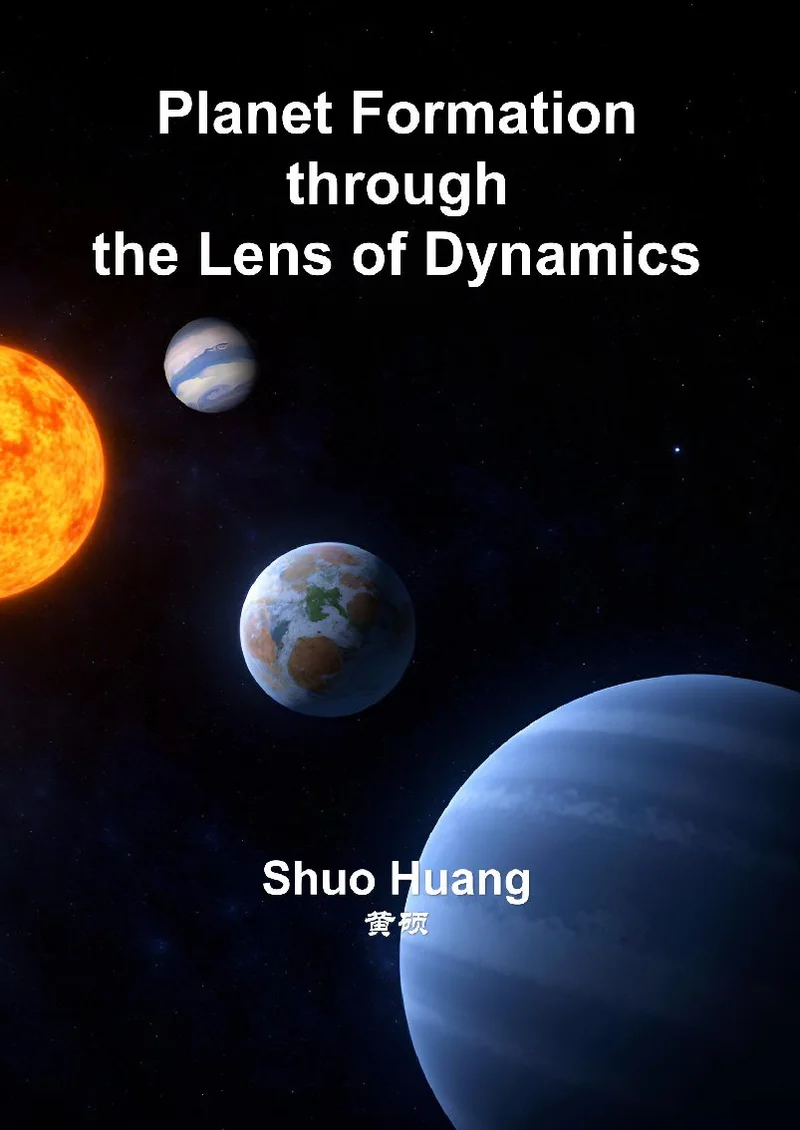


Planet Formation through the Lens of Dynamics
The discovery of the first exoplanet, 51 Pegasi b, marked the beginning of a rapidly expanding field. Today, nearly 6,000 exoplanets have been detected, revealing an astonishing diversity of planetary systems. Yet, despite this progress, Earth remains the only known planet hosting life. This contrast raises profound questions about whether life is common in the Universe and how planetary systems, including our own, form and evolve. Rather than providing a complete picture on their own, observations and theory work in close synergy to advance our understanding of exoplanet systems. Different detection methods probe different regions of parameter space: transit photometry favors close-in planets, radial velocity is most sensitive to massive planets, direct imaging reveals young and widely separated companions, while microlensing and astrometry access other complementary regimes. Together, these techniques offer a partial but expanding view of planetary populations. In this context, theoretical models of planet formation and evolution play a crucial role in interpreting observational data, making predictions, and guiding future surveys. At the same time, new observations continually challenge existing theories, pushing them to evolve and refine our understanding of how planetary systems form. Planet formation begins with the gravitational collapse of a dense region within a molecular cloud, leading to the formation of a protostar surrounded by a rotating protoplanetary disk. These disks, composed primarily of gas with a small fraction of solids, provide the environment in which planets form. Two main pathways are thought to operate: gravitational instability, which can rapidly form massive objects, and core accretion, in which small dust grains grow into planetesimals, planetary embryos, and eventually full planets. Observations from facilities such as ALMA have revealed that these disks often exhibit rings and gaps, which may indicate the presence of forming planets. Once formed, planets do not remain at their birth locations. Instead, they interact gravitationally with the surrounding gas disk, leading to orbital migration. Low-mass planets undergo Type I migration, while more massive planets that open gaps in the disk experience slower Type II migration. The migration process is governed by a balance of torques, primarily Lindblad and corotation torques, as well as additional effects such as heating and pebble accretion torques. These processes can drive planets inward, halt their motion, or even cause outward migration, significantly shaping planetary system architectures. Migration naturally leads to the formation of mean motion resonances, a concept first studied in the context of the Galilean moons by Pierre-Simon Laplace. When planets migrate toward each other, they can become locked in orbital configurations where their periods form simple integer ratios. In such resonances, gravitational interactions accumulate coherently, stabilizing the system and preventing close encounters. Resonances can also involve multiple planets simultaneously, forming resonant chains or three-body resonances that play an important role in compact planetary systems. Observations show that exoplanet system architectures are highly diverse. While some systems, such as TRAPPIST-1, exhibit resonant chains, many others do not. Statistical studies reveal that only a small fraction of planet pairs are currently in resonance, though many lie just outside resonant configurations. This has led to competing theories: planets may have formed in resonant chains that later became unstable, formed in gas-poor environments with little migration, or assembled in situ after the gas disk dissipated. Increasing observational evidence suggests that resonant chains may commonly form early and later break due to dynamical instabilities. Overall, the study of planet formation and system architecture combines observations, theory, and numerical simulations to understand how diverse planetary systems emerge. While significant progress has been made, many fundamental questions remain open, particularly regarding the origins of system diversity and the conditions that lead to habitable planets. Chapter 2: When, where, and how many exoplanets end up in orbital resonances? Protoplanetary disks are the birthplaces of planets. As protoplanets exchange angular momentum with the surrounding disk, they migrate. Migration can capture two planets in a stable mean motion resonance, as observed in systems such as PDS70 (2:1 resonance Bae et al. 2019) and TRAPPIST-1 (resonance chain Luger et al. 2017). However, too rapidly migrating planets result in resonance crossing instead of trapping. Here, I have derived the critical migration rate delineating the transition between resonance trapping and crossing, providing a tool for the community to diagnose the birth disk mass of perfect resonance chain planets. Because fast migration typically entails the existence of a massive disk, I also calculated that near-resonant exoplanets were formed in disks with masses comparable to the Minimum Mass Solar Nebula. Around the same time that I archived my paper, Batygin & Petit (2023a) independently derived an equivalent resonance-trapping criterion using a different approach. Chapter 3: The dynamics of special chain systems and their formation: TRAPPIST-1 Higher-order resonance chains allow us to constrain planet formation timescales. For example, in the TRAPPIST-1 system, the high-order 8:5 and 5:3 resonances of its inner three planets are near-impossible to replicate if the planets stayed within the disk (Teyssandier et al. 2022; Burn et al. 2021). These resonances can only be obtained when the inner planets migrated into a gas-free magnetospheric cavity, where disk torques expand their original 3:2 resonances to the observed higher-order resonances. In addition, the outer planets d, e, and f can neither form too fast nor too slow, otherwise the planets would result in a configuration incompatible with observation. In this way, I offered an approach to constrain the formation timescales of exoplanets from their present-day architectures. Recent magnetohydrodynamic simulations (Romanova et al. 2025) confirmed our proposed cavity migration mechanism. Our proposed pathway for TRAPPIST-1 is also applicable to other resonance chain systems, e.g., TOI-178, and HD158259. Chapter 4: The dynamics of broken chain systems and their formation: the Solar System While many systems exhibit resonances, others, including our Solar System, do not. Various mechanisms, such as disk dispersal (Izidoro et al. 2021), stellar flybys (Maas et al. 2025), and planetesimal collisions (Li et al. 2024; Yi et al. 2025a), can disrupt primordial resonances. In the Solar System, the giant planet instability (Morbidelli et al. 2005) perturbs inner terrestrial planets through secular interactions (Kaib & Chambers 2016). Here, the present-day dynamical structure of the Solar terrestrial planets naturally emerges when these planets started in a resonance chain that was destabilized during the giant planet instability, resulting in the Moon-forming impact. Our findings support the view that the Solar terrestrial planets formed early, in a gas-rich disk, analogous to exoplanet systems. It also offers a new testable way for multi-planet systems to break primordial resonances, as most planet systems exhibit. Chapter 5: Suppression of giant planet formation in star cluster environments Observation already revealed that the birth environment of stars significantly impacts the planet-forming disks. The examples are the observed Proplyds in the Orion Nebula (Berné et al. 2024) as well as numerical simulations (Wilhelm et al. 2023). This study introduces a simplified planet population synthesis code that simulates planet formation in the proplyds in an Orion-like cluster, incorporating factors such as pebble accretion and the effects of nearby stellar radiation on protoplanetary disks. The simulations show that clustered environments hinder the formation of giant planets, especially around low-mass stars. Neptune-sized planets on wide orbits are formed instead. The reason is that the short disk life time halt both planet gas accretion and migration. The large population of Neptune-sized planets at Jupiter-like orbits is consistent with recent Microlensing discoveries (Zang et al. 2025). Chapter 6: Signature of closely-spaced pebble-accreting protoplanets in ALMA disks While exoplanets on wide orbits are relatively common, not so many protoplanets have been found. It has been shown that the occurrence rate of substructures in disks is comparable to the occurrence rate of exoplanets (van der Marel & Mulders 2021). This study propose many of the protoplanets are too small to be detected. The transition disks are categorized into two distinct groups based on their properties and the types of planets they may host. In Group A, massive gas giants create deep gaps in the gas disk, while in Group B, multiple smaller Neptunian-like planets contribute to the formation of inner dust cavities without creating substantial gas gaps. The characteristics of the dust rings formed in these disks—such as sharp inner edges—can provide critical insights into the underlying planet formation processes. The observational implications of these findings suggest that high-resolution imaging techniques, particularly with the Atacama Large Millimeter/submillimeter Array (ALMA), could further validate these models and enhance our understanding of planet formation in various disk environments. Outlook: Identifying broken resonance chains While intact resonant chains are relatively easy to identify through integer period ratios and resonance angles, broken chains are far more subtle and challenging to detect even if many broken-chain theories have been proposed. Nevertheless, they encode critical information about a system’s migration history and dynamical evolution. A promising approach is to search for near-integer period ratios as relics of past resonances, as seen in several Kepler systems. Future work can combine analytical models and N-body simulations to systematically test whether the architectures of known multi-planet systems are consistent with an origin in resonant chains that were later destabilized. Such studies may also reveal the presence of unseen outer companions, offering testable predictions for upcoming missions such as Gaia. In addition to orbital architecture, planetary composition provides an independent and powerful probe of resonance disruption. The breaking of resonant chains is expected to trigger dynamical instabilities. If giant impacts have happened, it would leave observable imprints on planetary masses, radii, and atmospheres. By combining dynamical simulations with models of collision outcomes, it is possible to identify candidate post-impact planets and connect their present properties to their formation histories. These predictions can be tested with radial-velocity measurements and atmospheric characterization with facilities such as JWST. Looking ahead, next-generation telescopes on the ground and in space will enable systematic studies of small exoplanets, bringing us closer to understanding how common Solar System–like architectures are and ultimately addressing the origin of habitable worlds.
| Publicatiedatum | 19 juni 2026 |
| Universiteit | Universiteit Leiden |
| Auteur | Shuo Huang |
| Order nummer | 19115 |
| ISBN nummer | 978-94-6534-449-2 |