Pim Martens
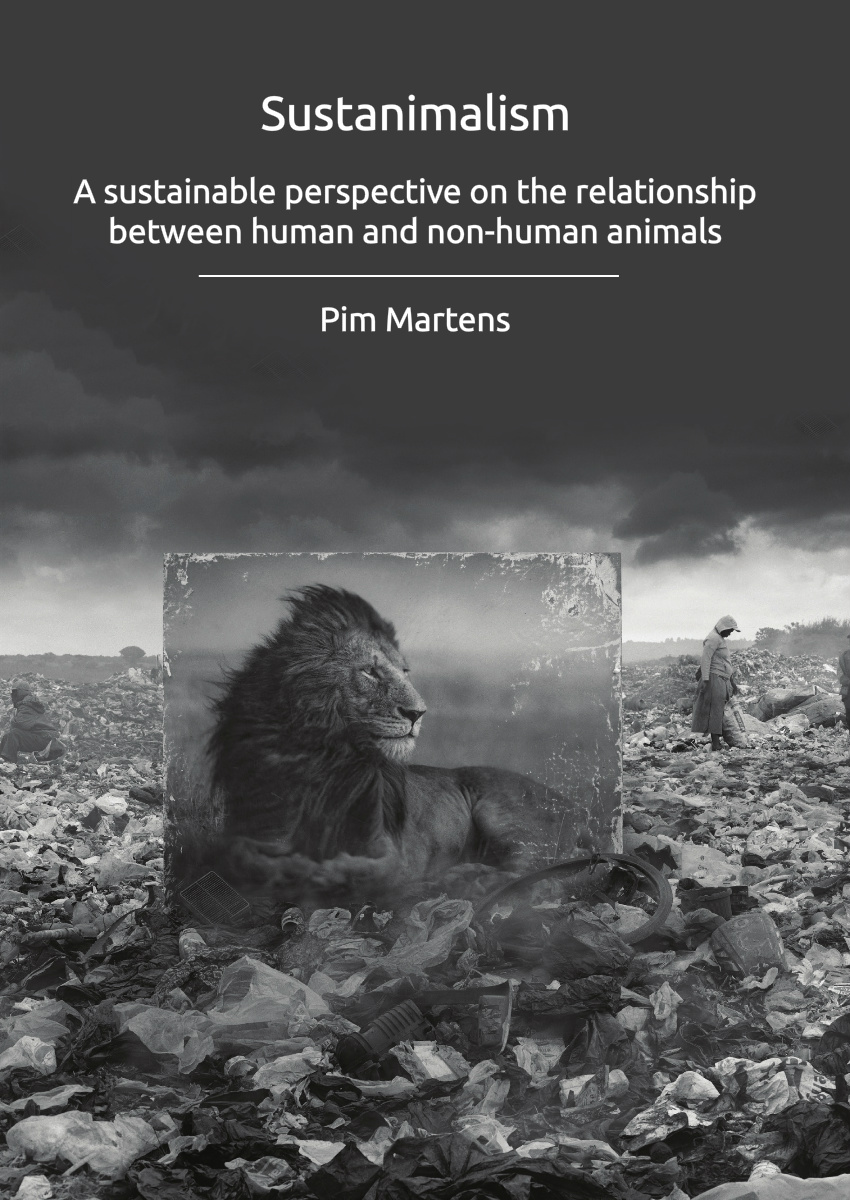


Sustanimalism
“The greatness of a nation can be judged by the way its animals are treated”, Mahatma Gandhi said many years ago. Somewhere between this observation and the sustainability debate in recent years it has gone wrong. If we look at the many sustainability indicators that have been developed over the years, it is striking to see that animal-wellbeing hardly plays a role. Biodiversity and ecosystems indicators put more emphasis on the number and variety of different species than their well-being. Assuming that the words of Gandhi make sense, can we then conclude that the concept of sustainability has nothing to do with civilization? Or is it that animal-wellbeing is a blind spot in the sustainability debate? Of course our interaction with the environment, other people and other animals is part of our civilization. The reason that ‘animals ‘and ‘sustainability’ are not often mentioned together in one sentence is likely to be found in the fact that the sustainability debate has been hijacked in recent years by industry and governments; their view regarding sustainable development has significantly been subordinate to the dogma of economic growth with little regard for animal welfare. How short-sighted this is has been illustrated by the various outbreaks of animal diseases in intensive farming and the development of antibiotic resistance of many pathogens, in large part because our farmed animals are given too many antibiotics. These are just some examples, but it is increasingly clear that our own well-being is closely connected with the welfare of the animals with whom we live. With this thesis, we study the sustainability of our relationship with animals. By looking at animals, you can put the sustainability debate on the map in an engaging way. Animal welfare should therefore be central in the sustainability debate: what we term ‘sustanimalism’ (in Dutch, the combination of ‘dieren’ (animals), and ‘duurzaamheid’ (sustainability) leads to the neologism ‘dierzaamheid’). With this in mind, it is also practical and easy to make a contribution to a sustainable society. Acting animal-friendly – for example, take good care of your animals and eating less meat – is not only beneficial to your health, but also to a better and more civilized world. We hope to encourage people to think about our interaction with the animals that surround us. What is sustainable and what is not, is not a black and white story. Without claiming to cover the full complexity of our relationships with animals, in this thesis we explore the sustainability of the relations humans have with the non-humans we are living with on various levels of interaction. Chapter 2 gives an overview how our relationships with animals has evolved over time and what different relationships we have. On the one hand, animals can serve instrumental purposes: we currently use animals for clothing, for testing a range of human products, for gaining basic insights into human biology and behavior, and as food. On the other hand, human-animal relations are social. We review the current state of research on human-animal relations by focusing particularly on pets and on the psychological mechanisms involved in this special relationship. In Chapter 3 we move closer into the relationships we have with our pets, in particular cats and dogs. In this chapter, we present, amongst others, information on how the attachment level of companion animal owners correlates to their attribution of emotions to their companion cat or dog. In Chapter 4 we go another step deeper into the relationship we have with our pets. we used photographs of dogs and cats to which companion-animal owners attributed an emotion and compared their assessments with those made by independent experts. Chapters 5 and 6 broadens the analysis of our interaction with animals, by looking at the social context and culture of the individual in relation to their attitude towards animals. Chapter 5 presents a case study on Dutch and Belgian high school students; Chapter 6 analyses the data we gathered for the Dutch population. In Chapter 7, we assess the impacts of companion animals on the environment, by introducing the “ecological paw print” (EPP). Here, we explain the impact of companion dogs and cats; quantifying their dietary EPP and greenhouse gas (GHG) emissions according to data we collected from China, the Netherlands and Japan, and discuss how to reduce their dietary EPP and GHG emissions. Finally, in Chapter 8 we broaden the scope again by looking at policy determinants and cross-country differences in animal protection policies. Results suggest that countries with stronger democratic institutions and more civil society groups focused on animal protection are likely to have stricter animal protection policies. For economic development and broad civil society strength we do not find significant effects.
| Publicatiedatum | 8 april 2026 |
| Universiteit | Overig |
| Auteur | Pim Martens |
| ISBN nummer | 978-94-6380-893-4 |