Patricia Bravo Tapia
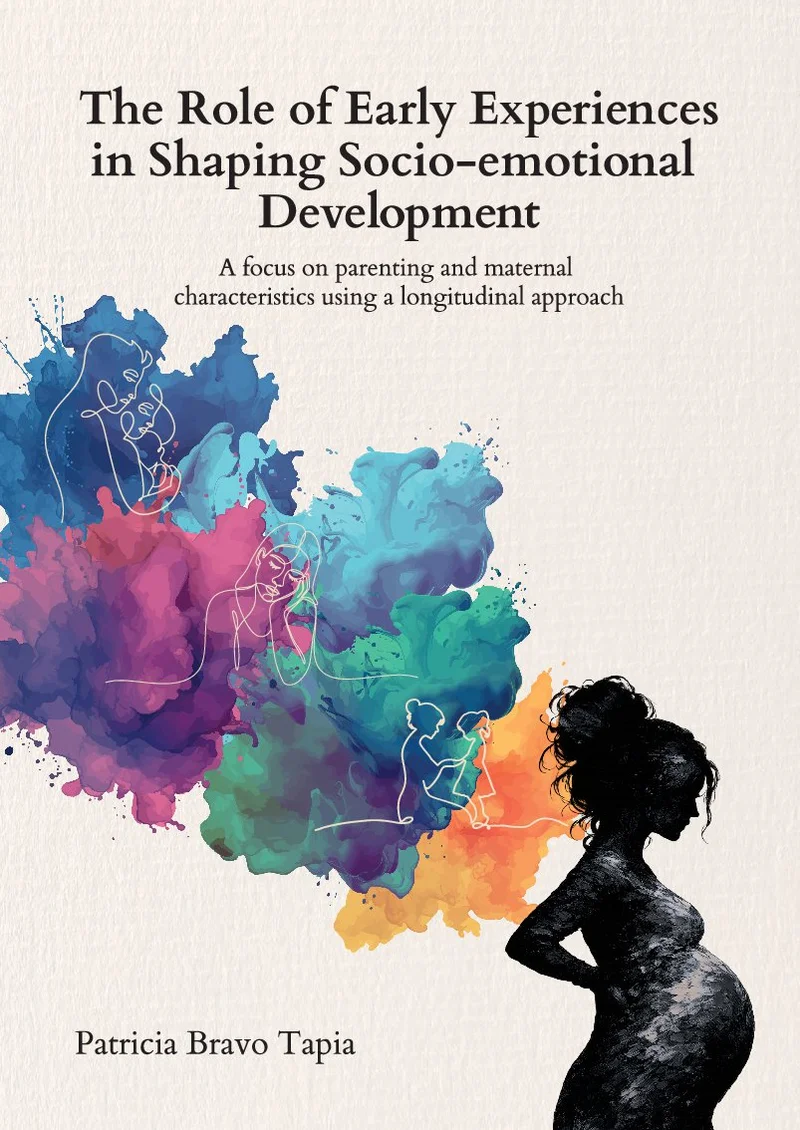


The Role of Early Experiences in Shaping Socio-emotional Development
Parenting plays an essential role in child development. As the family is the most immediate environment in a child’s life, parents exert a profound influence on their development. Therefore, it is crucial to support and improve healthy parenting and family environments. Previous studies have focused on early childhood and have already identified several protective and risk factors as predictors of different emotional and behavioral problems in children. In this thesis, through a longitudinal design, we explored beyond existing findings by identifying early determinants of parenting and of offspring’s emotional and behavioral problems over time, and by exploring the cultural context and its relationship with socio-emotional development. A better understanding of maternal, child, and contextual variables involved in child socio-emotional development may aid in the identification of important targets for early detection and intervention to support families. For that, we used data from 3 different prospective cohort studies: the Generation R study, the Early Childhood Longitudinal Survey (ELPI), and the Panel Study on Korean Children (PSKC). Initially, to gain greater insight into the role of early predictors of mother-child interactions in Chapter 2.1, we explored predictors of maternal sensitivity trajectories in the first 10 years. We examined how maternal characteristics, child variables, and contextual factors contributed to explaining changes in maternal sensitivity over time. In this study, we used longitudinal data from the Generation R Study, which followed participants until the age of 10. The study involved a sub-sample of 1236 participants with in-depth assessments of observed maternal sensitivity. Our analyses identified no significant predictors of maternal sensitivity trajectories over time. However, suggestive trends in the trajectories of maternal sensitivity over time were consistent with previous studies, indicating that maternal sensitivity decreased overall. These findings underscore the importance of repeated measures in maternal sensitivity, suggesting that while levels may decline, the influence of certain factors remains limited. Then we explored how early relational processes, such as infant attachment and maternal sensitivity, mediated the transgenerational transmission of maternal history of maltreatment on children’s mental health at 10 years (Chapter 2.2). This study again used the sub-sample of Dutch origin participants in Generation R. Our findings showed no significant associations of these early relational experiences as mediators. Instead, our results indicated an intergenerational effect of maternal childhood maltreatment on children’s externalizing and internalizing problems at 10 years, with only an indirect effect via maternal psychopathology. This finding is consistent with previous research and highlights the relevance of maternal mental health as a long-lasting consequence of life events such as maltreatment experiences. To gain a deeper understanding of the family’s role during adolescence, we examined in Chapter 3.1 whether maternal sensitivity was associated with BMI and regulatory eating behaviors, and whether children´s self-regulation mediated this relationship. For this, we again relied on the same Generation R sub-sample. We found that higher maternal sensitivity was associated with better child self-regulation, while better self-regulation was associated with a lower BMI. No direct associations between maternal sensitivity and BMI were found. The findings highlighted maternal sensitivity’s critical role in children’s regulatory behaviors and self-regulation as a mechanism explaining variation in BMI. The results suggest the inclusion of parents in interventions aiming to reduce BMI by improving children’s self-regulation. In Chapter 3.2, we studied how family variables explain the relationship between maternal childhood maltreatment and offspring’s emotional and behavioral problems at the age of 13 years, using structural equation modelling. Drawing upon the full Generation R sample, this chapter revealed a direct association between maternal childhood maltreatment and emotional and behavioral problems in adolescence and family variables such as family functioning and harsh parenting explaining part of this association. Results further showed that women exposed to childhood maltreatment might not only experience negative consequences themselves but may also be more likely to be exposed to poor family functioning in her current family, which in turn affects emotional and behavioral problems in their children. This suggests that maternal mental health problems may accumulate over time in these families. Early intervention in mothers who experienced maltreatment, even before the baby is born, may help to reduce the odds of negative consequences on children’s socioemotional development. After focusing on maternal predictors of children’s emotional and behavioral problems, we incorporated the cultural context into our models. Chapter 4 offers a more contextual perspective by examining socioemotional development and emotion regulation variables in two multi-cohort studies. In Chapter 4.1, using data from populations in Chile and the Netherlands, we explored emotional and behavioral problem trajectories among children and how the home environment explains those trajectories. We found more stable trajectories of lower emotional and behavioral problems in the Dutch sample than in the Chilean sample, where the trajectories started higher and then decreased at later ages. We also identified that in the Chilean population, home environment variables such as maternal involvement, learning materials, educational level, and depressive symptoms were predictors of those trajectories. In contrast, in the Dutch population, only maternal involvement and depressive symptoms were significant predictors. The results underscore the importance of considering the context and the home environment regarding emotional and behavioral problems in children. The next study in Chapter 4.2 focused on fathers in the Netherlands and South Korea. We found that paternal warmth protected against child self-control problems in both countries, suggesting that paternal warmth serves as a universal protective factor across cultures. On the contrary, results indicated that paternal control was associated with more self-control problems in Dutch children than in Korean children. These findings emphasize the universal importance of paternal parenting in promoting children’s self-control and underscore the need to support father involvement in child development across cultures. Finally, Chapter 5 synthesized the main findings from all the studies in this thesis. We discussed (1) the role of predictors of the caregiver system during childhood, (2) the understanding of maternal determinants of children’s emotional and behavioral problems, and (3) how parenting must be considered within a cultural context. Moreover, methodological considerations such as selection bias, information bias, statistical techniques, and the difficulties in conceptualizing and codifying parenting were discussed. Future directions should focus on the inclusion of fathers and the extended family, as the (cultural) context can be an important contribution to disentangling the association between parenting variables and children’s emotional development. Taken together, this thesis sheds light on the interplay of early determinants affecting parenting and the onset of emotional and behavioral problems in children over the lifespan. Additionally, by incorporating contextual variables that establish the goal of future research, we aim to bridge the gap between risk factors and poor emotional development. Overall, in this thesis, we identified that protective factors such as perceived family support and parental warmth were key predictors of children’s socioemotional development; however, these associations may differ across different cultural contexts. Thus, the call is to pay attention to contextual variables and cultural context, recognizing that child development results from the ongoing interaction of multiple systems throughout a child’s life, rather than from isolated factors.
| Publicatiedatum | 10 september 2026 |
| Universiteit | Erasmus Universiteit Rotterdam |
| Auteur | Patricia Bravo Tapia |
| ISBN nummer | 978-94-6534-516-1 |