Vera Weijer
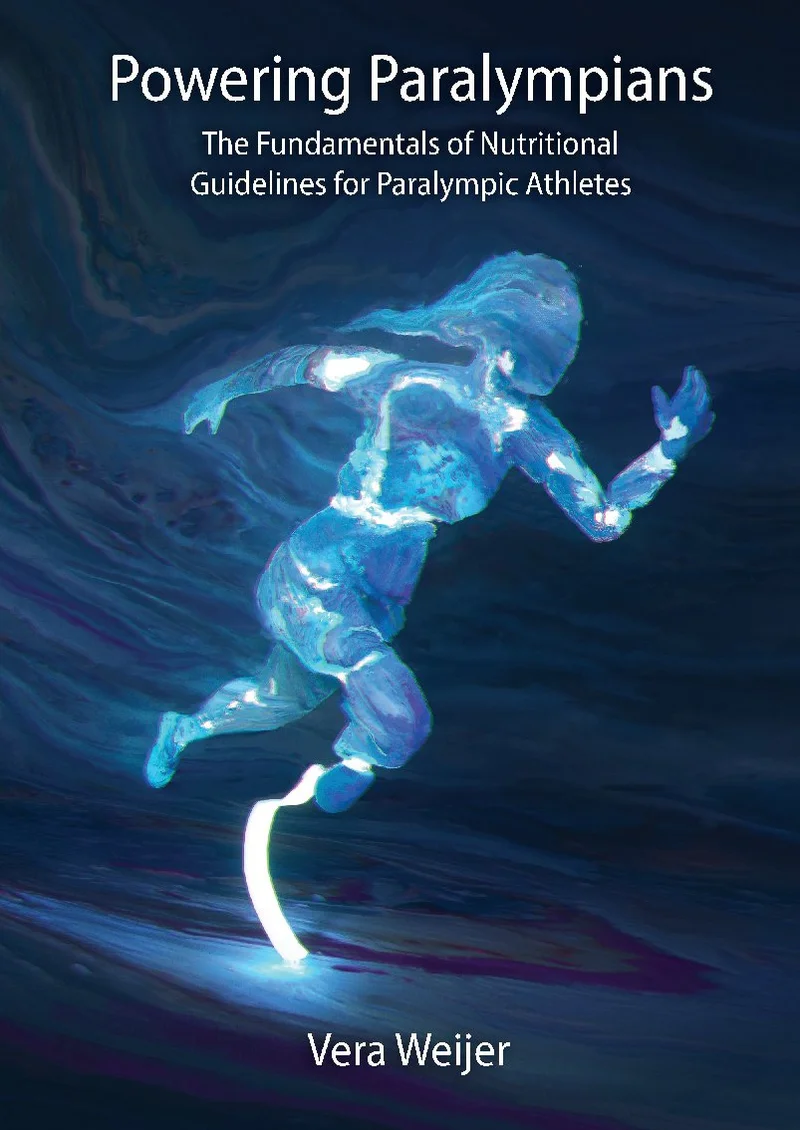


Powering Paralympians
Para-sports is rapidly growing, highlighting the increasing need for proficient support of the athletes. Nutritional intake plays a critical role in both performance and health of an athlete. Effective nutritional counseling relies on an accurate assessment of the energy requirements of an athlete. While evidence-based nutritional guidelines exist for able-bodied athletes, similar frameworks for Para athletes remain limited. Yet, Para-athletes often have unique nutritional needs due to differences in body composition, energy expenditure during both exercise and daily life activities, and the nature and level of impairments. These differences necessitate research to assess total energy expenditure, nutritional intake, and body composition of Paralympic athletes to form the foundation for nutritional counseling of Paralympic athletes. Accurate assessment of energy expenditure is essential for providing effective nutritional counseling. Chapter 2 describes the total daily energy expenditure (TDEE) of Paralympic athletes across various disabilities and sport disciplines, measured with the golden standard, doubly labeled water method. The findings revealed that TDEE was generally moderate to high, although there was considerable variation between sports and individuals. This variation was largely explained by differences in fat free mass (FFM) and exercise duration. Additionally, the presence of spinal cord disorder (SCD), such as spinal cord injury or spina bifida, was associated with a lower energy expenditure. Given that direct measurements of TDEE are not always feasible in practice, novel prediction equations were developed to estimate TDEE in this population. Regarding dietary intake, most athletes met or exceeded protein recommendations, while carbohydrate intake was often low, indicating potential for improvement in fueling strategies. In practice, the prediction of TDEE relies on an accurate estimation of the resting metabolic rate (RMR). In athletes without a disability, the RMR is primarily influenced by an athlete’s FFM. However, Para-athletes often have an altered body composition compared to able-bodied athletes, affecting the RMR. In Chapter 3, RMR was measured in a large cohort of Paralympic athletes, alongside assessments of body composition and blood analysis. The results identified FFM, triiodothyronine concentrations, and the presence of SCD as the strongest predictors, collectively explaining 71% of the variance in RMR. Based on these results a novel prediction equation was developed, and preexisting prediction equations were evaluated against measured RMR values. The novel prediction equations derived from this study, along with the pre-existing equations of Chun et al. and Nightingale & Gorgey, showed strong agreements with measured values and are now recommended for estimating RMR in Paralympic athletes. The FFM was the key determinant of both RMR and TDEE in our work, and was assessed using dual energy x-ray absorptiometry (DXA). While DXA provides accurate measurements, it is not always accessible in daily practice, where skinfold measurements are more commonly used. However, the validity and feasibility of using skinfold measurements to assess the FFM in Paralympic athletes remains uncertain. Therefore, in Chapter 4 we compared body composition assessments using DXA and skinfold measurements in this population. The results demonstrated high feasibility of DXA scans in Paralympic athletes, whereas standard 8-site skinfold measurements proved more challenging to perform, due to deformed or missing limbs. However, when skinfold measurements were translated into a fat percentage they showed strong correlations with the fat percentage measured by DXA. Though the translation from skinfolds to fat percentages is discouraged, it is recommended to use skinfold measurements to track changes in body composition in the individual athlete over time. Bone mineral density (BMD) is another important component of body composition and is influenced by both energy availability and mechanical loading. While insufficient energy intake can lead to reduced BMD, mechanical loading typically promotes BMD. However, in Paralympic athletes, loading patterns differ significantly from those of able-bodied athletes due to differences in ambulation and daily activities. In particular, wheelchair use reduces loading on the lower body, potentially affecting bone health. Chapter 5 explored the prevalence of low BMD in Paralympic athletes and assessed potential predictors of BMD. The findings revealed a high prevalence of low BMD in the hip region, whereas lumbar spine BMD was less frequently affected. Key factors associated with low BMD included wheelchair dependence, low body mass, and participation in non-weight-bearing sports such as Para-cycling. An emerging tool to aid with nutritional counseling is the continuous glucose monitor (CGM). This method offers real-time insights into glucose dynamics that can inform personalized fueling strategies, which is particularly useful in endurance sports like Para cycling. However, glucose profiles of Para cyclists have not been characterized yet and differences in glucose regulation may exist in athletes with SCD. Chapter 6 explores the glucose patterns of Para cyclists using CGM. Results showed that athletes remained within the euglycemic range throughout most of the day(s). Mild nocturnal hypoglycemia (<3.9 mmol/L) was occasionally observed, while severe hypoglycemia (<2.9 mmol/L) occurred almost exclusively in athletes with SCD. The validity of CGM readings was evaluated against capillary blood glucose measurements. Accuracy was acceptable at rest but declined during exercise. This effect was particularly evident in hand cyclists compared to cyclists, presumably because the sensor, which was placed on the upper arm for everyone, was located closer to the active muscle mass in hand cycling. In summary, this thesis examined multiple aspects of the nutritional requirements of Paralympic athletes, including energy intake, TDEE, RMR, body composition, BMD, and glucose regulation. In Chapter 7, the results of this thesis are placed in a broader perspective. More specifically, practical guidance is provided for estimating the energy requirements of Paralympic athletes in an applied setting. Additionally, recommendations are offered for identifying and addressing low energy availability, supporting practitioners in delivering tailored, evidence-based nutritional care for this diverse and unique athletic population. The chapter is finalized by providing future directions to further optimize measurements or estimations of physical activity energy expenditure and tailoring nutritional strategies to Paralympic athletes, ultimately supporting more evidence based, individualized sport nutrition counseling.
| Publicatiedatum | 2 september 2026 |
| Universiteit | Universiteit Maastricht |
| Auteur | Vera Weijer |
| ISBN nummer | 978-94-6534-506-2 |