Mariska Van Lier
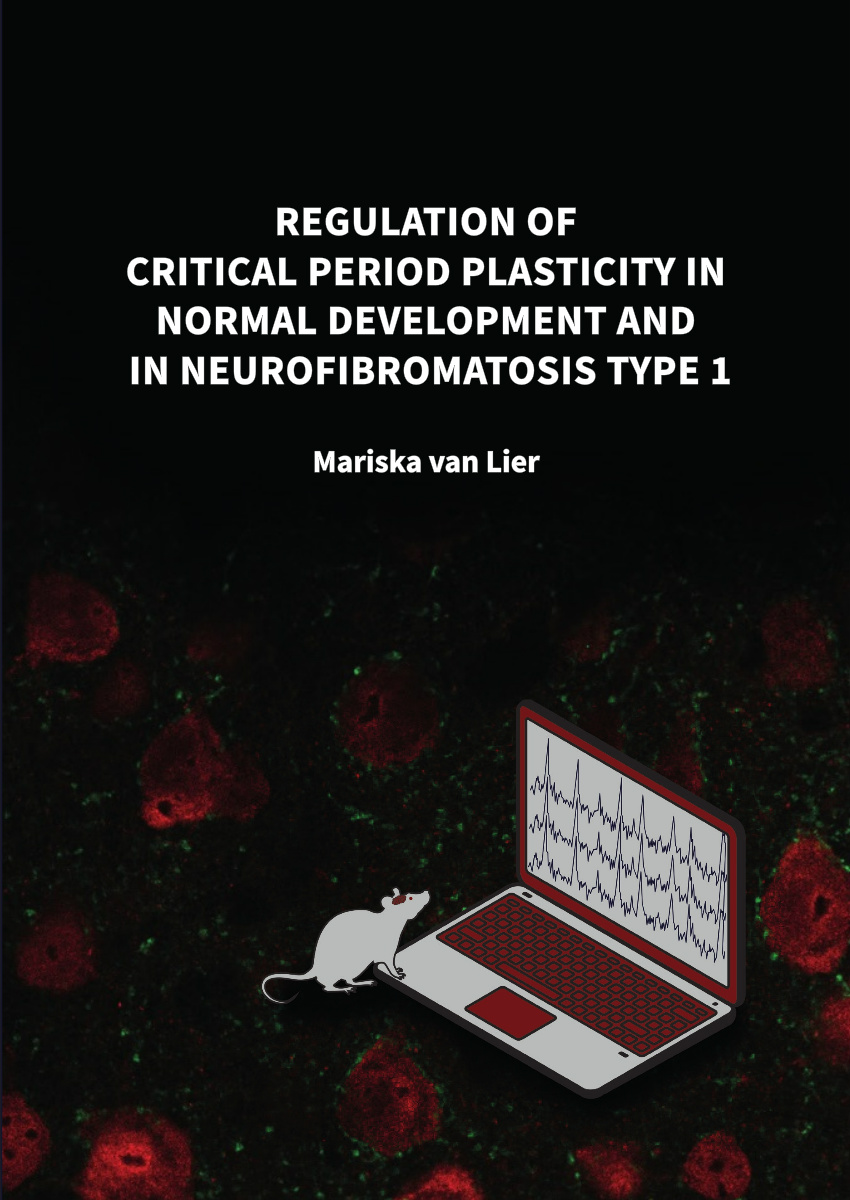


Regulation of critical period plasticity in normal development and in Neurofibromatosis type 1
Tijdens de ontwikkeling van onze hersenen worden er vele neuronale netwerken aangelegd die dan nog heel dynamisch zijn. Het brein moet in staat zijn nieuwe informatie op te nemen en zich aan te passen. Vooral na de geboorte en in de kinderjaren zijn er verschillende kritische perioden waarin een neuronaal netwerk zich aanpast door ervaringen van buitenaf. Er zijn kritische perioden voor het correct verwerken van zintuigelijke waarnemingen zoals het zien met beide ogen, het ontwikkelen van motorische vaardigheden en het leren van een eerste taal. Deze vaardigheden moeten tijdens een specifieke kritische periode geleerd worden zodat desbetreffende neuronale netwerken geoptimaliseerd worden. Als een kritische periode eenmaal gesloten is zijn de betrokken neuronale netwerken minder dynamisch en wordt het lastig tot onmogelijk om bepaalde vaardigheden alsnog te leren. Het openen en sluiten van kritische perioden moet daarom nauwkeurig gereguleerd worden. Als dit niet goed gaat kunnen er ontwikkelingsstoornissen ontstaan met cognitieve, gedrags- en motorische problemen. In dit proefschrift hebben wij verschillende mechanismen onderzocht die kritische perioden reguleren. Het model dat wij gebruikt hebben om kritische perioden te onderzoeken is het visuele systeem van de muis. Tijdens de ontwikkeling moet het visuele systeem leren om informatie van beide ogen te verwerken en één beeld te vormen. Wanneer tijdens een kritische periode één oog tijdelijk gedepriveerd wordt zullen cellen in de visuele hersenschors minder op dit oog gaan reageren en uiteindelijk meer op het andere oog. Dit komt door structurele en functionele veranderingen van neuronale verbindingen. Deze vorm van plasticiteit wordt oculaire dominantie (OD) plasticiteit genoemd. De kritische periode voor OD plasticiteit vindt bij muizen plaats tussen ongeveer P20 (20 dagen na de geboorte) en P35 met een piek rond P28. Na deze periode is OD plasticiteit veel minder sterk. Kritische perioden worden op verschillende manieren gereguleerd. Eén van de mechanismen die een rol spelen in het sluiten van de kritische periode is het stabiliseren van axonen en synapsen. Tijdens de kritische periode voor OD plasticiteit vindt er veel groei en terugtrekking van axonen plaats. Dit is na het sluiten van de kritische periode veel minder. Daarnaast vindt er tijdens de kritische periode ook in grote mate synaptische plasticiteit plaats. Na het sluiten is er nog wel lokale synaptische plasticiteit, maar veel minder. Een ander mechanisme is dat inhibitie via de neurotransmitter γ-amino butyric acid (GABA) een cruciale rol speelt in de regulatie van kritische perioden. Teveel inhibitie kan zorgen voor het vroeg openen en sluiten van kritische perioden en een tekort aan inhibitie kan juist zorgen voor een vertraagde of late kritische periode. Dit is veel onderzocht in diermodellen waarbij de hoeveelheid inhibitie genetisch of farmacologisch gemanipuleerd wordt. Een verschuiving van de excitatie/inhibitie balans ligt ook ten grondslag aan ontwikkelingsstoornissen waarin kritische perioden verstoord zijn, zoals Rett syndroom en het fragile X syndroom. In dit proefschrift hebben wij naar beide mechanismen gekeken die betrokken zijn bij de regulatie van kritische perioden. In hoofdstuk 2 hebben wij naar structurele aspecten gekeken en gevonden dat genen die betrokken zijn bij de regulatie van Walleriaanse degeneratie, een vorm van axonale degeneratie dat normaal optreedt na schade aan axonen, ook betrokken zijn bij plasticiteit tijdens de kritische perioden. In hoofdstukken 3 en 4 hebben wij laten zien dat verhoogde inhibitie in een muismodel voor de ontwikkelingsstoornis Neurofibromatose type 1 (NF1) kan leiden tot een vervroegde sluiting van de kritische periode voor OD plasticiteit. Walleriaanse degeneratie is een vorm van degeneratie waarin axonen acuut desintegreren nadat ze contact met het cellichaam hebben verloren. Dit proces wordt gereguleerd door de enzymen nicotinamide mononucleotide adenylyltransferases (NMNATs) in het cytoplasma. In een muizensoort dat door een mutatie een fusie-eiwit UBE4b-NMNAT1 produceert (WldS muizen) is Walleriaanse degeneratie erg vertraagd. Dit type degeneratie wordt ook vertraagd als in muizen NMNAT in het cytoplasma tot overexpressie wordt gebracht. In een studie waarin gekeken is welke eiwitten er veranderen tijdens OD plasticiteit kwamen er ook enkele eiwitten naar voren die betrokken zijn bij Walleriaanse degeneratie. Daarom zijn wij in hoofdstuk 2 gaan kijken of OD plasticiteit veranderd is in muizen waarin Walleriaanse degeneratie vertraagd is. Dit blijkt inderdaad zo te zijn. Zowel WldS muizen als muizen die NMNAT1 tot overexpressie brengen hebben verminderde OD plasticiteit aan het einde van de kritische periode. Wij zagen ook dat WldS muizen een versnelde ontwikkeling hebben van visuele acuïteit, een ontwikkelingsproces om scherpte te kunnen zien. De ontwikkeling van visuele acuïteit is een proces dat parallel loopt aan de kritische periode voor OD plasticiteit. Ondanks dat wij hebben aangetoond dat de NMNAT-signaalcascade een rol speelt bij OD plasticiteit, hebben wij geen bewijs kunnen vinden dat Walleriaanse degeneratie dan ook daadwerkelijk optreedt. Het is goed mogelijk dat NMNATs niet alleen Walleriaanse degeneratie reguleren na schade, maar dat ze ook een belangrijke rol hebben in de regulatie van kritische perioden tijdens normale corticale ontwikkeling. Behalve structurele veranderingen speelt ook inhibitie een grote rol bij de regulatie van kritische perioden. In een muismodel voor de ontwikkelingsstoornis NF1 (Nf1+/- muizen) is GABAerge inhibitie verhoogd in verschillende hersendelen. NF1 is een ontwikkelingsstoornis dat gepaard gaat met cognitieve, motorische en gedragsproblemen. Daarnaast hebben patiënten veelal last van huidproblemen, disfiguratie en een verhoogde kans op tumoren. NF1 wordt veroorzaakt door een mutatie in het nf1-gen wat leidt tot verminderde expressie van het eiwit neurofibromine. Behalve symptoombestrijding is er geen therapie. De cognitieve problemen lijken door verhoogde GABAerge inhibitie te komen. Omdat verhoogde inhibitie de opening en sluiting van kritische perioden kan beïnvloeden hebben wij gekeken hoe inhibitie in de visuele hersenschors zich ontwikkelt en of de kritische periode voor OD plasticiteit veranderd is. In hoofdstuk 3 hebben wij gekeken hoe de ontwikkeling van de hersenschors verloopt in Nf1+/- muizen. Eerst hebben wij onderzocht hoe GABAerge inhibitie en de activiteit van piramidaal cellen in de visuele schors zich ontwikkelen. Nadat bij muizen de ogen open gaan gaat de activiteit van piramidaal cellen snel omhoog. Bij Nf1+/- muizen is ook de prikkelbaarheid van deze neuronen iets verhoogd en zullen ze zelf sneller actiepotentialen afgeven. De GABAerge inhibitie die deze cellen krijgen hoort dan rustig omhoog te gaan, maar deze schiet bij Nf1+/- muizen omhoog. Omdat de verstoorde balans tussen excitatie en inhibitie invloed kan hebben op spontane activiteit tijdens de vroege ontwikkeling van de hersenschors hebben wij dit ook onderzocht. Deze spontane activiteit wordt gegenereerd in de retina of in de hersenschors zelf en verspreidt zich door het brein. Dit is belangrijk voor de aanleg van neuronale connecties. In het visuele systeem is dit bijvoorbeeld belangrijk voor goede connecties tussen de retina, thalamus en de visuele hersenschors. Wij hebben echter geen verschil gevonden in spontane activiteit in de visuele schors tussen Nf1+/- muizen en hun wild-type controles. Het lijkt er daarom op dat de ontwikkelingsproblemen bij NF1 zich pas later ontwikkelen. Hoofdstuk 4 is een vervolg op hoofdstuk 3 en gaat over de studie van Nf1+/- muizen van één maand oud. Eerst hebben wij gekeken naar de activiteit van GABAerge interneuronen en piramidaal cellen in de visuele hersenschors van Nf1+/- muizen tijdens de kritische periode voor OD plasticiteit. Wij laten zien dat corticale inhibitie verhoogd blijft en dat de verhoogde prikkelbaarheid van piramidaal cellen die wij in hoofdstuk 3 vonden, dan hersteld is. Het is heel belangrijk dat wij laten zien dat de kritische periode voor OD plasticiteit vroeg sluit in Nf1+/- muizen. Tijdens de normale piek van de kritische periode (P28) vertonen Nf1+/- muizen veel minder OD plasticiteit vergeleken met wild-type muizen, terwijl dit een week eerder in de ontwikkeling normaal is. Interessant is ook dat deze kritische periode wel normaal start en dat de totale duur van de kritische periode voor OD plasticiteit dus verkort is in deze dieren. Dit kan grote gevolgen hebben omdat er minder tijd is om de neuronale netwerken te optimaliseren. Ook is de regulatie van kritische perioden belangrijk omdat deze elkaar opvolgen. Plasticiteit vindt vaak eerst plaats in lagere corticale gebieden en daarna pas in hogere, meer gespecialiseerde corticale gebieden. Als dit elkaar niet goed opvolgt kan dit leiden tot cognitieve, motorische en gedragsproblemen zoals in patiënten met NF1. Omdat cognitieve problemen bij NF1 voornamelijk veroorzaakt worden door verhoogde GABAerge inhibitie richten de meeste klinische studies zich op het (farmacologisch) verminderen van deze inhibitie. Tot nu toe zijn deze klinische studies echter nog niet succesvol. Het is goed mogelijk dat de timing van de behandelingen niet goed is en dat de behandelingen pas na het sluiten van kritische perioden worden gestart. Ook kunnen de momenten van behandeling en de dosering erg afhankelijk zijn van verschillende hersengebieden. Het is dan ook een uitdaging om de hoeveelheid inhibitie op verschillende momenten te verlagen, afhankelijk van het hersengebied. Een andere mogelijkheid is om kritische perioden te verlengen. In muizen kunnen kritische perioden verlengd worden door kooiverrijking. Doordat kooiverrijking de hoeveelheid inhibitie verlaagt kan de kritische periode voor OD plasticiteit verlengd worden. Wij hebben laten zien dat door Nf1+/- muizen op te laten groeien in een verrijkte omgeving, de verschillen in GABAerge inhibitie en in OD plasticiteit verdwenen zijn. Dit betekent dat verrijking van de omgeving ontwikkelingsproblemen kan overwinnen. In dit proefschrift hebben wij laten zien dat de timing en regulatie van kritische perioden erg belangrijk zijn. Wij hebben een structureel aspect van de sluiting van kritische perioden ontrafeld en gekeken naar de rol van inhibitie in de regulatie van kritische perioden. Wij hebben gevonden dat NMNATs in het cytoplasma een rol spelen bij OD plasticiteit. Voorheen was het niet bekend dat deze eiwitten een rol hebben in normale ontwikkeling, alleen bij schade. Daarnaast hebben wij aangetoond dat verhoogde inhibitie resulteert in vervroegde sluiting van kritische perioden in NF1 en dat dit tegengegaan kan worden door verrijking van de omgeving. Door deze bevindingen weten wij meer over de mechanismen die de kritische perioden reguleren. Dit kan nieuwe aanknopingspunten opleveren voor behandelstrategieën of voor de ontwikkeling van nieuwe therapeutische benaderingen.
| Publicatiedatum | 14 oktober 2020 |
| Universiteit | Vrije Universiteit Amsterdam |
| Auteur | Mariska Van Lier |
| ISBN nummer | 978 94 6380 793 7 |