Jonathan Abel
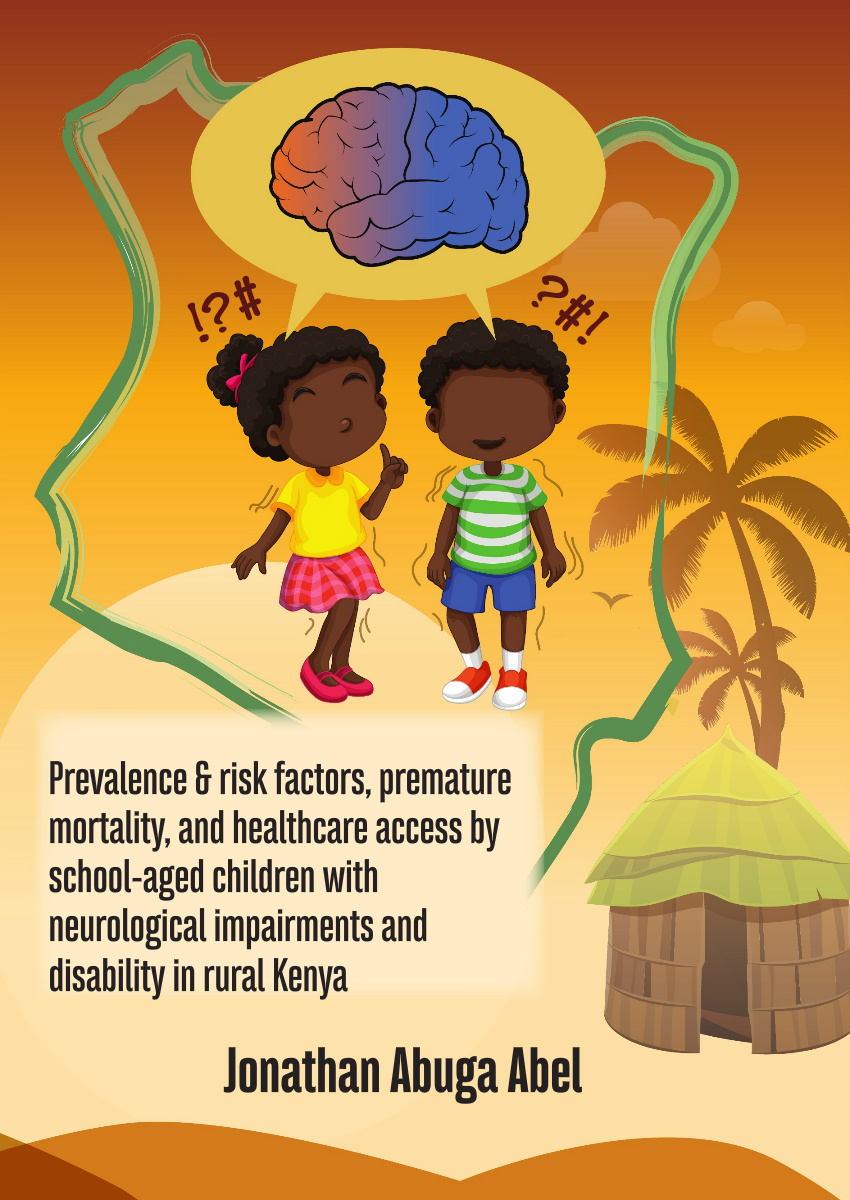


Prevalence and Risk Factors, Premature Mortality, and Healthcare Access by School-aged Children with Neurological Impairments and Disability in Rural Kenya
Addendum For my doctoral research, I investigated changes in prevalence, premature mortality and their risk factors, the overall burden in disability-adjusted life-years and healthcare for children with epilepsy and impairments in cognitive, vision, hearing and motor functioning. This was done by conducting systematic reviews and analysing epidemiological data obtained from a defined rural setting in Kenya. In Chapter 3 (a systematic review), it was reported that mortality was higher in childhood-onset epilepsy compared to intellectual disability. More specific, in epilepsy, mortality was highest: soon after diagnosis; among younger age groups; when comorbid neurological disorders were present; among cases with structural/metabolic types, and among untreatable epilepsy, but there were no differences by sex. Most deaths were caused by non-epilepsy-related causes. For intellectual disability, mortality was reported to be highest in younger age groups; among females; in severe to profound types; among those with congenital disorders; among those with comorbid neurological disorders (including adverse pregnancy and perinatal events). Respiratory infections and comorbid neurological disorders were the leading causes of death. Most of the studies on this subject originate from high-income countries (HICs); few studies have been conducted in low- and middle-income countries (LMICs). Mortality is infrequently examined in vision, hearing, and motor impairments. It was concluded that individuals with childhood-onset NI have an increased risk for premature mortality and their survival could be improved through early interventions targeting modifiable risk factors and underlying causes. In chapter 4, we conducted a systematic review to identify and classify barriers limiting access and utilization of preventive, curative and rehabilitative services by children with neurological impairments in LMICs. The most significant barriers described were poverty, geographical inaccessibility, inadequate healthcare resources, low health literacy and prohibitive cultures and beliefs. Other barriers described were related to the attitudes of the patients, health workers or the society, poor doctor-patient communication, physical inaccessibility, and a lack of confidentiality for personal information. It was concluded that sensitization and economic empowerment initiatives and strengthening of the healthcare system may improve utilization of biomedical care by children with NI in LMICs. In Chapter 5, we describe geographical and temporal changes in the prevalence and risk factors for NI for children aged 6 to 9 years. While the prevalence of epilepsy, hearing and motor impairments decreased over time, that for cognitive and vision impairments remained unchanged. There was little evidence of geographical variation in the prevalence in either survey. The association between NI and some risk factors changed significantly with the year of the survey, for example, increased association of adverse perinatal events with hearing impairments. Annual admission rates with preterm births, low-birthweight and neonatal encephalopathy significantly increased between 2005 and 2015. We concluded that there was a significant decline in the prevalence of NI and differential changes in the associations of some risk factors with NI over the study period. The prevalence of NI can be reduced using similar interventions across the defined area. In Chapter 6, we describe the results of a cohort study, which was based on a two-phase epidemiological survey to measure the magnitude of premature mortality in children aged 6 to 9 years and to identify risk factors and causes of death. It was found that children with NI had a three to four-fold increased risk of premature mortality compared to their peers without NI, over about 15 years. Our data did not identify variation in the risk of death by sex, severity, or domain of impairment. Developmental delay and severe malnutrition significantly increased the risk of mortality in children with NI. Furthermore, it was found that Infections, such as HIV, and accidents were common among all decedents. In Chapter 7, we describe the estimation of the risk of hospitalization comparing children with and without NI, identified causes and outcomes of hospitalization. We also describe the patterns for rehabilitative care for children and adolescents in Kilifi County Hospital. The risk of hospitalization was found to be similar between the two groups. Seizures and malaria were found to be the main causes of hospitalization and the presence of electricity in the household was the only factor associated with reduced odds of hospitalization. Furthermore, we found that most of the outpatient paediatric visits for rehabilitative care were related to cerebral palsy and intellectual developmental delay; health education, rehabilitative exercises, and assistive technology were the most common interventions. We concluded that rates of hospital use were similar for children with and without NI and that evidence-based and tailored rehabilitative interventions are urgently required. In chapter 8, empirical and literature estimates were used to model disability-adjusted life years (DALYs), years lived with disability (YLDs) and years of life lost to premature mortality (YLLs) for children aged 5 to 14 years in five domains: epilepsy (lifetime and active) and moderate-to-severe cognitive, hearing, motor, and visual impairments. NI in the five domains resulted in a significantly high burden of DALYs (53 DALYs per 1,000 children), of which the larger proportion (83%) were YLLs. Girls had significantly more YLLs and DALYs than boys. Besides being the leading cause of fatal and non-fatal outcomes, epilepsy accounted for the greatest proportion of the total burden for a single domain; visual impairment accounted for the least proportion. I recommend future epidemiological studies in survival cohorts of children (in Kenya and similar settings) to monitor and validate empirical evidence on the trends in the incidence, prevalence, risk factors, premature mortality, and the overall burden associated with NI and disability. Evidence from such studies will inform policy and provide the framework for the design, implementation, and evaluation of appropriate and multi-level interventions. I cannot over-emphasize the importance of government in legislating and enforcing the requisite legal framework to support the healthcare and education of children with NI and disability. In addition, assessment of child growth and development should be promoted and formalised in the community, especially in hospitals and schools, using rapid and validated screening tools for early detection and intervention for NI and disability. Early detection might increase the chances of uptake of effective interventions to improve the quality of life among affected children and their caregivers, prevent premature mortality, improve participation in society, and ultimately improve health and non-health outcomes. It is imperative to continue promoting maternal and childcare to address adverse prenatal, perinatal/neonatal, and postnatal risk factors for NI and disability and the utilization of biomedical healthcare by all mothers (and caregivers) and their children from the antenatal stage, during delivery and after delivery. Besides, it is important to sustain/increase childhood vaccination coverage, further control infections such as malaria and meningitis, and address the problem of undernutrition/household food security, and related determinants of NI and disability such as poverty and health literacy. It is important to emphasise that the similarity of risk factors and causes of death across the five domains of NI provides an opportunity for integration of preventive, curative and rehabilitative services. Integrated interventions targeting modifiable risk factors, for instance, improving access to anti-seizure medications, assistive devices and technology, as well as caregiver/parental training, child supervision, and prevention of opportunistic infections, immunization, and improved nutrition, are required to improve survival and quality of life among the affected children and their families. Comprehensive/tailored and evidence-based patient-level rehabilitative interventions for children with NI and disability, such as the provision of assistive devices and technology, are urgently required both in formal healthcare and community-based systems. Known barriers limiting access and utilization of existing healthcare by children with NI and disability should be addressed by: (i) expanding health insurance coverage; (ii) improving healthcare infrastructure; (iii) further decentralization of healthcare services; (iv) adequate training and staffing of public healthcare facilities, and; (v) investment in structured health education and promotion. in het Nederlands Voor mijn promotieonderzoek deed ik onderzoek naar veranderingen in prevalentie, vroegtijdige sterfte en de daaraan gerelateerde risicofactoren, de totale belasting in voor beperkingen gecorrigeerde levensjaren en gezondheidszorg voor kinderen met epilepsie en beperkingen in cognitief, visueel, auditief en motorisch functioneren. Dit heb ik gedaan door het uitvoeren van literatuuronderzoek en analyse van epidemiologische gegevens verzameld in een wel omschreven plattelandsgebied in Kenia. In Hoofdstuk 3 (een systematische review) wordt een hogere mortaliteit beschreven in de groep met epilepsie die op de kinderleeftijd begon in vergelijking met de groep met een verstandelijke beperking. Bij epilepsie was de mortaliteit het hoogst: kort na de diagnose, in de jongere leeftijdsgroepen, als sprake was van meer dan één neurologische aandoening (comorbiditeit), bij gevallen met structurele/metabole stoornissen en bij onbehandelbare epilepsie. Er werd geen verband gevonden tussen mortaliteit en geslacht. De meeste sterfgevallen hadden niet-epilepsie gerelateerde oorzaken. In de groep met een verstandelijke beperking was de mortaliteit het hoogst in jongere leeftijdsgroepen, bij vrouwen, bij ernstige tot diepe verstandelijke beperkingen, bij aangeboren aandoeningen, comorbiditeit van neurologische aandoeningen. Luchtweginfecties en comorbide neurologische aandoeningen waren de belangrijkste doodsoorzaken. De meeste studies over dit onderwerp zijn afkomstig uit landen met een hoog inkomen (HICs); er zijn weinig studies uitgevoerd in lage- en middeninkomenslanden (LMICs). Sterfte werd zelden onderzocht bij visuele, auditieve en motorische stoornissen. In hoofdstuk 4 komt de literatuuronderzoek aan de orde die verricht werd om de belemmeringen te identificeren en te classificeren met betrekking tot de toegang tot en het gebruik van preventieve, curatieve en rehabiliterende zorg voor kinderen met neurologische beperkingen in LMICs. De belangrijkste belemmeringen waren armoede, geografische ontoegankelijkheid, ontoereikende middelen in de gezondheidszorg, beperkte kennis over gezondheid en belemmerende culturele en geloof gerelateerde overtuigingen. Ook worden belemmeringen beschreven die gerelateerd zijn aan de opstelling van de patiënten, gezondheidswerkers of de samenleving, slechte communicatie tussen arts en patiënt, fysieke ontoegankelijkheid en een gebrek aan vertrouwelijkheid met betrekking tot persoonlijke informatie. In Hoofdstuk 5 beschrijven wij geografische en temporele veranderingen in de prevalentie van en risicofactoren voor neurologische stoornissen bij kinderen van 6 tot 9 jaar. Terwijl de prevalentie van epilepsie, auditieve- en motorische stoornissen mettertijd afnam, bleef die met betrekking tot cognitieve en visuele stoornissen gelijk. In beide onderzoeken werd weinig bewijs gevonden voor geografische variatie in de prevalentie van neurologische stoornissen. Gedurende het onderzoeksjaar veranderde de associatie tussen neurologische stoornissen en bepaalde risicofactoren. Zo was er sprake van een toename in de associatie tussen perinatale gebeurtenissen en auditieve stoornissen. De jaarlijkse opnamecijfers met betrekking tot vroeggeboorten, een laag geboortegewicht en neonatale encefalopathie namen tussen 2005 en 2015 significant toe. In Hoofdstuk 6 beschrijven wij de resultaten van een cohortstudie. In dit epidemiologisch onderzoek werd in twee fasen het voorkomen van vroegtijdige sterfte bij kinderen van 6 tot 9 jaar gemeten en werden risicofactoren en doodsoorzaken geïdentificeerd. Kinderen met neurologische stoornissen hadden gedurende vijftien jaar een drie- tot viervoudig verhoogd risico op vroegtijdige sterfte in vergelijking met hun leeftijdsgenoten zonder neurologische stoornissen. Op basis van onze onderzoeksdata kon met betrekking tot het risico op vroegtijdig overlijden geen relatie gevonden worden met geslacht, ernst of domein van neurologische stoornissen. Ontwikkelingsachterstand en ernstige ondervoeding verhoogden wel het risico op sterfte bij kinderen met neurologische stoornissen aanzienlijk. Daarnaast kwamen infecties zoals hiv en ongevallen frequent voor bij de overleden kinderen. In Hoofdstuk 7 gaan wij in op de inschatting van het risico op een ziekenhuisopname voor kinderen met neurologische stoornissen in vergelijking met de kinderen zonder deze stoornissen. Ook identificeren wij oorzaken en uitkomsten van ziekenhuisopname en beschrijven wij patronen voor revalidatiezorg voor kinderen en adolescenten in Kilifi County Hospital. Het risico op een ziekenhuisopname was voor kinderen met een neurologische stoornissen vergelijkbaar met de kinderen zonder deze stoornis. Epileptische aanvallen en malaria waren de belangrijkste oorzaken van ziekenhuisopname en de aanwezigheid van elektriciteit in het huishouden was de enige factor die verband hield met verminderde kans op ziekenhuisopname. Uit ons onderzoek kwam naar voren, dat de meeste poliklinische pediatrische bezoeken voor revalidatiezorg gerelateerd waren aan cerebrale parese en intellectuele ontwikkelingsachterstand. Gezondheidsvoorlichting, revalidatieoefeningen en ondersteunende technologie waren de meest voorkomende interventies. In hoofdstuk 8 werden empirische en schattingen uit de literatuur gebruikt voor het modelleren van voor invaliditeit gecorrigeerde levensjaren (DALYs), jaren geleefd met een handicap (YLDs) en verloren levensjaren door vroegtijdige sterfte (YLLs) voor kinderen van 5 tot 14 jaar in vijf domeinen: epilepsie (levenslang en actief) en matige tot ernstige cognitieve, auditieve-, motorische en visuele beperkingen. Neurologische stoornissen in de vijf domeinen resulteerden in een significant hoge last van DALYs (53 DALYs per 1.000 kinderen), waarvan het grootste deel (83%) YLLs waren. Meisjes hadden significant meer YLLs en DALYs dan jongens. Epilepsie bleek niet alleen de belangrijkste oorzaak van fatale en niet-fatale uitkomsten te zijn, maar was ook verantwoordelijk voor het grootste deel van de totale last voor een enkel domein. Visuele beperkingen hadden het minste aandeel. Meer epidemiologisch onderzoek is nodig in Kilifi County Hospital en vergelijkbare instellingen om empirisch bewijs over de trends te monitoren en te valideren in de incidentie, prevalentie, risicofactoren, vroegtijdige sterfte en de algehele belasting die gepaard gaat met neurologische stoornissen en invaliditeit in overlevingscohorten van kinderen. Dergelijke studies kunnen bijdragen aan een beter beleid en het kader bieden voor het ontwerp, de implementatie en de evaluatie van geschikte interventies op meerdere niveaus. De rol van de overheid bij het opstellen en handhaven van het vereiste wettelijke kader om de gezondheidszorg en het onderwijs van kinderen met neurologische stoornissen en handicaps te ondersteunen, kan niet genoeg benadrukt worden. Bovendien moet in de gemeenschap en met name in ziekenhuizen en scholen de beoordeling van de groei en ontwikkeling van kinderen worden bevorderd en geformaliseerd, met behulp van snelle en gevalideerde screeningtools voor vroege detectie en interventie bij neurologische stoornissen en handicaps. Vroege detectie kan de kans vergroten dat effectieve interventies worden toegepast om vroegtijdige sterfte bij de betreffende kinderen te voorkomen en verbetering te brengen in de kwaliteit van leven van deze kinderen en uiteindelijk de gezondheids- en niet-gezondheidsresultaten te verbeteren. Het is absoluut noodzakelijk om de zorg voor moeders en kinderen te blijven promoten om ongunstige prenatale, perinatale/neonatale en postnatale risicofactoren voor neurologische stoornissen en handicaps aan te pakken en gebruik te maken van biomedische gezondheidszorg door alle moeders (en andere verzorgers) en hun kinderen vanaf de prenatale fase, tijdens en na de bevalling. Daarnaast is het belangrijk om de vaccinatiegraad bij kinderen te handhaven/verhogen, infecties zoals malaria en meningitis verder onder controle te krijgen en het probleem van ondervoeding/voedselzekerheid en aan NI en handicaps gerelateerde determinanten, zoals armoede en gezondheidsvaardigheden, aan te pakken. De overeenkomst tussen de risicofactoren en doodsoorzaken in de vijf domeinen van neurologische stoornissen biedt een kans voor integratie van preventieve, curatieve en revalidatiediensten. Geïntegreerde interventies die gericht zijn op modificeerbare risicofactoren, zoals verbetering van de toegang tot anti-epileptica, hulpmiddelen en technologie, evenals training van de verzorger/ouders, toezicht op kinderen, immunisatie en verbeterde voeding en het voorkomen van infecties, zijn nodig om de overlevingskans en de kwaliteit van leven van de betreffende kinderen te verbeteren. Uitgebreide/op maat gemaakte en evidence-based revalidatie-interventies op patiëntniveau voor kinderen met neurologische stoornissen en handicaps, zoals het verstrekken van hulpmiddelen en technologie, zijn dringend vereist, zowel in de formele gezondheidszorg als in de gemeenschapssystemen. Bekende belemmeringen die de toegang tot en het gebruik van bestaande gezondheidszorg voor kinderen met neurologische stoornissen beperken, moeten worden aangepakt door: (i) de dekking van de ziektekostenverzekering uit te breiden; (ii) verbetering van de zorginfrastructuur; (iii) verdere decentralisatie van gezondheidsdiensten; (iv) adequate opleiding en personeelsbezetting van openbare gezondheidszorginstellingen, en (v), investeringen in gestructureerde gezondheidseducatie en -bevordering. Authors and Affiliations Jonathan Abuga – PhD candidate, Department of Clinical Research (Neurosciences group), KEMRI-Wellcome Trust Research Programme (KWTRP), Kilifi, Kenya Lucy Mwangi – Co-investigator in healthcare access and utilization studies, Department of Clinical Research (Neurosciences group), KEMRI-Wellcome Trust Research Programme (KWTRP), Kilifi, Kenya Emma Cottrell – Co-investigator in healthcare access and utilization studies, Department of Clinical Research (Neurosciences group), KEMRI-Wellcome Trust Research Programme (KWTRP), Kilifi, Kenya Christopher Nyundo – Co-investigator in the changes in prevalence and risk factors study, Cartographer, Epidemiology and Demography Department, KEMRI-Wellcome Trust Research Programme (KWTRP), Kilifi, Kenya Amina Abubakar – Co-investigator in the changes in prevalence and risk factors study, Department of Clinical Research (Neurosciences group), KEMRI-Wellcome Trust Research Programme (KWTRP), Kilifi, Kenya; Institute for Human Development, The Agha Khan University, Nairobi, Kenya. Symon Kariuki – Secondary supervisor, Department of Clinical Research (Neurosciences group), KEMRI-Wellcome Trust Research Programme (KWTRP), Kilifi, Kenya; Department of Psychiatry, University of Oxford, Oxford, UK Samson M Kinyanjui – Secondary supervisor, Training Department, KEMRI-Wellcome Trust Research Programme (KWTRP), Kilifi, Kenya; Nuffield Department of Medicine, University of Oxford, Oxford, UK Charles Newton – Primary supervisor, Department of Clinical Research (Neurosciences group), KEMRI-Wellcome Trust Research Programme (KWTRP), Kilifi, Kenya; Department of Psychiatry, University of Oxford, Oxford, UK Michaël Boele van Hensbroek – Primary supervisor, Amsterdam Center for Global Child Health, Emma Children's Hospital, Amsterdam University Medical Centers, University of Amsterdam, the Netherlands; Amsterdam Institute for Global Health and Development, Amsterdam, The Netherlands
| Publicatiedatum | 18 mei 2022 |
| Universiteit | Universiteit van Amsterdam |
| Auteur | Jonathan Abel |
| Order nummer | FTP-202604031030 |
| ISBN nummer | 978-94-6423-733-7 |