Inge Compter
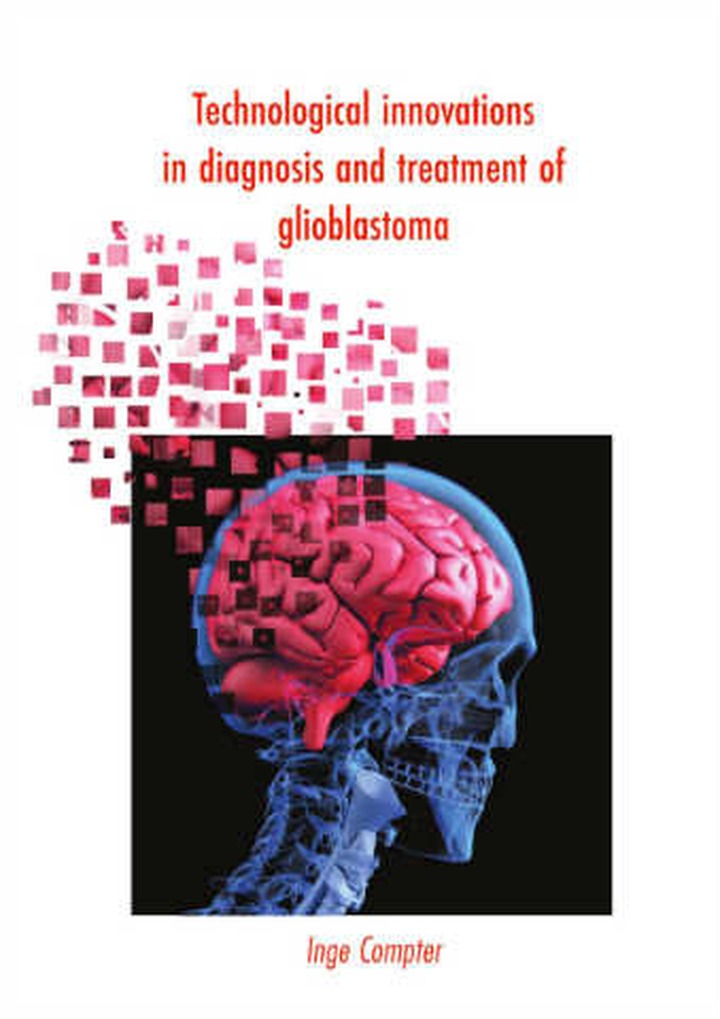


Technological innovations in diagnosis and treatment of glioblastoma
Gliomas are the most common type of primary malignant tumors of the central nervous system in adult patients, with an annual incidence of approximately 1200 patients in the Netherlands. Patients with a glioblastoma (GBM), the most aggressive type of glioma, are presented with a dismal prognosis. Despite aggressive multimodality regimens including surgical resection, radiation therapy and chemotherapy curation cannot be achieved, recurrence is inevitable and median overall survival is only 15 months. The prognosis for patients with a GBM has not improved significantly over the last 15 years, despite extensive research on how to tackle inter-and intratumoral heterogeneity. In this thesis several innovations in the diagnosis and treatment of GBM are investigated. Part I considers methods to monitor and predict treatment response which can be included into clinical decision support systems, which are developed in order to aid physicians and patients to choose an optimal treatment strategy. Decision support systems can include all available medical data such as patient demographics and comorbidities, tumor characteristics (both phenotypical and molecular) and treatment characteristics. Chapter 2 discusses the already established approaches as well as future diagnostics used for monitoring and prediction of treatment response in patients with a GBM, introducing the “noninvasive glioblastoma testing” (NIGT) platform. The NIGT platform consists of a multimodal diagnostic approach which tries to capture the complexity and heterogeneity of GBM with the use of conventional images techniques such as magnetic resonance imaging (MRI) and nuclear imaging, enhanced by computational approaches, and the development of circulating biomarkers. Upon initial presentation, standard imaging approach of GBM patients consists of both CT and MRI imaging. The advantages of CT scans over MRI imaging are that CT scans are relatively fast, cheap and widely available. In Chapter 3 a CT radiomics signature for survival in GBM patients treated by radiotherapy is described. This model was compared to two models based on important clinical parameters. The clinical model based on age and WHO performance status and radiomics model both demonstrated a comparable discriminative signature, which merits research to establish the additive value of CT radiomics. Using methods such as radiomics integrated in the NIGT platform, decision support models for GBM can be created both in the primary and the recurrent setting. This can guide clinicians in selecting the appropriate treatment strategy for patients with a GBM, so-called personalized medicine. Part II discusses relevant technical aspects of 7 Tesla (T) MRI for GBM and the necessary steps to integrate this into radiation treatment planning. Ultra-high field strength MRI result in a higher contrast-to-noise ratio compared to conventional high-field strength MRI at 1.5T or 3T that is widely available in diagnostic radiology. Chapter 4 reports on a preparatory study in which the technical feasibility of incorporating 7T MRI into the neurosurgical navigation and radiation treatment planning systems was investigated. The MRI scans were well tolerated by the volunteers. Regional loss of signal and contrast could be minimized by the use of dielectric pads. Image transfer and processing did not degrade image quality. However, susceptibility artefacts were observed in both the cortex and subcortical white matter at close proximity to air-tissue interfaces. The system-related spatial uncertainty of geometrical distortion-corrected MP2RAGE pulse sequences was ≤2 mm. In conclusion, the integration of high-quality and geometrically-reliable 7T MR images into neurosurgical navigation and radiation treatment planning software is technically feasible and safe. The geometrical accuracy of 7T MRI was further investigated in Chapter 5. This study aimed to investigate the clinical applicability of anatomical 7T MRI in comparison to 3T MRI and CT for reliable high-precision radiotherapy by evaluating the magnitude and location of hardware-related geometrical distortion. Three methods were applied: 1) global mean absolute deviation, 2) local mean absolute deviation and 3) Euclidean distances directly between the point of interest-coordinates in the image. System related geometrical distortion was present in all 3T and 7T MRI and increased with increasing distance from the magnetic isocentre, even though vendor provided correction methods and 2nd order 3D shimming were applied. Geometrical distortion of ≤1mm could be assured near the magnetic isocentre, but was larger in peripheral regions. This implies that 7T MRI can be applied for high-precision radiation treatment planning in central brain regions with clinically acceptable levels of spatial uncertainty, under the assumption that tissue-related geometrical distortion can be ignored. For peripheral regions, applying 7T MR protocols for radiation treatment planning should incorporate geometrical distortion in tumour-site specific planning target volume margins for treatment uncertainties. In Part III treatment aspects, specifically the safety of autophagy inhibition through the addition of chloroquine to chemoradiation for GBM in a phase Ib trial, are discussed. The lysomotropic drug, chloroquine, inhibits autophagy by blocking its final degradative step. This results in a reduction of hypoxic regions within a tumor, making the cells more susceptible to radiation treatment. Chapter 6 presents the results of a phase I trial in which chloroquine concurrent to radiotherapy and temozolomide is investigated in patients with a newly diagnosed GBM. Thirteen patients were included in the study. A total of 44 reversible adverse events, possibly related to chloroquine, were registered; including electrocardiogram QTc prolongation, irreversible blurred vision and nausea/vomiting. Median overall survival was 16 months, with the longest survival rates seen in EGFRvIII + mutated GBM. A daily dose of 200 mg chloroquine was determined as the maximum tolerated dose when combined with radiotherapy and concurrent temozolomide for newly diagnosed GBM. EGFRvIII was identified as a potential predictive biomarker. Favorable toxicity and promising survival in EGFRvIII + patients supports further clinical studies in GBM.
| Publicatiedatum | 13 oktober 2021 |
| Universiteit | Universiteit Maastricht |
| Auteur | Inge Compter |
| ISBN nummer | 978-90-9034643-4 |