Hooman h Eslami
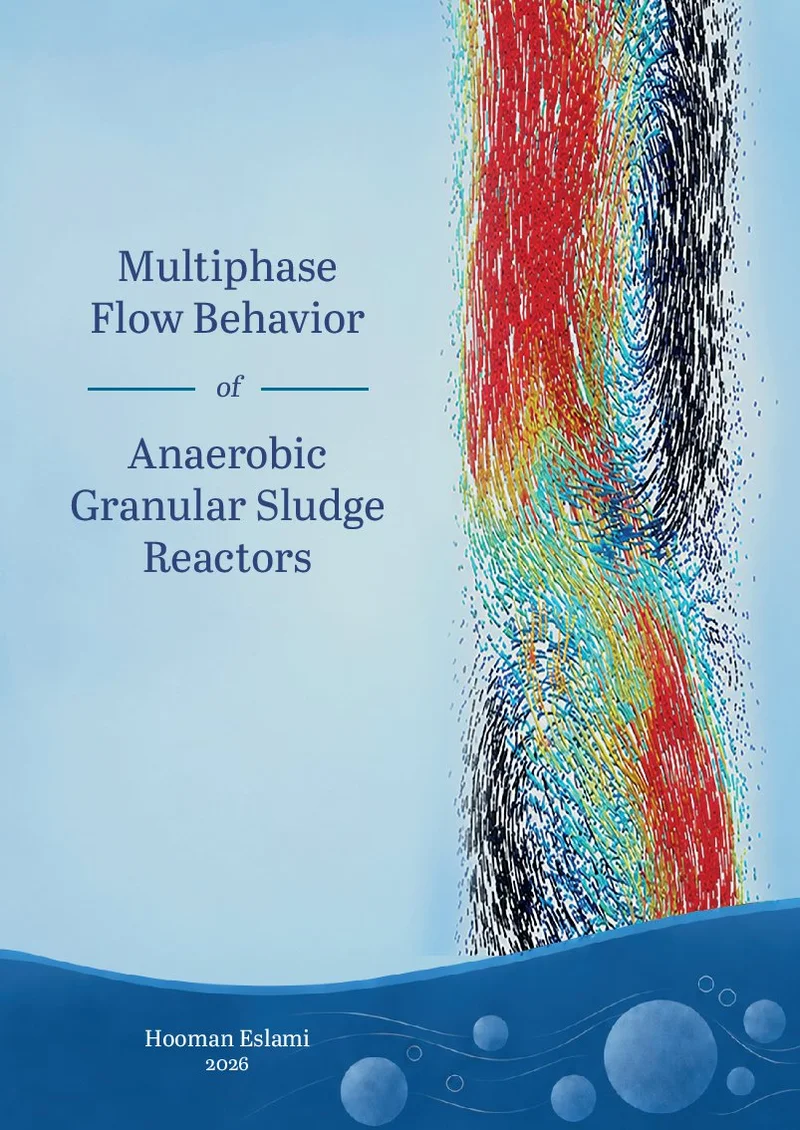


Multiphase Flow Behavior of Anaerobic Granular Sludge Reactors
Anaerobic granular sludge technology has become the cornerstone of high-rate anaerobic wastewater treatment, combining the removal of organic contaminants from wastewater streams with the productions of biogas. It has been successfully implemented for different types of industrial effluents across a wide range of sectors. Anaerobic granular sludge reactors (AGSRs) are characterized by a small footprint and the ability to operate at high volumetric organic loading rates. Maximum performance of these bioreactors is obtained when the reactor contains a high concentration of active granular biomass. This is achieved through the formation and development of anaerobic granules, which can be described as spherical biofilms formed without supporting carrier materials. These granules provide rich microbial diversity within a robust structure with good settling ability, high mechanical stability, and tolerance to environmental stresses (e.g., inhibitory compounds).
Among the many parameters influencing the formation and development of anaerobic granules, hydrodynamics plays a key role. During granule formation, hydrodynamic conditions control the hydraulic selection pressure, through which poorly structured flocs and dispersed biomass are washed out, while dense and well-settling aggregates are retained within the reactor. During granule development and maturation, local hydrodynamics in the vicinity of granules govern the shear stress and thereby abrasion and attrition and mass transfer at the granule surface. These phenomena affect the transport of substrates, nutrients, and metabolic products between the bulk liquid and the granule interior, thereby shaping the physical, chemical, and biological properties of granules.
Previous studies have suggested that specific hydrodynamic conditions enhance mass transfer and biogas production. However, hydrodynamics in AGSRs, which are three-phase systems, are not an independent phenomenon, but emerge from complex gas–liquid–solid interactions governed by multiple parameters. These parameters include wastewater characteristics, operational conditions, and reactor design. Therefore, before any optimization of hydrodynamics in AGSRs takes place, a mechanistic understanding of how these parameters affect reactor-scale hydrodynamics and how these conditions translate to granule-scale flow dynamics is required. Furthermore, the influence of local flow behavior on mass transfer and shear stress at the granule surface needs to be understood. However, such understanding has been constrained by the lack of experimental techniques capable of resolving local flow dynamics in three-phase systems, particularly at high solid concentrations. In this PhD thesis, experimental approaches were developed and applied to characterize local liquid velocity in lab-scale AGSRs and to elucidate how different hydrodynamic conditions influence granule properties under calcium-rich wastewater conditions.
Chapter 1 provides an overview of the current understanding of hydrodynamics in different AGSRs and reviews the experimental and modeling approaches used to characterize flow dynamics in these three-phase bio-reactors. Based on this review, it identifies the knowledge gaps and defines the research objectives of this thesis.
Chapter 2 presents the literature-based theoretical background on turbulence and transport phenomena in multiphase flows. It introduces the statistical description of turbulence and the different scales of turbulent motion. The chapter also discusses the main sources of turbulent velocity fluctuations in multiphase systems, including shear-induced turbulence and bubble- or particle-induced turbulence. This theoretical framework provides a basis to explain how turbulent velocity fluctuations influence mixing, mass transfer, and shear stress in anaerobic granular sludge reactors.
Chapter 3 evaluates the feasibility of experimentally resolving local flow dynamics in dense liquid–solid systems representative of the sludge bed/blanket region of AGSRs. To overcome the optical limitations caused by high solid concentrations, transparent hydrogel beads were used as model granules. A combined approach of refractive index matching (RIM), which completely eliminates the opaqueness of the suspension, and three-dimensional particle tracking velocimetry (3D-PTV) was successfully applied. This approach enabled non-intrusive measurement of three-dimensional liquid velocity fields within a reactor operated at model-granule volume fractions of up to 50%. The results demonstrated that the method can successfully capture local liquid flow dynamics under dense two-phase conditions, which were previously difficult to access experimentally. This enables us to investigate the effect of key influential parameters (e.g., granular sludge concentration) on the liquid velocity field and mixing performance in these reactors.
Chapter 4 extends the RIM–3D-PTV approach to gas–liquid–solid three-phase flow conditions by using the same model granules as in Chapter 3 and by introducing controlled gas flow through the reactors. These three phase conditions are characteristic of AGSRs. The study systematically investigated how gas superficial velocity, representing different biogas production rates, and model-granule volume fraction influence liquid velocity fields and mixing behavior. Flow measurements were conducted in a reactor operated at gas superficial velocities ranging from 0.01 to 0.1 cm/s and solid volume fractions ranging from 0 to 50%. The results showed that increasing gas flow generally enhanced the mean liquid velocity and increased the occurrence of extreme instantaneous velocities in both the axial and lateral directions. In contrast, increasing the solid volume fraction had a dual effect: both the mean liquid velocity and the likelihood of instantaneous high-velocity events initially increased to a peak value and subsequently decreased. Notably, the critical solid volume fraction and the corresponding peak mean velocity depended on the gas superficial velocity. For each tested operating condition, the axial dispersion coefficients, ranging from 4.1 × 10⁻⁵ to 2.4 × 10⁻³ m2/s, were higher than the radial dispersion coefficients, which ranged from 8.1 × 10⁻⁶ to 2.3 × 10⁻⁴ m2/s. Increasing GSV enhanced both axial and radial dispersion coefficients for all solid VOFs. At a constant GSV, the effect of increasing solid VOF on the dispersion coefficients varied with the applied GSV and differed between the axial and radial directions.
Chapter 5 investigates how local flow dynamics influence the evolution of anaerobic granule properties under calcium-rich wastewater conditions (400 mg/L Ca2+) as found in paper mills. Granule development was studied in two low-seeded, lab-scale reactors operated under distinct hydrodynamic conditions controlled by gas sparging, namely a high-shear reactor (HSR) and a low-shear reactor (LSR). The results were compared with granules developed in slow-mixing (shear-free), continuous reactors with all reactors operated under calcium-rich conditions. Three-dimensional liquid velocity fields in the reactors were quantified using 3D-PTV, allowing time-averaged velocity and shear fields, as well as turbulence characteristics, to be related to the evolution of granule properties, including size, morphology, mechanical strength, internal structure, calcification, and methanogenic activity. The flow measurements showed average liquid velocities of 0.075 and 0.043 m/s in the HSR and LSR, respectively, with corresponding average shear rates of 0.25 and 0.125 1/s. The average methanogenic activities of the developed granules were 0.65, 0.38, and 0.10 g CH4-COD/g VSS/day in the HSR, LSR, and shear-free reactors, respectively, suggesting considerably reduced intragranular mass transfer efficiency for granule developed under shear-free conditions. Although smaller granules were expected in the reactor with higher meso-scale shear (HSR), granules developed in the LSR were smaller (1–1.5 mm) than those developed in the HSR (1.5–2 mm) and exhibited a higher degree of calcification, with calcium contents of approximately 185 and 83 g Ca/kg dry weight, respectively. Statistical analysis of the turbulence characteristics showed that, although the HSR exhibited stronger velocity fluctuations and higher overall kinetic energy, the dominant turbulent eddy size at the granule scale was smaller in the LSR. These small-scale flow structures likely generated higher-frequency velocity fluctuations, resulting in increased mechanical stress at the granule surface and enhanced Ca2+ transport into the granule structure. The results indicate that turbulence characteristics within the reactor play a more decisive role than the mean bulk flow in determining granule properties. Moreover, beyond the intensity of turbulent fluctuations, their temporal frequency was identified as a critical parameter governing both shear stress and mass transfer at the granule scale.
Chapter 6 integrates the findings of this thesis with state-of-the-art advances in multiphase flow research and recent insights into how biofilm-flow interactions influence biofilm properties. The chapter identifies key hydrodynamic variables in three-phase AGSRs and discusses the potential mechanisms by which they govern granule properties and reactor performance. It focuses on the main parameters that can affect hydrodynamics in these systems, including the physicochemical characteristics of wastewater, operational conditions, and reactor design. The chapter explains how these parameters can influence key hydrodynamic variables, including mean liquid velocity, gas holdup, bubble characteristics and dynamics, and turbulence, through direct and indirect mechanistic pathways. Particular attention is given to turbulence as a key hydrodynamic variable that can regulate both mass transfer and shear stress at the granule surface. The chapter further emphasizes that hydrodynamic conditions at the reactor scale do not always represent the mechanical stresses experienced by granules. Therefore, studying the effect of hydrodynamics on granule development requires multiscale approaches.
| Publicatiedatum | 4 november 2026 |
| Universiteit | Wageningen University |
| Auteur | Hooman h Eslami |
| ISBN nummer | 978-94-6534-726-4 |
| DOI nummer | 10.18174/681531 |