Hilâl Ziylan Tekatli
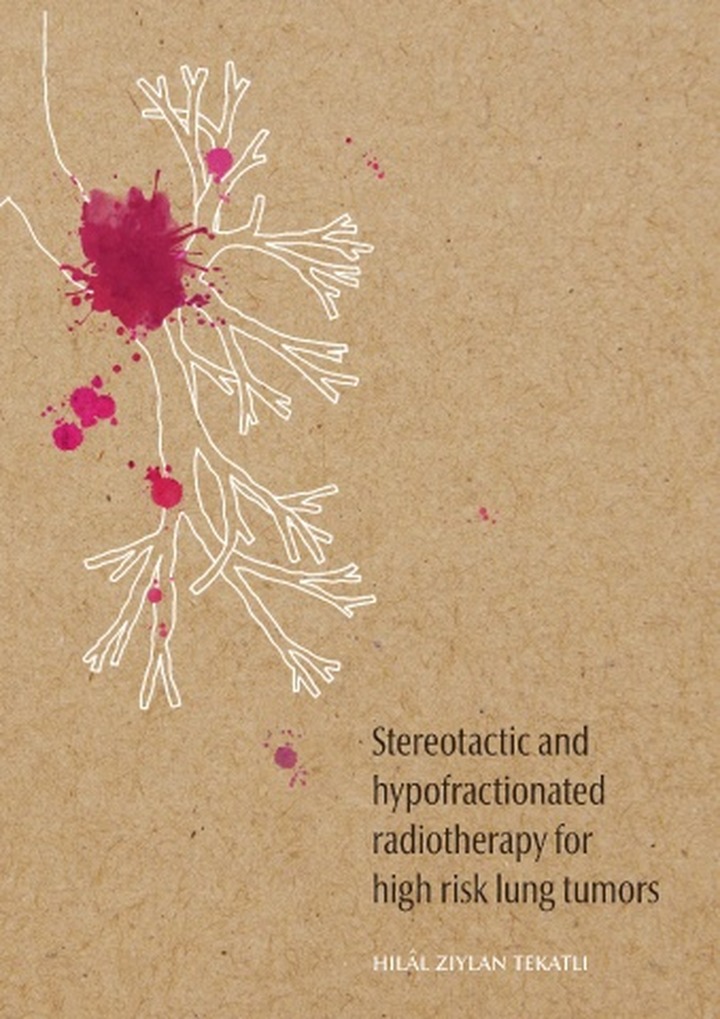


Stereotactic and hypofractionated radiotherapy for high risk lung tumors
This thesis describes the long-term outcomes and risks associated with the use of stereotactic ablative radiotherapy (SABR) and hypofractionated high dose radiotherapy in patients with lung tumors at a higher risk for treatment-related toxicity. The first chapter (Chapter 1) provides a general introduction to the epidemiology and treatment of lung cancer, as well as an outline of this thesis. The incidence of lung cancer has increased in recent years, especially in the elderly. Elderly patients and current or former smokers have generally higher rates of comorbidities, thereby increasing the risks of toxicity after guideline specified treatments. The introduction of SABR has resulted in a reduction in untreated elderly patients in the Netherlands. While SABR is now established in the treatment of peripherally located early stage non-small cell lung cancer (NSCLC), less data is available on outcomes when high risk lung tumors are treated with SABR or high dose hypofractionated radiotherapy, including centrally located lung tumors, large volume tumors, and patients presenting with multiple lung tumors. Chapter 2 is an Editorial Note highlighting the controversies and new insights into the curative treatment of early stage NSCLC. An overview is provided on all comparative effectiveness research performed in the Netherlands comparing SABR with a surgical resection in the treatment of stage I NSCLC, which shows a clinical equipoise between both treatment options in some patient groups. The following five chapters focus on centrally located lung tumors. In this thesis, central lung tumors have been subdivided into two groups. We have used the definition “moderately central” for tumors with a planning target volume (PTV) located within 2 cm in all directions of the proximal bronchial tree, and “ultracentral” tumor location has been used for tumors with a PTV overlapping the trachea or main stem bronchi (Figure 1, Chapter 1). In Chapter 3, treatment plans and long term clinical outcomes were described for 80 patients with a moderately central lung tumor, who were treated with SABR delivered in 8 fractions of 7.5 Gy at our institution between 2008 and 2013. A volumetric modulated arc therapy (VMAT, RapidArc) was used in all patients. Underdosage to the PTV was observed in only 4% of patients, all of whom had tumors adjacent to the esophagus or brachial plexus. The majority of patients exceeded dose limits for 1 or more normal organs, which were defined in the prospective trials RTOG 0813 and LungTech. Grade 3 or higher toxicity was seen in 11% of patients, and fatal toxicity was uncommon (5%). After a median follow-up time of 45 months, the median overall survival was 38 months, which was similar to a contemporaneous cohort of patients who were treated with three or five fractions of SABR for a peripheral tumor. The latter had a median survival of 44 months after a median follow-up time of 47 months. Chapter 4 describes an institutional analysis of outcomes in patients with an ultracentral NSCLC. A total of 47 patients were identified between 2010 and 2015, all of them were ineligible for other treatment options, and were treated using a hypofractionated schedule of 12 fractions of 5 Gy with a heterogeneous dose distribution. An endobronchial tumor extension was present in 53% of patients, and a substantial proportion of patients had stage IIB (30%) or stage IIIA (38%) disease. All patients completed the planned treatment. PTV Dmax was at least 123% of the prescription dose (i.e. ≥73.8 Gy) in all treatment plans, and doses delivered to normal organs were detailed described. The median overall survival was approximately 16 months in this unfit patient population after a median follow-up time of 29 months. Isolated local recurrences were not observed, and regional and distant failure rates were 11% and 26%, respectively. Grade 3 or higher toxicity was observed in 38% of patients (range 0.2-41 months post-treatment). In total, ten deaths (21%) were considered as being “possible” or “likely” treatment-related, and a fatal lung bleeding was observed in 15% of patients. The latter manifested most commonly ≥12 months after treatment, and among patients who developed a fatal lung haemorrhage, 43% had an endobronchial lesion. Three out of the 4 patients with pre-treatment interstitial lung disease (ILD), developed a fatal lung haemorrhage. We concluded that the 12 fractions schedule is a short, patient-friendly treatment option in patients in a poor condition, and who did not have ILD. Although some tumor specific characteristics itself may predispose to high toxicity rates, a contribution of the high maximum point doses in the PTV could not be excluded, and more homogenous dose distributions within the PTV might therefore be justified. In recent years, several prospective trials were open with the aim of identifying normal organ tolerance doses for central lung tumors. Data from institutions where patients were treated outside a clinical trial setting may be contributory. In a letter (Chapter 5), we clarified our institutional guidelines for the treatment of central lung tumors which were incorrectly interpreted by a clinical trial protocol. The limited patient numbers at our institution precluded a more comprehensive statistical analysis to identify predictors for toxicity. In Chapter 6, we combined dosimetric, radiographic, and clinical data of 195 patients with a moderately central or ultracentral tumor who were treated at the VU University Medical Center (VUmc) and Erasmus Medical Center (EMC) between 2006 and 2015. SABR or high dose hypofractionated radiotherapy was delivered using 12 or fewer fractions. A substantial part of the patients had a Charlson comorbidity index of 3 or more (48%), an endobronchial tumor location was present in 16% of patients, and 33% had an ultracentral PTV. Evaluation of follow-up CT scans revealed that radiographic bronchial toxicities (stenosis or occlusion) were present in 28% of patients. High grade radiographic toxicity (i.e. an occlusion with or without atelectasis) was observed in 18% of patients, mainly in the lobar bronchi. Clinical grade 3 or higher pulmonary toxicity was observed in 12% of patients. Only two patients had severe clinical signs of a bronchus obstruction, both with an ultracentral PTV location. Grade ≥3 lung haemorrhage was observed in 7%, and an endobronchial or ultracentral lesion was present in 46% and 70% of them, respectively. A fatal lung haemorrhage was the most common treatment-related death (6%). There were no significant correlations between a radiographic and clinical pulmonary toxicity, and both toxicities mainly manifested within 12 months post-treatment. Dosimetric parameters were evaluated for 585 bronchial structures. Univariable logistic regression analyses revealed that all analyzed dosimetric parameters were significantly correlated with both clinical and lobar radiographic toxicity. Whereas the V130GyIEQD had the highest odds ratio (OR) for both toxicities, the maximum point dose (DmaxIEQD) had the lowest OR, and all normal tissue complication probability (NTCP) models showed a volume dependency. A multivariable analysis with both clinical and dosimetric covariates revealed that significant predictors for high grade clinical pulmonary toxicity were an ultracentral PTV location, COPD, and the total V130GyIEQD in the bronchial structures. These results confirm our earlier finding of ultracentral tumors being a subgroup at highest risk for severe toxicity development after high dose radiotherapy, and in particular for severe lung haemorrhage. Esophageal toxicities are more common in patients treated with conventional radiotherapy, especially when combined with systemic therapies. In Chapter 7, we studied the dose and volume parameters associated with acute esophagus toxicity in a total of 231 patients treated with 12 or fewer fractions for a moderately central or ultracentral tumor at the VUmc and EMC. Severe esophageal toxicity was uncommon in this large study population, with an incidence of 17% for grade 1-2 acute esophagus toxicity and no grade 3 to 5 toxicities observed. On univariable regression analysis, esophageal Dmax, D1cc, D2cc, and D5cc were all significantly correlated with acute grade 1-2 esophagitis, with the D5cc having the highest OR. NTCP analysis showed a 50% probability for acute grade 1 or 2 toxicity at a Dmax of 67 Gy (in 2 Gy per fraction with an α/β ratio of 10) and a D5cc of 30 Gy (in 2 Gy per fraction with an α/β ratio of 10). The last studies of this thesis focus on two remaining groups of patients at higher risk for radiation toxicity; patients with large volume tumors and patients presenting with multiple lung tumors. In Chapter 8, long-term outcomes were described for 63 patients with a primary NSCLC who were treated for a tumor measuring more than 5 centimeter in largest axis at our department between 2003 and 2014. We identified a selected group of patients who constituted of only 6% of our institutional lung SABR population treated for a primary lung tumor during that period. Most of the patients had stage IIA disease (81%), and pre-treatment radiological signs of lung emphysema and interstitial lung disease were present in 60% and 13% of patients, respectively. Median PTV was 135.5 cc, and SABR was delivered in five (35%) or eight (65%) fractions. After a median follow-up time of 55 months, median overall survival was 28 months for all patients. While local (6%) or regional (6%) recurrences were uncommon, 19% of patients had distant failure. Grade 3 or higher toxicity was observed in 30% of patients, at between 1 to 43 months after SABR, with 42% of the latter manifested ≥12 months post-treatment. Fatal toxicity, including fatal lung haemorrhage, developed in 19% and 5% of patients, respectively. Patients with comorbidities or interstitial lung disease were at a higher risk for severe toxicity. On univariable analysis, grade ≥3 radiation pneumonitis was significantly more observed in patients with ILD and in patients with a WHO performance score of 2 or 3. A percentage of 63% of patients with ILD developed fatal toxicity. In Chapter 9, we identified 84 patients (with a total of 188 metastatic or primary NSCLC lesions) from the VUmc and the London Health Sciences Centre (LHSC), who were synchronously treated for more than one lung lesion with multi iso-center SABR delivered using VMAT. VMAT allows for shorter treatment delivery compared to conventional static beam plans, which is more convenient for patients with multiple lesions. In this pooled analysis, grade 3 or higher toxicity occurred in only two patients (2%). Grade ≥2 radiation pneumonitis was observed in 11% of patients. In a multivariable analysis including both clinical and dosimetric parameters, grade ≥2 radiation pneumonitis was predicted by the presence of a primary NSCLC and a total lung V35Gy of 6.5% or more (in 2 Gy per fraction with an α/β ratio of 3). As the majority of our patients had two or three tumors, these findings could not be extrapolated for patients with more tumors.
| Publicatiedatum | 5 juni 2018 |
| Universiteit | Vrije Universiteit Amsterdam |
| Auteur | Hilâl Ziylan Tekatli |
| ISBN nummer | 978-94-6361-089-6 |