Hamidreza Raeisidehkordi
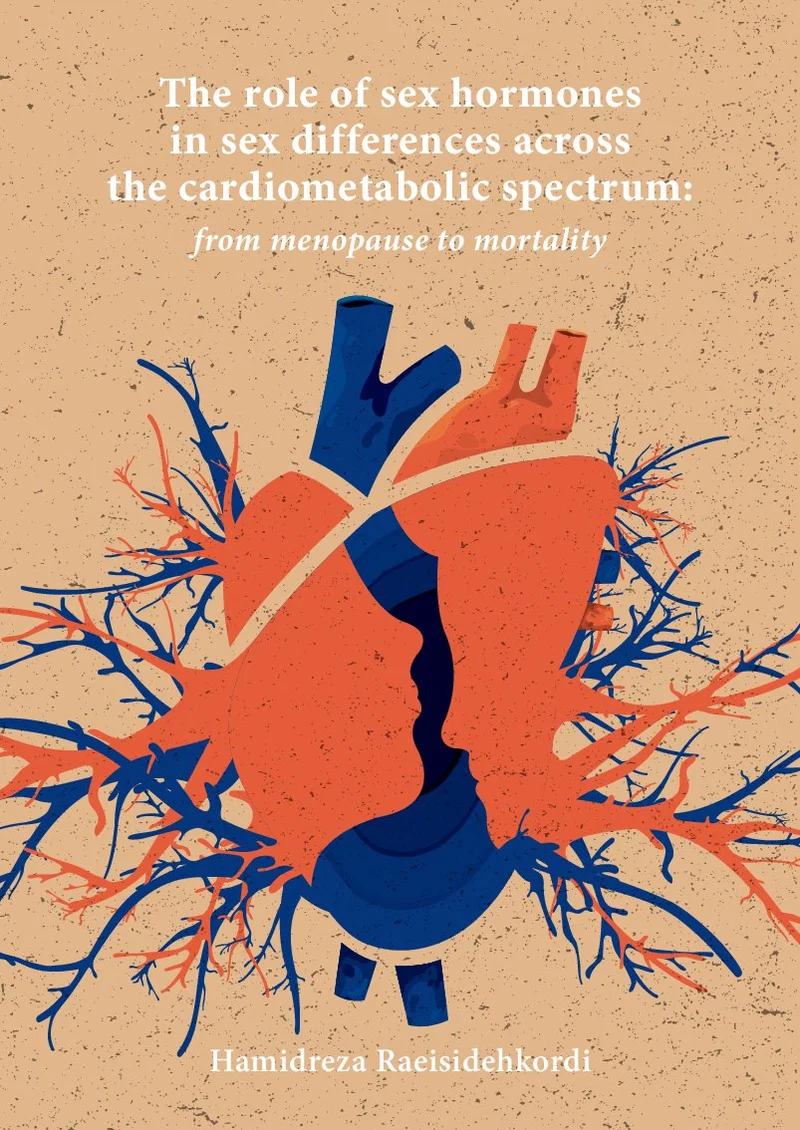


The role of sex hormones in sex differences across the cardiometabolic spectrum: from menopause to mortality
Sex differences in cardiometabolic diseases are well documented, yet the biological mechanisms underlying these differences remain incompletely understood. Endogenous sex hormones and sex hormone–binding globulin (SHBG) have been proposed as important contributors, given their central role in metabolic regulation and cardiovascular physiology. This thesis aimed to investigate the role of endogenous sex hormones and SHBG across the life course, from the menopausal transition to mortality, in relation to cardiometabolic health.
Chapter 2 of this thesis presented a systematic review of risk prediction models for natural menopause. Menopause represents a major reproductive transition in women and is increasingly recognized as an independent risk factor for cardiometabolic diseases later in life. By evaluating existing prediction models for the onset of menopause, this work highlighted both the potential and the current limitations of these approaches in identifying women who may experience earlier or later menopause. Improving such predictive tools could enhance our understanding of individual risk assessment and its implications for long-term cardiometabolic prevention strategies.
Chapters 3 to 5 examined whether endogenous sex hormones and SHBG contribute to explaining sex differences in cardiometabolic risk factors and diseases. Using population-based data from the KORA study, we investigated the associations between sex, circulating hormone concentrations, and key cardiometabolic outcomes, including glucose homeostasis, type 2 diabetes, and cardiovascular disease. A mediation analysis framework was applied to explore the complex relationships between sex, sex hormones, cardiometabolic intermediates, and clinical outcomes. This approach allowed us to assess the extent to which differences in endogenous hormone levels and SHBG may explain observed sex differences in cardiometabolic health. Our findings suggest that the role of androgens and SHBG may be context-dependent and varies across vascular beds and disease types, indicating that their effects cannot be generalized across different forms of cardiovascular disease.
In Chapters 6 and 7, we synthesized existing epidemiological evidence on the associations between circulating sex hormones, SHBG, and mortality. Through systematic reviews and meta-analyses of prospective cohort studies, we evaluated the relationships between hormone levels and both all-cause and cause-specific mortality in the general population as well as among patients with established cardiovascular disease, an area that had not previously been comprehensively synthesized. These findings contribute to the growing body of evidence suggesting that circulating sex hormones and SHBG may serve as markers of overall health status and long-term disease risk.
Finally, Chapter 8 integrates the findings of this thesis and discusses their broader implications for research and clinical practice. It also outlines important methodological considerations and highlights directions for future research to address remaining knowledge gaps regarding the role of sex hormones in cardiometabolic health across the life course.
| Publicatiedatum | 7 december 2026 |
| Universiteit | Universiteit Utrecht |
| Auteur | Hamidreza Raeisidehkordi |
| ISBN nummer | 978-94-6534-923-7 |
| DOI nummer | 10.33540/3820 |