Share this project
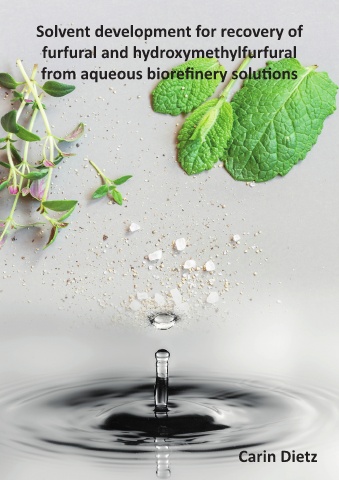
Carin Dietz
Overig
Publication date: 28 juni 2019
University: Overig
ISBN: 978-90-386-4749-4
Solvent development for recovery of furfural and hydroxymethylfurfural from aqueous biorefinery solutions
Summary
Our society strongly depends on depleting fossil fuels. Thus, renewable resources should be found to make products. For example, from biomass we can obtain many platform chemicals like furfural (FF) and hydroxymethylfurfural (HMF), which can be used as a chemical building block for pharmaceutical precursors, lubricants, adhesives, solvents and plastics.
With the current state of the art, (hemi-) cellulose can be hydrolyzed into monosaccharides, which can be further converted into FF and HMF. This process results in diluted aqueous acidic solutions with a relatively small fraction of FF and HMF. Subsequently, a separation step is required to obtain the desired monosaccharides, preferably in higher concentrations. Common separation methods often include one or more distillation steps, resulting in high energy consumptions, or require organic solvents as extracting agents. A major drawback of the use of organic solvents is their relatively high volatility and toxicity, posing possible risks for safety, health and environment.
Alternative separation methods are desirable for the sustainable production of FF and HMF from biomass. New biobased solvents, so-called deep eutectic solvents (DESs), have been recognized as interesting alternatives to replace organic solvents currently used in research and the chemical industry. Their main advantage is their negligible vapor pressure. Additional advantages of the new biobased solvents are their biodegradability, non-toxicity, tunability and their easy preparation, which makes them relatively cheap. This thesis focuses on the development of new biobased solvents for one specific application: to extract FF and HMF out of aqueous solutions.
In Chapter 2 the solubility of different sugar-derived molecules was experimentally determined in six different DESs. The Kamlet-Taft parameters of the DESs were determined and correlations with the solubility data were established. Moreover, thermophysical properties such as viscosity and decomposition temperature were measured. The hydrophobic DES, deca-N8888Br, had the most interesting solubility properties and was found to be a promising extractant for selective extraction of FF and HMF from aqueous solutions.
Subsequently, 507 combinations of different constituents were screened for DESs formation in Chapter 3. All their physicochemical properties were measured. Their sustainability and future use was investigated on the basis of four main criteria: the density difference with water, a sufficiently low viscosity, the amount of DES that transfers to the water phase and the pH of the water upon mixing. Five newly developed DESs Thy:Cou (2:1), Thy:Men (1:1), Thy:Cou (1:1), Thy:Men (1:2) and 1-tdc:Men (1:2) satisfied all four criteria.
In Chapter 4, head-space gas chromatography mass spectrometry (HS-GC-MS) was used for the first time to measure the total vapor pressure of hydrophobic DESs and the partial pressure of each DES constituent. Moreover, activity coefficients, enthalpies of evaporation and Arrhenius activation energies for fluid displacement were obtained and correlated to the measured vapor pressure data. It was confirmed that the total vapor pressures of the hydrophobic DESs are very low in comparison to those of commonly used volatile organic solvents like toluene. Finally, the total vapor pressures of the hydrophobic DESs were successfully predicted with Perturbed-Chain Statistical Associating Fluid Theory (PC-SAFT).
The new hydrophobic DESs were applied as extracting agents for FF and HMF in Chapter 5. Diffusion coefficients of ten different hydrophobic DESs were tested and compared to the benchmark toluene. It was found that the hydrophobic DESs selectively extract FF and HMF from aqueous solutions without extraction of sugars with comparable or better distribution coefficients compared to toluene.
In Chapter 6 the effects of different acid concentrations, temperatures and solvent-to-feed ratios on the reaction yield of xylose to FF was measured. Fifteen organic solvents were screened to extract FF out of aqueous solutions. To determine the effect of solvent addition on the reaction yield, the two best extraction solvents, two solids and four hydrophobic DESs were added to the reaction mixture and the yield of FF, conversion of xylose and the degradation of FF as a function of time were measured. Almost all solvents decrease the degradation of FF except toluene and some solvents lead to a 3 times higher production yield.
In Chapter 7 twelve different supported DES liquid membranes were prepared and characterized and introduced to the literature for the first time. It was observed that the addition of the DES enhances the transport of FF and HMF through the polymeric membrane support and that the supported liquid membranes (SLMs) are interesting for (in situ) isolation of FF and HMF from aqueous solutions, e.g. in biorefinery processes.
Finally, Chapter 8 presents a comparison of the three different extraction techniques: liquid-liquid extraction after reaction, in-situ extraction and SLMs. Moreover, the recovery of the solvents was investigated.
Overall, it can be summarized that the new biobased solvents are a good alternative to replace the organic solvents. They are tunable, more sustainable, less volatile, cheaper, less prone to degradation of FF. This all leads to an increase of the production yield and process efficiency.
See also these dissertations

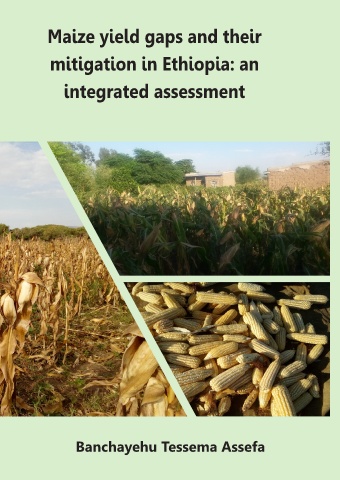
Banchayehu Assefa
Maize yield gaps and their mitigation in Ethiopia: an integrated assessment
14 maart 2023
Wageningen University
Open EbookSuratno, B.
A Method for Operationalizing Service-Dominant Business Models
17 maart 2020
TU Eindhoven
Open EbookBaljinnyam Sereeter
Mathematical formulations and algorithms for fast and robust power system simulations
18 maart 2020
TU Delft
Open Ebook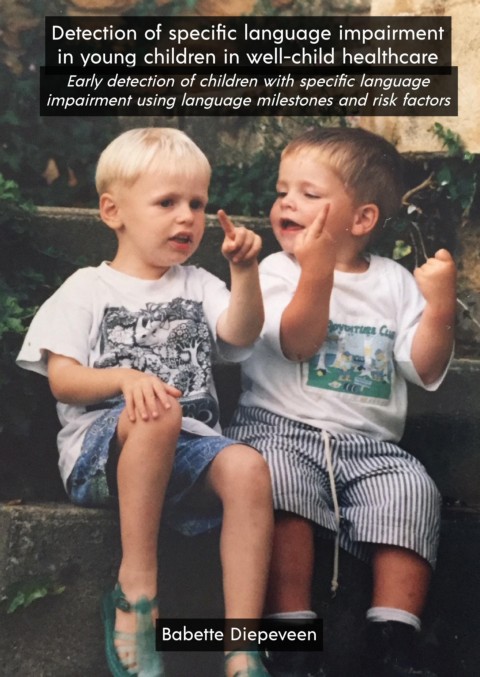
Babette Diepeveen
Detection of specific language impairment in young children in well-child healthcare
24 januari 2019
Universiteit Leiden
Open Ebook
Babette Becherer
OPTIMIZING QUALITY AND SAFETY OF BREAST IMPLANT SURGERY
17 november 2021
Erasmus Universiteit Rotterdam
Open Ebook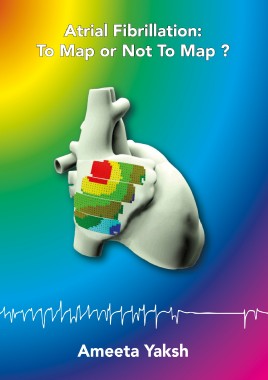
Ameeta Yaksh
Atrial Fibrillation: To Map Or Not To Map
25 november 2016
Erasmus Universiteit Rotterdam
Open Ebook
Arjan Rauwers
Bacterial Contamination of Complex Flexible Gastrointestinal Endoscopes
27 oktober 2023
Erasmus Universiteit Rotterdam
Open EbookWe print for the following universities