Suratno, B.
A Method for Operationalizing Service-Dominant Business Models
17 maart 2020
TU Eindhoven
Open Ebook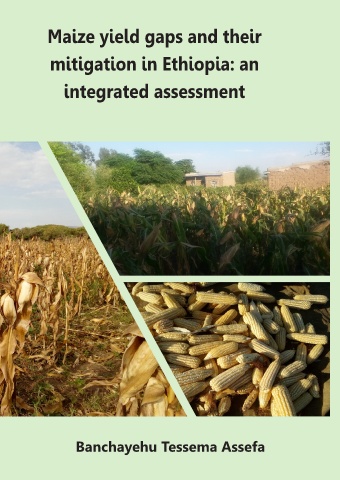
Share this project
Summary
Improving agricultural production in Africa is essential given its growing population and agriculture’s significant contribution to employment, food security, GDP and foreign exchanges. Agricultural extensification (increase in agricultural land area) and intensification (increase in production per unit of land) are the two major alternative strategies to increase agricultural production. Extensification, however, has environmental consequences (greenhouse gas emissions, competition with biodiversity aims and resource depletion). In addition, land is a scarce resource and it has other competing uses (e.g., industrial, residential and conservation). Accordingly, narrowing the so-called yield gaps of crops through agricultural intensification has been considered as the major component of strategies that aim to increase food production in the context of growing food demand. Yield gaps are defined as the difference between farmers’ yields and the yield potential under either rainfed or irrigated conditions. The latter assumes perfect management.
Ethiopia has achieved the second highest maize productivity in Africa. However, maize yields are still far lower than on-farm and on-station trial yields, and only 20% of the estimated water-limited potential yield. The major aim of the thesis was to explain actual farmers’ maize yields and maize yield gaps along with the associated technologies and management practices used in maize production in Ethiopia, to support the development of innovations and policies that enhance productivity and food security of smallholder maize farms. Under this general objective, the thesis aimed at addressing four specific objectives: 1) examining the drivers of maize yields and yield gaps by decomposing yield gaps into efficiency, resource, and technology components; 2) estimating the maize yield response to nitrogen fertilizer by incorporating detailed field characteristics, inputs, and biophysical conditions, and evaluating fertilizer profitability under different risk assumptions; 3) better understanding the factors associated with the usage of different technologies and management practices, and estimating the impacts of these choices of usage on maize yield and labor productivity, and 4) examining whether there is a trade-off between maize productivity and farm-level crop diversity. The thesis adopted an integrated production-ecological and socio-economic perspective and methodological approach.
Chapter 2 provided a national level analysis of maize yield drivers and maize yield gap decomposition into efficiency, resource and technology components using detailed field and farm level variables. Stochastic frontier analysis was combined with concepts of production ecology to explain maize yield, to estimate efficiency and resource yield gaps. Water-limited potential yield was accessed from the Global Yield Gap Atlas and used to estimate the technology yield gap. The chapter showed that most of the maize yield explaining factors were consistent with agronomic theory. Maize yield levels and yield gaps varied across maize varieties, soil types, farming systems and production year. The average efficiency yield gap was about 44%. This indicated that maize yield could be enhanced by 44% by improving existing crop management practices without additional input. The efficiency yield gap comprised 18% of the total estimated maize yield gap. The average resource yield gap (difference between highest farmers’ yield and technically efficient yield) was about 20% of the total maize yield gap, and is explained by sub-optimal input use, mainly pesticides and nitrogen. The average technology yield gap (difference between water-limited potential yield and highest farmers’ yield) comprised the largest part of the yield gap, at 63%, implying that theoretically existing technologies were not available in practice or not fully utilized by Ethiopian maize farmers.
In Chapter 3, yield response to fertilizer use was estimated by considering potential interaction effects with other inputs and management practices. In addition, fertilizer profitability was evaluated at different levels of assumed risk aversion. Fertilizer use was relatively high compared to other countries in Sub-Saharan Africa. On average, nitrogen (N) use was 88 kg N/ha, with 10th and 90th percentiles of 4 and 178 kg N/ha, respectively. However, actual N use was below the economic and agronomic optimum N levels. The agronomic optimum ranged from 0 to 344 kg/ha with a mean value of 209 kg/ha. The average economic optimum level was 145 kg N/ha, but approaches the average observed level of 88 kg N/ha when we account for risk aversion, as then the optimum decreased to 80 kg N/ha on average. Yield response to N was conditional on other inputs and management practices. The average physical product (average yield gain from using fertilizer) was 9.8 kg maize /kg N. On average, the marginal physical product (average additional yield due to an extra unit) of nitrogen was 7.3 kg maize/ kg N, ranging from -6 to 18 kg maize/kg N. This indicated the possibility to increase maize yield by increasing nitrogen input, and confirms that on average the agronomic optimum has not been reached. Fertilizer profitability was evaluated using average physical product and marginal physical product of fertilizer. Fertilizer use was on average profitable for both risk neutral and risk averse fertilizer users (with an average value cost ratio of 1 and 2, respectively). However, profitability was highly variable across the maize fields investigated. The implication is that policies need to target site-specific interventions through detailed local information on management practices, field characteristics and market conditions.
In Chapter 4 major technologies and management practices in Ethiopian maize production were described and their association with maize yield and labor productivity was investigated. Fertilizer, improved variety, crop protection (pesticide, herbicide), manure and integrated management (intercropping, crop rotation and crop erosion) were the technologies and practices studied. The technologies and management practices were studied both individually and as packages. The results showed that technologies and management practices were used both as complements and substitutes. The factors that explained the technologies and management practices varied across the practices studied. Fertilizer and improved varieties were used in combination on 85% of the maize fields, reflecting the progress made in using these technologies as a package. Using fertilizer and improved varieties in combination with other technologies and practices did not always lead to better yield. The maximum yield gain (22%) was found when fertilizer, improved variety, crop protection and integrated management were used in combination. Maize yield was lower when manure was used in combination with fertilizer and improved varieties, which was not as expected from an agronomic point of view. Manure quality and quantity may explain this unexpected result, which needs further investigation. Combining crop protection practices with any of the other practices/packages resulted in higher labour productivity. On the other hand, labour productivity decreased when manure and integrated management were used in combination with fertilizer and improved varieties, indicating that manure and integrated practices were labour demanding. The average maize yield achieved using the various technologies and management practices was much lower than the water-limited potential yield that can be achieved given local biophysical conditions. This gap suggests that the technologies and management practices were not used in their optimal manner and/or tailored to the local conditions. Additional detailed study on implementation of the technologies and practices may give insight to explain why the practices failed to give larger yield gains.
In Chapter 5, the factors that determined crop diversity decisions in maize-based systems were explained, and the trade-offs between crop diversity and maize technical efficiency and (net and gross) value of crop production were assessed. On average, households allocated two-thirds of their total cultivated land to maize production. Households produced an average of two crops, ranging from one to six crops. Simpson’s diversity index showed that households had moderate crop diversity; the average diversity index of the households was 0.38, while it could range between zero (complete specialization) to one (maximum diversity). Keeping other things constant, crop diversity was negatively related with asset values, and female headed households had lower crop diversity. Crop diversity was positively associated with farm size, extension visits and rainfall variability in the previous season. Stochastic frontier analysis showed that maize technical efficiency and crop diversity were negatively associated, indicating that the farmers who were most technically efficient in maize tended to produce less diversified crop portfolios. Both net and gross value of production were negatively associated with crop diversity. This suggested that maximizing the value of crop production is not the primary purpose of crop diversification. This idea is in line with crop diversity as a risk management strategy, as indicated by the positive association between diversity and rainfall variability. Taking these results together suggests that this form of risk reduction comes at the cost of lower expected value of production, while specializing in maize gives increased economic returns in expectation (but possibly with greater variance across seasons).
This thesis provides a comprehensive analysis of drivers of maize yield and yield gaps in Ethiopia. The thesis concludes (Chapter 6) that decomposing the yield gap into efficiency, resource and technology components is relevant to guide policy design and implementation. The technology yield gap comprised about two-third of the total maize yield gap, which is of strategic importance and can be addressed through improved agricultural research to identify the gap between theory and practice with regard to technologies in maize production. Actual nitrogen use rates in the study sample were far below the estimated agronomic and economic optimum nitrogen levels (i.e., the levels at which agronomic and economic returns to usage were highest). However, taking farmer risk aversion into account explained much of the discrepancy between observed nitrogen use rates and the rates at which economic returns would be maximized. Addressing risk along with an improved fertiliser supply chain may help to raise fertiliser use rates. Raising nitrogen use efficiency through better management would also help to make fertilizer more profitable, ceteris paribus. However, clearly identifying and promoting the uptake of better management is not always straightforward. As Chapter 4 shows, using complementary management technologies and practices in recommended combinations does not always lead to higher maize yields, indicating that technologies and management practices may not be practised optimally and/or not tailored properly to the local conditions in ways that are difficult to measure precisely with existing survey data. While more analysis on the management practices and technology and empirical work on the implementation by smallholders is clearly needed, the analysis assembled in this thesis strongly indicates that farmers make agronomic management decisions which are informed by economic and other non-agronomic considerations. Profitability and risk seem to be key factors. Agronomic policy and investments should seek to integrate these factors into efforts to improve agricultural productivity through better agronomic practices.