Ameeta Yaksh
Atrial Fibrillation: To Map Or Not To Map
25 november 2016
Erasmus Universiteit Rotterdam
Open Ebook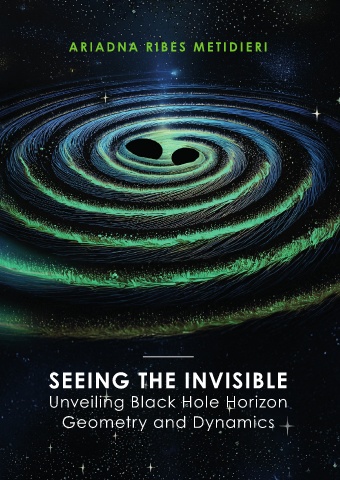
Share this project
Summary
remains valid even in the nonlinear regime. In short, we have taken a step toward “seeing” the horizon and unveiling what was previously hidden. The following sections summarize the key findings from each part (I-V) of this thesis.
From Observations to Innovative Tools for Modeling Nature
In Part I, we reviewed the current status of GW astronomy and the first direct observations of black holes, which began a decade ago. The field has experienced rapid progress with the advent of new GW detectors, generating great excitement. In the coming decades, one of the primary goals will be to test GR in the strong-gravity regime, but we are not yet fully prepared. Challenges remain, both in terms of technological advancements and data analysis, as well as from a theoretical perspective.
A crucial development needed in the coming years is a more accurate description of black holes in interaction. Achieving this goal requires new tools, some of which we introduced in Chapter 2. We adopt a horizon-centered perspective, leveraging the quasi-local horizon framework to rigorously describe black hole geometry. Additionally, we introduced the Newman-Penrose formalism, particularly useful for analyzing null directions, which plays a central role in our work. The characteristic initial value formulation was also introduced—this framework, based on intersecting null hypersurfaces, allows us to construct the near-horizon geometry and ensure that the field equations are well-posed in the neighborhood of the horizon. Finally, we explored catastrophe theory and its applications to GR.
Perturbations of quasi-local horizons
Parts II and III of this thesis develop perturbative extensions of the quasi-local horizon framework to account for the presence of matter, gravitational radiation, and the corresponding response of the horizon to these external fields. We began by considering an adiabatic perturbation of an IH induced by a nearby matter source. In this tidal regime, the timescale of variation of the tidal field is much longer than the black hole’s response time, allowing us to model the perturbation as static. We show that such perturbations modify the mass and angular momentum multipole moments of the horizon without altering the black hole’s overall mass and spin. Crucially, we identify the Weyl scalar Psi 2 as the key quantity encoding the black hole’s response. This scalar plays a dual role: On the one hand, it describes the external tidal field produced by the companion’s mass distribution, related to the effective gravitational potential through
U = 2 int dr' int dr'' Re Psi 2 (r'') . (8.1)
On the other, Psi 2 governs the geometry of the horizon cross-section, thereby determining the horizon’s mass and spin multipole moments.
This formalism provides a transparent link between the surficial Love numbers (which quantify the surface deformation of the black hole) and the field Love numbers (which describe how this information propagates into the surrounding spacetime). While field Love numbers vanish for a black hole in a static tidal field, the surficial Love numbers do not. This means their induced higher-order multipole moments influence the “shape” of the horizon (and consequently, the geodesics of the tidally perturbed spacetime). This does not violate the no-hair theorem or the stronger Birkhoff’s theorem (for the non-rotating black hole), as both apply strictly to stationary black holes in isolation. When subjected to external perturbations, the black hole’s multipole moments temporarily deviate from those of Kerr, but once the interaction ceases, the black hole is expected to relax back into a Kerr state. Thus, if GR accurately describes our Universe, both the initial and final states of the black hole must belong to the Kerr family. Ironically, black holes become observationally accessible precisely in the moments when they are not described by the Kerr solution.
Our approach remains valid as long as the black hole horizon can be approximated as isolated and the tidal deformation remains perturbative. Numerical simulations of merging black holes confirm that, throughout most of the inspiral, the infalling flux of GWs is small, as is the tidal distortion. Thus, our framework should be applicable up until the final few orbits before the merger. The next logical step was to relax the assumption of strict horizon isolation by allowing a small flux of GWs to be absorbed. When this happens, the horizon geometry reacts. If the absorbed flux remains small over a short timescale, the black hole’s area, mass, and angular momentum remain unchanged, but the higher multipole moments, which determine the “shape” of the horizon, are modified. This response occurs both during the inspiral and the ringdown phases of a black hole merger. In Part IV, we focused on the ringdown phase, neglecting the tidal effects of the companion examined in Part III. In this context, we find that the outgoing GW signal consists of a superposition of QNM frequencies. We show analytically that the infalling radiation shares the same QNM structure, and this imprint is reflected by the horizon’s response. This constitutes the first explicit construction of perturbative black hole tomography: given the GW modes observed in the wavezone, we can reconstruct the geometry of the black hole horizon. This challenges the belief that only the lightring is accessible through GW observations [232]. In other words, we have shown that “the invisible” can be seen.
A natural question is how this result extends beyond linear perturbation theory. To address this, we analyzed fully nonlinear numerical simulations of dynamical black holes, focusing on the horizon geometry immediately following the merger of two black holes. Examining the post-merger horizon, we identify quadratic QNM excitations, both in the horizon geometry and the infalling radiation. Remarkably, these nonlinear modes coincide with those previously reported in studies of the GW signal in the wavezone. This provides strong evidence that black hole tomography extends beyond the linear regime, opening new avenues for probing the structure of black hole horizons.
Other topics
In Part IV, we explored two topics that, while not central to our main focus, are closely related to black holes, GWs, and the techniques developed throughout this work. In Chapter 6, we examined gravitational lensing, an inevitable effect given that the universe is not empty. As gravitational or electromagnetic waves propagate toward our detectors, they can be deflected and distorted by nearby masses, making lensing an important phenomenon that cannot be ignored. Unlike standard approaches that rely on the geometric optics approximation, we directly evaluated the Kirchhoff-Fresnel integral, which describes wave diffraction along the path of light rays. To make this calculation tractable, we employed Picard-Lefschetz theory, a systematic method for transforming oscillatory integrals into sums of absolutely convergent ones. By computing the diffraction patterns produced by a rotating star, we qualitatively demonstrated that the spin of the lens can be inferred from the resulting interference pattern. This technique can also be applied to “invisible” black holes, isolated black holes that act as lenses for gravitational and electromagnetic waves. Refining this method could provide an additional means of determining the mass and spin of otherwise undetectable celestial objects.
The final chapter of Part IV investigates the Hoop Conjecture using Brill-Lindquist initial data and quasi-local horizon techniques. Specifically, we explore whether extremely compact, horizonless objects could exist at a given instant in time. Examining puncture configurations that might challenge the Hoop Conjecture, we find no evidence that GR allows such exotic solutions within the initial data we consider. The horizons we have studied extensively throughout this thesis appear to persist even under extreme conditions.
8.2 Open questions and next steps
Despite the progress reported in this work, many fundamental questions remain unanswered. Among them, one stands out above all: the problem of the merger, including the moments just before and immediately after. So far, we can describe the inspiral phase when the binary components are sufficiently separated. But what happens in the final orbital cycles leading up to the merger? At this stage, velocities are extreme, gravitational fields are at their strongest, and the bodies undergo significant deformations. The resulting spacetime distortions are expected to be substantial, and crucially, the length scales become comparable to the size of the objects themselves. This means that modeling one black hole as an external tidal field acting on the other is no longer a valid approximation.
In this highly nonlinear regime, do the emitted GWs still encode information about the field Love numbers, or do they predominantly reflect the surficial ones? This is a fair question, as GWs are generated in the dynamic spacetime surrounding the black holes. Under standard approximations, where tidal effects are weak and the black holes remain well-separated, the deformation of the individual objects is not imprinted on its gravitational field (i.e., the field Love numbers vanish). However, as these approximations break down in the final two to three orbits before the merger, it is reasonable to ask whether horizon deformations become the dominant imprint on the emitted GWs.
Another lingering question concerns the formation of the remnant black hole horizon and its relation with the GW signals’ peak. It is commonly assumed that the peak corresponds to the formation of the final horizon, yet some studies suggest that the peak occurs slightly later (see Ref. [106]). Similarly, what happens in the early ringdown phase, immediately after the merger? Is the GW signal instantaneously described by a superposition of quasi-normal modes (QNMs) and their overtones, or is there a transition period before this description becomes valid? Furthermore, how do the amplitudes of the ringdown relate to features of the inspiral? These are crucial questions, and a horizon-based perspective could offer significant insights. Part of the difficulty in addressing these problems lies in testing the limits of validity of different theoretical approaches, such as PN methods, black hole perturbation theory, and numerical relativity. It remains an open question whether these methods can be combined to construct a unified picture of the merger or if entirely new techniques are needed.
The problems outlined here are vast and multifaceted. In the following, we discuss the next natural steps that build upon this work, moving us closer to answering these foundational questions. While we will not explicitly cover the natural extensions to arbitrary black hole spin and higher-order perturbation theory in this discussion, we intend to pursue these directions as well.
Tidal heating and surficial dynamic Love numbers
As previously noted, the framework we developed for the ringdown—focusing on the horizon, its surrounding spacetime, and the infalling and outgoing GW fluxes—can be naturally extended to the inspiral phase. In this regime, however, the frequencies appearing in the mode decomposition will no longer be the QNM frequencies but rather a continuous spectrum of frequencies, constrained by the symmetries of the system. In the simplest case of a Schwarzschild black hole orbited by a small compact object, these frequencies will reflect the periodic motion of circular orbits. Given the perturbative nature of our methods, EMRIs present themselves as an ideal next application. To describe an EMRI within this framework, we would need to refine and combine the tidal perturbations discussed in Part III with the radiative perturbations detailed in Part IV. The small orbiting body induces a weak tidal field that perturbs the central SMBH, while the inherently dynamical nature of the system ensures that GWs are continuously generated—though only a small fraction of this flux is absorbed by the larger black hole. This setup provides an ideal foundation for a rigorous treatment of tidal heating—the process by which GW energy is absorbed by the black hole’s horizon, backreacting on the compact object’s orbit. Tidal heating can lead to a phase shift of thousands of orbital cycles in an EMRI [18], making it crucial for precise waveform modeling. Existing models account for tidal heating only through changes in the mass and spin of the central black hole, neglecting its impact on higher-order multipole moments. These deviations, which are essential for testing GR, have traditionally been considered negligible for the orbit of the smaller object. However, as our discussions in Parts III and IV suggest, both tidal interactions and infalling GW fluxes modify the near-horizon geometry. To accurately quantify their influence on the motion of the compact object—and thus on the emitted GWs—a detailed study of geodesic motion in this tidally perturbed, dynamical spacetime is required.
Furthermore, as we already remarked in Part I, traditional approaches to modeling tidal effects rely on a worldline approximation, treating the black hole as a point-like object viewed from afar to quantify the tidal field. While useful in many contexts, this approximation neglects key dynamical effects introduced by the horizon’s null nature. Replacing the worldline with the full black hole horizon allows us to capture horizon deformations and dissipation effects that have no analog in the worldline description. For instance, the horizon’s shear and expansion can couple to the external tidal field, leading to energy dissipation in a way that would be absent in a purely worldline-based treatment. This is precisely why the approach outlined here would be ideal for quantifying the dynamical deformation of the black hole horizon, specifically through the computation of surficial and field dynamical Love numbers. Although the effects discussed above are likely to be small, they could still leave an observational imprint during the final two or three orbits before the compact object plunges into the central black hole. Even if their impact proves negligible for observations, accurately modeling and accounting for them remains essential. On one hand, we cannot reliably estimate the magnitude of such effects without a proper model, especially in the strong-gravity regime where they arise. On the other hand, this study aims to deepen our understanding of the horizon and its surroundings in a dynamical setting. The changes in the higher multipole moments represent a perturbative analog of the horizon memory effect. Gaining insight into this perturbative regime is crucial for fully understanding horizon memory and its connection to the memory effect in the wave zone, particularly through black hole tomography.
Figure 8.1.: Schematic representation of the setup to obtain a first estimate of the impact of a higher multipole moment (for instance, the quadrupole moment), on the GW signal. The aim is to study the GW generated by the EMRI while considering that the secondary SMBH acts as an external tidal field. The distorted SMBHs are separated by a distance sufficiently large so that the orbital period of the two SMBHs can be ignored. This representation is not to scale.
Mapping the neighborhood of a SMBH using EMRIs
EMRIs offer an unparalleled opportunity to probe the environment surrounding a SMBH with exceptional precision. But can we determine from GW observations whether the central object is a black hole predicted by GR, a compact object from a modified gravity theory, or something entirely different? While much effort has been devoted to extracting the mass and spin of the central object from GWs, less attention has been given to its higher multipole moments. These moments could hold crucial information, as they may not only reflect the object’s intrinsic properties but also be influenced by nearby matter through tidal interactions, as we showed in Part II. Detecting such effects in the GW signal is essential—both for robust tests of GR and for gaining insights into the structure of galactic centers. With this project, we aim to quantify how variations in the central object’s multipole moments—regardless of their origin—affect the GW signal.
As a first step to explore this, we consider the setup in Fig. 8.1, where a small compact object orbits one of two nearby SMBHs. The presence of the second black hole perturbs the central object’s multipole moments, and we aim to determine whether this alteration can be detected in the emitted GWs. To estimate the magnitude of these distortions during the inspiral, a first-order self-force calculation for a tidally perturbed black hole should provide a reasonable first approximation. The effect of tidal heating can be ignored in this setup.
Early ringdown
From the moment the remnant black hole horizon forms, it can be modeled as a dynamical horizon that gradually transitions into the perturbed IH described in Part IV. This transition, from a fully dynamical regime to a perturbative isolated one, can be well captured using second-order perturbation theory, which is already sufficient to describe the increase in the black hole’s area during this phase. In fact, the exact system of differential equations governing the transition from a dynamical to an IH is quadratic in the shear.
This feature is crucial because it allows us to study the ringdown at the horizon perturbatively (as discussed in Part IV) by directly comparing properties of the infalling GW flux with geometric features of the horizon, even in the nonlinear regime. Figure 8.2 illustrates this relationship by comparing the dominant shear mode (l = 2) with the rate of area change relative to its asymptotic value. Around t = POM, the horizon’s area has effectively settled, yet its shear remains non-negligible (see Chapter 5 for further discussion).
In this outlook, we focus on the dynamical phase of the horizon, where the most significant area increase occurs between the formation of the remnant horizon at t = 0 and t ~ NOM (red region in Fig. 8.2). During this phase, the change in the horizon’s area is non-negligible. A key question is whether this phase can still be modeled using QNM frequencies, incorporating modifications to the black hole’s multipole moments (i.e., mass, spin, and higher multipoles) due to the infalling flux of GWs, or whether it follows an entirely different behavior. Regardless of the specific description, one fundamental constraint remains: the horizon can only evolve by absorbing the appropriate amount of radiation, as it cannot emit radiation classically and its area must always increase.
Understanding this transition, including the absorbed radiation and its correlation with the outgoing GWs, could lead to a first-principles model describing the GW signal from the moment of merger throughout the entire ringdown phase. Such a model would be invaluable for the ringdown community, as the lack of a precise theoretical description of the ringdown signal from the GW peak currently limits our ability to accurately extract the QNM frequencies needed for black hole spectroscopy.
Furthermore, this problem presents a compelling conceptual challenge. In Chapter 5, we numerically explored the regime in which the horizon “asymptotes to the event horizon” given that the horizon’s area is settling down. Since the dynamical horizon lies behind the event horizon (see Fig. 8.3), it is, in principle, causally disconnected from the rest of spacetime. However, our results suggests that the properties of the horizon are somehow imprinted on its surrounding neighborhood, at least in the final stages of evolution of the dynamical horizon, allowing GWs to carry this information to infinity. To fully confirm this picture, it would be necessary to extend the black hole tomography program to the nonlinear regime, even if only at a perturbative level.
Figure 8.2.: The evolution rate of the post-merger horizon area, relative to its asymptotic value Af (green), is compared with the l = 2 shear deformation (black). During the initial dynamical phase (red), the area evolution dominates. As the system transitions into the ringdown regime, the rate of change in area decreases until it becomes comparable to the shear deformation around t ~ 2SM, after which it drops. In the linear ringdown phase, the area evolution becomes negligible. The distinction between the dynamical phase and ringdown is heuristic and should be interpreted as approximate.
Figure 8.3.: Representation of a dynamical horizon (red curve) approaching its stationary final state (black). The dynamic phase is shown in red.
Exploring the merger
The immediate extensions of quasi-local horizons we just discussed would help expand the validity of our approach to cover extra regions in Fig. 1.9. The newly covered areas are represented in Fig. 8.4. However, a fully analytic or intuitive description of the merger—if it exists—remains a challenge for the future.
As Fig. 8.4 highlights, closing this gap will likely require novel techniques beyond the standard toolkit. One such technique, introduced in this thesis, is catastrophe theory—a natural candidate for describing certain aspects of the merger, given its inherently “catastrophic” nature.
There are several features of black hole mergers that could be modeled using catastrophe theory. The most striking—and perhaps most challenging—is the formation of the common horizon. As two black holes approach each other, there comes a critical moment when a common horizon “abruptly” forms. This sudden transition suggests that catastrophe theory could provide a useful framework for understanding the emergence of a common horizon. Of course, the full picture is far more intricate. When the common horizon forms, the trapped surfaces that previously constituted the individual black hole horizons remain present inside it. For a detailed visualization of the merger process through numerical simulations, we refer the reader to Refs. [335, 337, 338]. This possibility is an exciting avenue for future research.
Figure 8.4.: This figure illustrates the extensions of our approach (quasi-local horizons with black hole perturbation theory) and their applicability in describing different parts of the merger phase across different black hole systems, from comparable mass binaries (CMBH) to EMRIs. We highlight that advancing our understanding of the merger itself will likely require the development of new techniques.
8.3 Final words
This journey has been nothing short of exhilarating. We have explored the very fabric of warped space and time, peering into the depths of black holes with a level of detail once thought impossible: we have glimpsed the invisible.
Yet, as we discussed in Sec. 8.2, many mysteries remain. Black holes will continue to challenge our understanding, likely keeping some of their secrets for at least another decade. Still, I hope that my research has helped illuminate some aspects of these enigmatic objects and that I can contribute to the revolutionary discoveries yet to come.
We are living in an extraordinary era for physics. As we look to the skies, we do so with the hope of uncovering the unseen, of revealing the unobserved secrets of nature. The universe still has much to teach us, and the adventure is far from over.