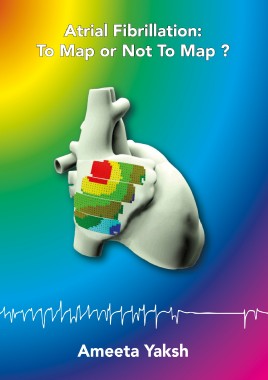
Ameeta Yaksh
Atrial Fibrillation: To Map Or Not To Map
25 november 2016
Erasmus Universiteit Rotterdam
Open Ebook
Share this project
Summary
(78) National Cholesterol Education Program Working Group on Lipoprotein Measurement. National Cholesterol Education Program recommendations for triglyceride measurement: Clin Chem 1995; 41:1421-1426.
(79) Tziomalos K, Dimitroula HV, Katsiki N, Savopoulos C, Hatzitolios AI. Effects of lifestyle measures, antiobesity agents and bariatric surgery on serological markers of inflammation in obese patients. Mediators Inflamm 2010.
(80) Yokoyama H, Emoto M, Araki T et al. Effect of aerobic exercise on plasma adiponectin levels and insulin resistance in type 2 diabetes. Diabetes Care 2004; 27:1756-1758.
(81) McLaughlin T, Abbasi F, Lamendola C, Kim HS, Reaven GM. Metabolic changes following sibutramine-assisted weight loss in obese individuals: role of plasma free fatty acids in the insulin resistance of obesity. Metabolism 2001; 50:819-824.
(82) Hamilton MT, Hamilton DG, Zderic TW. Role of low energy expenditure and sitting in obesity, metabolic syndrome, type 2 diabetes, and cardiovascular disease. Diabetes 2007; 56:2655-2667.
(83) Bamba V, Rader DJ. Obesity and atherogenic dyslipidemia. Gastroenterology 2007; 132:2181-2190.
(84) Case CC, Jones PH, Nelson K, O’Brian Smith E, Ballantyne CM. Impact of weight loss on the metabolic syndrome. Diabetes Obes Metab 2002; 4:407-414.
(85) Aronne LJ, Wadden T, Isoldi KK, Woodworth KA. When prevention fails: obesity treatment strategies. Am J Med 2009; 122:S24-S32.
(86) Durstine JL, Grandjean PW, Cox CA, Thompson PD. Lipids, lipoproteins and exercise. J Cardiopulm Rehabil 2002; 22:385-398.
(87) Kraus WE, Houmard JA, Duscha BD. Effects of the amount and intensity of exercise on plasma lipoproteins. N Engl J Med 2002; 347:1483-1492.
(88) Andersson K, Karlstrom B, Freden S, Petersson H, Ohrvall M, Zethelius B. A two-year clinical lifestyle intervention program for weight loss in obesity. Food Nutr Res 2008; 52.
(89) Rosen CJ. Revisiting the rosiglitazone story--lessons learned. N Engl J Med 2010; 363:803-806.
(90) Nissen SE, Wolski K. Rosiglitazone Revisited: An Updated Meta-analysis of Risk for Myocardial Infarction and Cardiovascular Mortality. Arch Intern Med 2010; 170: 1191-1201.
(91) Lincoff AM, Wolski K, Nicholls SJ, Nissen SE. Pioglitazone and risk of cardiovascular events in patients with type 2 diabetes mellitus: a meta-analysis of randomized trials. JAMA 2007; 298:1180-1188.
(92) Shah P, Mudaliar S. Pioglitazone: side effect and safety profile. Expert Opin Drug Saf 2010; 9:347-354.
(93) Ferns G, Keti V, Griffin B. Investigation and management of hypertriglyceridemia. J Clin Pathol 2008; 61:1174-1183.
(94) Ginsberg HN, Elam MB, Lovato LC et al. Effects of combination lipid therapy in type 2 diabetes mellitus. N Engl J Med 2010; 362:1563-1574.
(95) Bucher HC, Hengstler P, Schindler C, Meier G. N-3 polyunsaturated fatty acids in coronary heart disease: a meta-analysis of randomized controlled trials. Am J Med 2002; 112:298-304.
(96) Hooper L, Thompson RL, Harrison RA et al. Risks and benefits of omega 3 fats for mortality, cardiovascular disease, and cancer: systematic review. BMJ 2006; 332:752-760.
(97) Fojo SS, Brewer HB. Hypertriglyceridaemia due to genetic defects in lipoprotein lipase and apolipoprotein C-II. J Intern Med 1992; 231:669-677.
(98) Cefalu AB, Noto D, Arpi ML et al. Novel LMF1 nonsense mutation in a patient with severe hypertriglyceridemia. J Clin Endocrinol Metab 2009; 94:4584-4590.
(99) Peterfy M, Ben-Zeev O, Mao HZ et al. Mutations in LMF1 cause combined lipase deficiency and severe hypertriglyceridemia. Nat Genet 2007; 39:1483-1487.
(100) Beigneux AP. GPIHBP1 and the processing of triglyceride-rich lipoproteins. Clin Lipidol 2010; 5:575-582.
(101) Calandra S, Priore OC, Tarugi P, Bertolini S. APOA5 and triglyceride metabolism, lesson from human APOA5 deficiency. Curr Opin Lipidol 2006; 17:122-127.
Rs964184 (APOA5-A4-C3-A1) is related to elevated plasma triglyceride levels, but not to an increased risk for vascular events in patients with clinically manifest vascular disease
A.P. van de Woestijne, Y. van der Graaf, P.I.W. de Bakker, F. W. Asselbergs, W. Spiering, F.L.J. Visseren for the SMART Study Group
Submitted
Abstract
Background: SNPs in the APOA5-A4-C3-A1 gene complex are associated with elevated plasma triglycerides (TG) and elevated vascular risk in healthy populations. In patients with clinically manifest vascular disease, hypertriglyceridemia and metabolic syndrome are frequently present, but the contribution of these SNPs to plasma TG, effect modification by obesity and risk of recurrent vascular events is unknown in these patients.
Methods: Prospective cohort study of 5547 patients with vascular disease. Rs964184 (APOA5-A4-C3-A1 gene complex) was genotyped, and we evaluated the relation with plasma lipid levels, presence of metabolic syndrome and the risk for new vascular events.
Results: Rs964184 was strongly associated with log plasma TG (ß 0.12; 95%CI 0.10-0.15, p=1.1*10-19), and was also associated with 0.03 mmol/L lower high-density lipoprotein-cholesterol (HDL-c) (95%CI 0.01-0.04), and 0.14 mmol/L higher nonHDL-c (95%CI 0.09-0.20). The minor allele frequency increased from 10.9% in patients with plasma TG <1 mmol/L to 24.6% in patients with plasma TG between 4 and 10 mmol/L. The relation between rs964184 and plasma TG was modified by body mass index (BMI) in patients with one minor allele (ß 0.02; (95%CI -0.04-0.09) if BMI <24 kg/m2, ß 0.17 (95%CI 0.12-0.22) if BMI >27 kg/m2, p for interaction=0.02). The prevalence of the metabolic syndrome increased from 52% for patients with two copies of the major allele to 62% for patients with two copies of the minor allele (p=0.01). Rs964184 was not related with recurrent vascular events (HR 0.99; 95%CI 0.86-1.13).
Conclusion: The SNP rs964184 (APOA5-A4-C3-A1) is associated with elevated plasma TG concentrations in patients with clinically manifest vascular disease. In carriers of one minor allele, the effect on plasma TG was modified by BMI. There is no relation between SNP rs964184 and recurrent vascular events in these patients.