Linda Remijn Nelissen
Symptomatic treatment of myasthenia gravis
3 september 2026
Universiteit Leiden
Open Ebook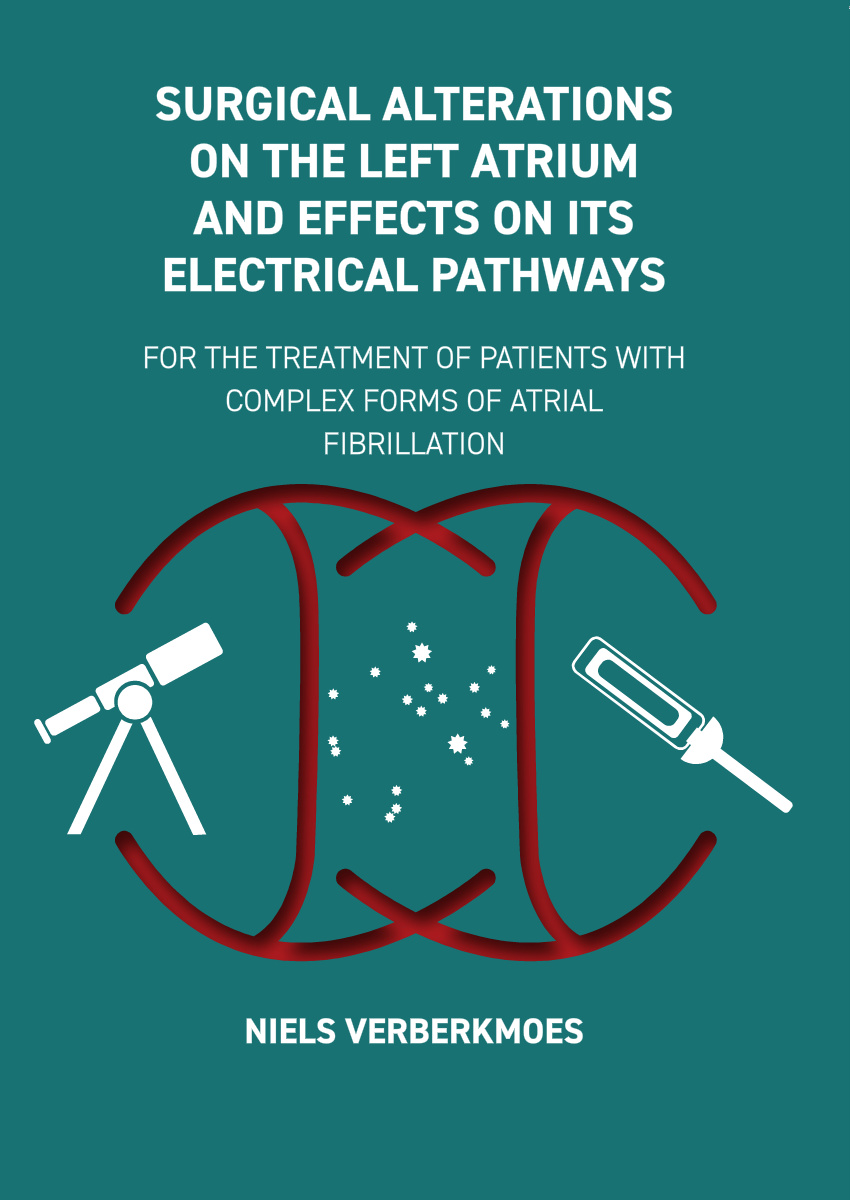
Share this project
Summary
This thesis aims to evaluate the different techniques that we adopted and modified in the surgical management of atrial fibrillation. In addition to the minimally invasive techniques, surgical modifications to increase the feasibility, efficacy, and safety were addressed. We also evaluated the joint approach of combined epicardial and endocardial ablation. Finally, we studied the role of left atrial appendage (LAA) exclusion and its possible biochemical, hormonal, and hemodynamic effects.
After a short introduction and background information in chapter 1, we described the minimally invasive thoracoscopic ablation technique in chapter 2. Our technique is a combination of several existing handlings, which resulted in increasing the safety and feasibility of the totally thoracoscopic ablation.
In chapter 3, we describe an innovative technique – the Convergent procedure – a combined approach to perform epicardial ablation of the left atrium through a sub xiphoidal uniportal video-assisted procedure. This is combined with an endocardial ablation illustrating the multidisciplinary convergent method to treat patients with AF. This approach is an alternative in case the totally thoracoscopic surgical ablation is technically not feasible.
Chapter 4 addresses a multi-center study to compare the clinical outcomes of using the clamping devices compared to the linear non-clamping devices to isolate the posterior wall of the left atrium. We hypothesized that success depends not only on the surgical technique but also on the ablation device. Both devices effectively restored sinus rhythm, but the non-clamping box lesions revealed lower rates of intraoperative exit block of the box compared to the clamping device. Re-intervention rate was accordingly lower in the latter device. We concluded that using the clamping device in minimally invasive thoracoscopic epicardial ablation is the most favorable option for patients with complex forms of atrial fibrillation.
As we described above (Chapter 2), and as reported by others, left atrial appendage exclusion is performed as a part of the totally thoracoscopic ablation procedure. Its role in reducing the incidence of stroke in patients with AF has been demonstrated. In Chapter 5, we evaluated procedural success and complications of thoracoscopic clipping in patients undergoing total thoracoscopic procedures, hybrid endocardial or epicardial surgical ablations. This multi-center study showed a complete closure rate of 95.0%, in accordance with other smaller studies. The incidence of cerebrovascular complications was 0.5 per patient-year. As many as 57% of the patients didn’t have oral anticoagulation therapy at follow-up. According to these findings, we concluded that LAA clipping during thoracoscopic ablation is a practical and durable approach in treating patients with AF.
Chapter 6 presents five cases of patients with AF who had an absolute contraindication to using OAC therapy. We successfully adopted a stand-alone total thoracoscopic approach to close the LAA using an epicardial clip device in these patients. Our indication for this intervention was either failure of the previous percutaneous approach or the extremely high risk of lifelong antiplatelet therapy. We have shown that the procedures can be performed with short procedural times and fast recovery due to the minimally invasive approach. None of our patients experienced thromboembolic events during follow-up, despite their high risk as predicted by the CHA2DS2-VASc score.
According to earlier studies, left atrial appendage amputation results in alterations in body fluid balance and biochemical status of the human body. The study in chapter 8 elaborates on the biochemical effects of thoracoscopic LAA closure in standalone AF. It investigates whether total amputation of LAA is superior to clipping regarding these biochemical effects. Our findings showed increased inflammatory response activation after left atrial appendage clipping compared with left atrial appendage stapling. Furthermore, a significant decrease in blood pressure was observed after surgical removal of the left atrial appendage.
In chapter 9, we address the results of a prospective, nonrandomized study comparing patients who underwent epicardial LAAE with patients undergoing endocardial exclusion. Postoperative SBP was significantly lower in the epicardial group at three months and one year compared with the endocardial group. An adjusted multivariate linear mixed-effects model demonstrated that epicardial LAAE significantly decreased SBP by 7.4 mm Hg at three months and 8.9 mm Hg at one year (p < 0.0001). Considering another finding of the study, a clinical perspective of this study is that epicardial LAAE could be another way of targeting the autonomic innervations and the RAAS system in hypertensive AF patients to improve the overall clinical outcomes. We conducted a prospective pilot study on 20 AF patients who underwent thoracoscopic ablation and LAAC (Chapter 10). Two transesophageal echocardiographic examinations were performed before and after LAAC to evaluate LA velocities and volumes. According to the study, LA reservoir function decreased significantly directly after LAAC. As the analysis is performed in an operative setting, it is hard to conclude if these intraoperative echocardiographic findings would be associated with relevant clinical outcomes. However, our study indicates that LAAC has an immediate impact on the LA function in patients with AF. Further evaluations of the long-term effects on LA function and cardiac performance after LAAC are needed to validate these findings. In conclusion, this thesis describes some surgical techniques and modifications we adopted to improve the feasibility and efficacy of minimally invasive surgical ablation. We also highlighted the role and outcomes after left atrial appendage exclusion as a part of the surgical ablation. These findings open the way for further development and innovations in the surgical treatment of patients with atrial fibrillation.