Mengxiao Sun
The role of service plants in promoting biological pest control and pollination in Xinjiang pear
3 juni 2026
Wageningen University
Open Ebook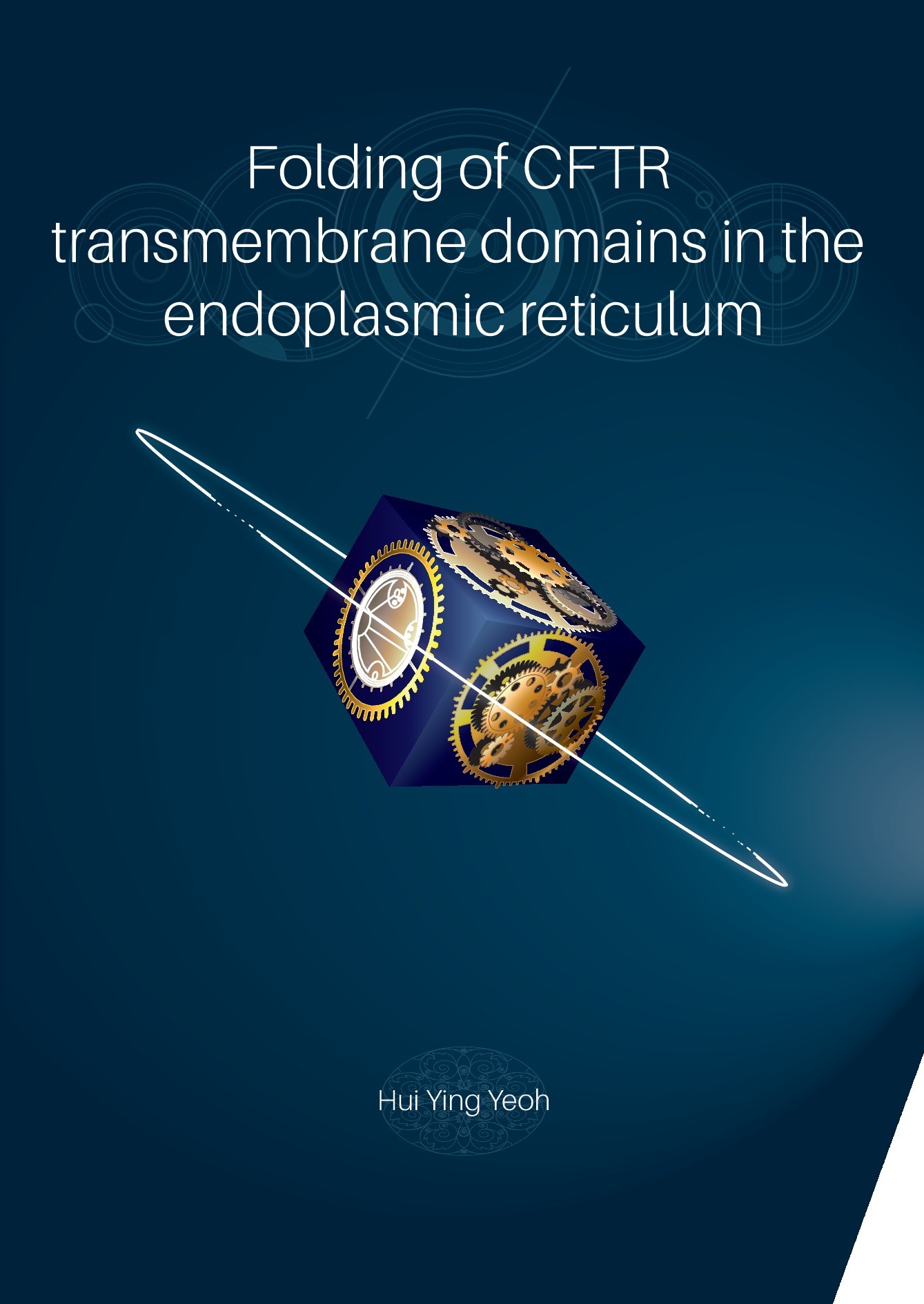
Share this project
Summary
Thirty percent of eukaryotic proteins are membrane proteins, which contain at least one transmembrane domain (TMD) formed by one or more transmembrane (TM) helixes. These proteins carry out a large variety of functions, including transporting small molecules and ions, transducing signals, cell adhesion, protein trafficking, and membrane formation. Membrane proteins are synthesized in the Endoplasmic Reticulum (ER), an organelle specifically endowed with machinery for executing general protein folding and post-translational modifications. The TMDs of membrane proteins may encounter several folding challenges during biogenesis, many of which can be resolved by binding to chaperones. In Chapter 1, we discuss these problems and the putative membrane-bound chaperones that may be involved in solving them. Although the role of cytoplasmic chaperones in protein folding has been extensively studied, interactions between membrane proteins and membrane-bound chaperones are only recently being explored.
In Chapter 1 we also describe the Cystic Fibrosis Transmembrane Conductance Regulator (CFTR), our model protein for studying membrane protein folding and chaperones in the ER. CFTR is a member of the ABC transporter family. It has two TMDs and two cytoplasmic nucleotide binding domains (NBDs) and an unstructured R-region. The domain hierarchy of CFTR comprises TMD1 followed by NBD1, (R), TMD2, and NBD2, and is highly conserved among ABC transporters. CFTR poses many typical folding problems that are common in membrane proteins, which makes it an ideal example for uncovering the folding pathway of these proteins. Disrupting CFTR conformation can cause Cystic Fibrosis, a disease that causes mucus accumulation and promotes infections in the respiratory, digestive, and reproductive systems. Understanding CFTR folding will therefore also provide medically relevant information about this disease.
In this thesis, we analyzed CFTR biogenesis and maturation using a radioactive pulse-chase assay. This is a powerful tool for studying the conformational maturation, trafficking between organelles, and degradation of target proteins in live cells (Chapter 2). In this approach, a small fraction of the total protein pool is ‘tagged’ during short radiolabeling times (<30 min; i.e pulse) and maturation and protein trafficking is then followed during tightly controlled chase times. When combined with limited proteolysis, immunoprecipitation with domain-specific antibodies, and nonreducing/reducing SDS-polyacrylamide gel electrophoresis (SDS PAGE), folding processes of a target protein can be examined in great detail. CFTR folds in two steps: the domains of CFTR fold during biosynthesis and when biosynthesis is completed they assemble to form a functional protein. It is therefore important to understand the folding of each domain as this is profoundly connected to the overall conformation of CFTR. Due to a paucity of suitable reagents, the folding of CFTR transmembrane domains (TMDs) and their assembly is poorly understood. We thus generated three antibodies against TMD1 and TMD2 to study the folding of these TMDs in Chapter 3. These antibodies revealed that the TMDs undergo post-translational conformational changes that are the result of CFTR domain assembly. The antibodies generated in Chapter 3 were then used to detect the folding of a series of CFTR patient mutants. While investigating the folding of CFTR class III and IV mutants, whose grouping is based on the ability to reach the cell surface albeit in a form with limited function, we discovered that mutation R347P is mis-classified (Chapter 4). R347P is the only mutation in the class III and IV mutations that leads to major defects in domain assembly. As R347 is located in TMD1, a mutation into proline may disrupt the interaction between the TMDs of CFTR and interfere with domain assembly. R347P does not respond to the recently approved potentiator VX-770, which opens the channel, whereas most other class-III and class-IV mutants do respond to it. By this criterion and by its functional response to corrector drug VX-809, R347P qualifies also as a class-II mutation. Our study demonstrated that the new antibodies can detect CFTR conformation defects and provide an unbiased approach for characterizing the mode of action of novel therapeutic compounds. These antibodies can therefore be used for investigating which drugs are effective for which cystic fibrosis disease variant. R347 is one of the charged residues located in the TM area of CFTR. Such amino acids at these specific locations in a membrane protein serve both structural and functional purposes. Nevertheless, the uncoupled TM charged residues can disturb the thermodynamics of the ER membrane, and how to stabilize them is one of the main problems of membrane protein folding. We also used the antibodies described in Chapter 3 to characterize the effect of the R751L mutation on CFTR folding (Chapter 5). In comparison to R347P, R751L exerted less effect on CFTR domain folding and assembly but impaired CFTR function. This likely is because R751 is located in the R-region, a part of the protein that does not play a main role in CFTR domain assembly but is responsible for channel opening and closing. In Chapter 5, we showed that R751L folds and responds to VX-770 and VX-809 like wild-type protein instead of another CFTR mutant, delF508, whose domain folding and assembly are heavily disrupted. Like Chapter 4, Chapter 5 also demonstrated a correlation between CFTR folding and its function in vivo in man. The ER membrane complex (EMC) is a highly conserved ER-resident complex that can chaperone TMDs with charged amino acid sequences, though the precise mechanism how it does this remains largely unknown. The EMC was reported to interact with CFTR, and this finding was confirmed and extended in Chapter 6. By using a radiolabeling coupled protease susceptibility assay, and immunoprecipitation with the TMD antibodies, we discovered that EMC assists the folding of TMD2, but not of the other domains, and that EMC prevents early degradation of CFTR in the ER. CFTR post-translational assembly was also decreased due to a destabilized TMD2 in cells without EMC. These experiments provide direct evidence of how EMC assists the folding of polytopic TMDs that contain destabilizing features. In Chapter 6 we also showed that CFTR TMD2 engaged the chaperone EMC during translation. This binding is most likely driven by ionic forces at the TM areas of the two proteins, as they both contain charged residues. Another CFTR chaperone, Bap31, also contains charged TM residues and binds to pre-domain assembly CFTR. Bap31 interacts with TMD1 and sorts CFTR to ER-associated degradation (ERAD), but its function in chaperoning CFTR charged residues has not been studied. In Chapter 7, using the TMD antibodies, our results revealed that the charged residues in the Bap31 TMs are required to stabilize TMDs of CFTR post-translationally and Bap31 binding maintains efficient CFTR domain assembly. We therefore propose that Bap31 chaperones CFTR folding by preventing CFTR TM charged residues from interacting with the lipid bilayer and thus acts as quality control for CFTR domain assembly. Finally, in the discussion (Chapter 8), we reviewed the results in a broader context, considering what the possible selection criteria and binding mechanisms of EMC and Bap31 could be. In this chapter we also relate the folding mechanism of CFTR to other type-I ABC transporters and membrane proteins. Finally, we propose a model of how these two chaperones act in the folding of CFTR. This model may also provide a useful description for understanding the folding pathways of other membrane proteins that require both the EMC and Bap31.