Isaura Wayop
Enhancing antimicrobial stewardship in veterinary medicine
4 juli 2025
Universiteit Utrecht
Open Ebook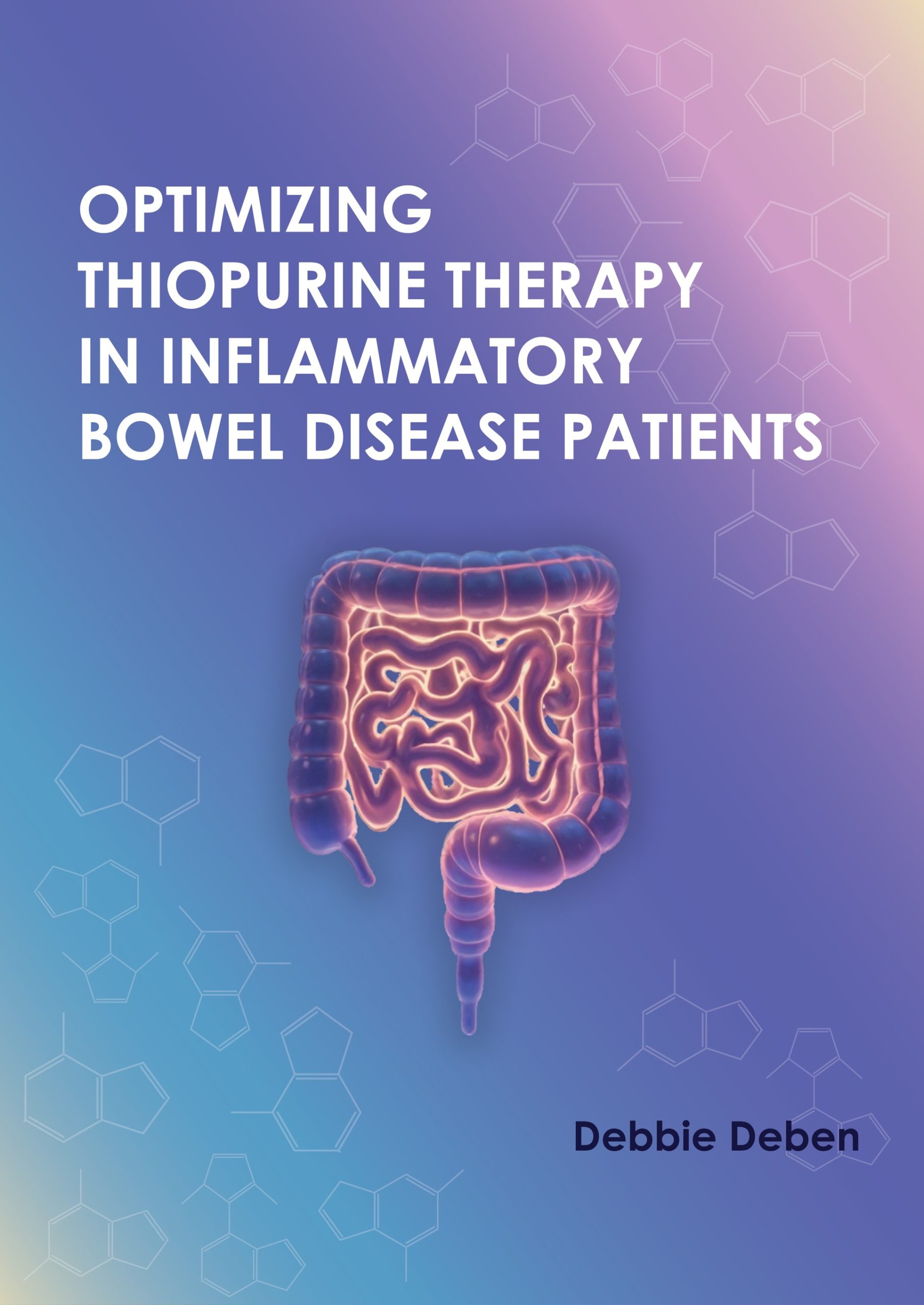
Share this project
Summary
Inflammatory bowel disease (IBD), comprising Crohn’s disease (CD), ulcerative colitis (UC) and IBD-unclassified (IBD-U), is a chronic inflammatory disease of the gastrointestinal tract. The incidence and prevalence of IBD are rising worldwide, whilst the exact etiology of IBD remains unknown. In general, IBD is diagnosed in patients between 20 and 40 years old, affecting most patients throughout their lifetime. The disease course of IBD is characterized by its relapsing and remitting character, in which flares alternate with periods of quiescent disease. During relapses, patients suffer from, amongst others, fatigue, general malaise, abdominal pain and diarrhea.
The thiopurine derivatives azathioprine (AZA), mercaptopurine (MP) and tioguanine (TG) are frequently used immune suppressive drugs in the treatment of IBD. Thiopurines have a slow onset of action (8 – 16 weeks) and are particularly suitable to maintain remission. Induction of remission is generally attained by other medicinal treatments, such as prednisolone or infliximab (IFX).
Thiopurines are all pharmacologically inactive drugs, converted into active metabolites. The most important active thiopurine metabolites related to effectiveness and adverse drug reactions (ADRs) are considered to be the 6-thioguanine nucleotides (6-TGN) and the 6-methylmercaptopurine ribonucleotides (6-MMPR), respectively. Unfortunately, ADRs, being either idiosyncratic or concentration-related, are relatively common in thiopurine therapy. To date, therapeutic drug monitoring (TDM) of the thiopurine metabolites is widely applied to optimize thiopurine therapy. However, it remains challenging to balance effectiveness with avoidance of toxicity.
The aim of this thesis was to provide new insights into optimization strategies of thiopurine treatment for patients with IBD, focusing on pharmacokinetics, pharmacogenetics, and pharmacodynamics. This thesis contains four different sections.
In Part I, an overview of current and future perspectives on TDM of thiopurine metabolites is discussed. In Chapter 2, a literature review on the pharmacology of thiopurines, the pharmacogenetics and the advantages and limitations of TDM in thiopurine therapy are outlined in detail. While multiple enzymes are involved in the complex thiopurine metabolism, the well-studied enzyme thiopurine S-methyl transferase (TPMT) is considered to be the most important enzyme in balancing the 6-TGN and 6-MMPR metabolites. Polymorphisms in the gene encoding the TPMT enzyme can result in reduced activity or total inactivity, ultimately leading towards a shift in elevated (toxic) 6-TGN formation with reduction or absence of 6-MMPR formation. On the contrary,