Share this project
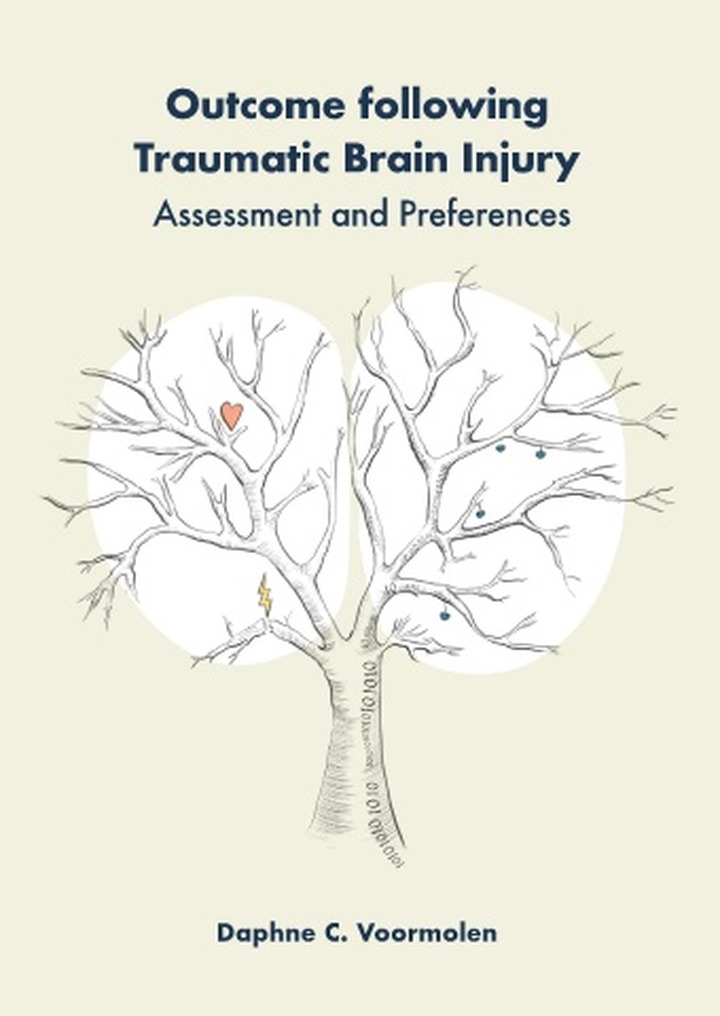
Daphne Voormolen
Erasmus Universiteit Rotterdam
Publication date: 13 oktober 2020
University: Erasmus Universiteit Rotterdam
Outcome following Traumatic Brain Injury
Summary
Introduction
Traumatic brain injury (TBI) is a leading cause of death and disability worldwide with 2.5 million new cases in the European Union (EU; 28 Member States) each year. In addition, it is costing the global economy approximately $US400 billion per year. The large majority of patients (70-90%) are diagnosed with mild TBI (mTBI). However, despite the term ‘mild’, patients after mTBI can also experience long-lasting symptoms. Other than all the research efforts in the last couple decades, substantial improvement in outcome for patients has been lagging behind and many questions remain unanswered regarding the impact of mTBI. Health-related quality of life (HRQoL) has been the focus of outcome assessment in current research endeavors, since this reflects an individual’s perception of how an illness and its treatment affect the physical, mental, and social aspects of his or her life.
Stroke is the second leading cause of death worldwide, with an increasing incidence due to an ageing population. Even though the causes of TBI and stroke are different, the consequences and effects are often very similar, since both result in physical, cognitive, psychological, and social dysfunction.
TBI and stroke both have high economic costs and because of this cost-effectiveness analyses have become an integral part of decision making processes in both diseases. Nevertheless, essential components to be able to perform economic evaluations, namely quality-adjusted life years, health-utility indices, value sets and population based norms, are missing in current TBI and stroke research.
This thesis consists of two parts. Part I focused on assessing outcome following mTBI, with an emphasis on prevalence, risk factors, classification and pre-injury reporting of post-concussion symptoms and post-concussion syndrome (PCS). In part II, we examined the preferences and utility weights for TBI and stroke health states and their application. Prospective observational longitudinal patient data, survey data of the general population, and a simulation study were used. The aim of this thesis is operationalised in the following research questions:
1. What is the association between post-concussion symptoms and HRQoL in mTBI?
a. What is the outcome in divergent mTBI patient groups?
b. What are the prevalence and risk factors of post-concussion symptoms in mTBI patients and the general population?
c. How can we classify post-concussion symptoms and post-concussion syndrome after mTBI and to what extent are pre-injury ratings reliable?
2. What are preferences and utility weights for TBI and stroke health states and how could they be applied?
a. What are preferences of the general population for disease specific outcome measures for TBI and which utility weights can be assigned to TBI value sets?
b. How can value sets and patient data be used to determine utility and/or disability weights for TBI and stroke health states?
Part I - Outcome assessment following traumatic brain injury
In Chapter 2 and 3 a total of 731 mTBI patients from a prospective observational cohort study performed in the Netherlands were included. In Chapter 2 we examined how four divergent classification methods and two different rating scores as cutoff defining post-concussion syndrome (PCS) differ among patients six months after mTBI. The Rivermead Post-Concussion Symptoms Questionnaire (RPQ) was used to assess post-concussion symptoms and the following classification methods were used to classify patients as having PCS: the RPQ mapped to the ICD-10/ DSM-IV, the RPQ total score, the RPQ-3 and the RPQ three-factor model. We found prevalence rates of PCS ranging from 11% to 39%, a different set of risk factors to be statistically significantly associated with PCS, and a different percentage of overlap with functional impairment. These differences in results were all dependent on the classification method and rating score used. In Chapter 3 we assessed the association between PCS and health-related quality of life (HRQoL) six months after mTBI and we additionally looked at the correlation between post-concussion symptoms, assessed by the RPQ, and different HRQoL domains. HRQoL was measured with the 36-item Short-Form Health Survey (SF-36) and the Perceived Quality of Life Scale (PQoL). We found that 39% of patients were classified as suffering from PCS, and these patients had significantly lower HRQoL, e.g. lower scores on all SF-36 domains and lower mean PQoL scores. Furthermore, all RPQ items were negatively correlated to all SF-36 domains and PQoL subscale scores, which indicates a decreasing effect on different aspects of an individuals’ HRQoL when reporting problems on any of the RPQ symptoms.
In Chapter 4, 5 and 7 we presented results based on the Collaborative European NeuroTrauma Effectiveness Research in TBI (CENTER-TBI) study, which is a large multicenter, prospective observational longitudinal cohort study conducted in Europe and Israel. In Chapter 4 and 5 we differentiated patients in complicated (intracranial abnormalities present on computed tomography (CT)) and uncomplicated (no intracranial abnormalities present on CT) mTBI. In Chapter 4 we assessed the occurrence of post-concussion symptoms and PCS in a large sample of patients with complicated and uncomplicated mTBIs at three and six months post-injury. A complete case analysis was performed and a total of 1302 patients with mTBI who completed the RPQ were included. Approximately 46% of patients were identified as complicated mTBI and they reported significantly more symptoms and have higher PCS prevalence rates compared to patients after uncomplicated mTBI at three and six months. However, when adjusting for baseline covariates, e.g. age, gender, education, injury mechanism, Glasgow Coma Score, complicated vs. uncomplicated, psychiatric medical history and stratum, the differences between both patient groups became less clear and this indicated that the association could be explained by differentiations in baseline characteristics. In Chapter 5 we compared outcome of patients after complicated and uncomplicated mTBI at three and six months post-injury. Outcome was assessed as a multidimensional construct to compare patients on different outcome levels: generic and disease specific HRQoL, functional outcome and symptomatology such as post-traumatic stress, depression and anxiety measured by the following instruments: SF-36 and Quality of Life after Brain Injury (QOLIBRI), Glasgow Outcome Scale Extended (GOSE), Posttraumatic Stress Disorder Checklist-5 (PCL-5), Patient Health Questionnaire (PHQ-9) and Generalized Anxiety Disorder questionnaire (GAD-7), respectively. A complete case analyses was performed and a total of 1104 patients with mTBI who completed the seven assessed outcome instruments were included. The results of this study showed that patients after complicated mTBI reported lower generic and disease-specific HRQoL and worse functional outcome compared to patients after uncomplicated mTBI at three and six months post-injury. Nevertheless, no significant differences were found between time points.
In Chapter 6 we evaluated the frequency of post-concussion-like symptoms and prevalence and risk factors of PCS, determined the relationship between the items of the RPQ with self-perceived health (EQ-5D) and ultimately investigated differences in the general population of three European countries, e.g. Italy, the Netherlands, and the United Kingdom. We conducted a web-based survey among representative samples in three European countries, and a total of 11,759 respondents who completed the RPQ and EQ-5D were included. The most frequently reported symptom was fatigue (50%), approximately half of the respondents were classified as having PCS and chronic health complaints was found to be a significant risk factor for PCS. These results indicate that post-concussion-like symptoms are not specific for patients with TBI, and PCS is not a unique syndrome after TBI. Furthermore, positive correlations were determined between all RPQ items and EQ-5D dimensions and score. This suggests that post-concussion-like symptoms are debilitating and they also have a major effect on HRQoL in the general population.
In Chapter 7 we analyzed the prevalence and associated risk factors for the development of post-concussion symptoms, and the relationship with Quality of life (QoL) in pediatric and adolescent patients with mTBI at six months post-injury. We used data from the CENTER-TBI study and included 196 patients who completed the RPQ at six months post-injury. At least one moderate or severe symptom of the RPQ was experienced by 36% of patients and PCS was present in 13% when considering symptoms of at least moderate severity (score > 2). A prediction model for PCS using only baseline clinical and demographical factors, directly available in the emergency department, was developed and regression analyses identified females as a significant risk factor. Pediatric patients with PCS had lower QoL compared to patients without PCS since they had significant lower QOLIBRI total scores.
In Chapter 8 we assessed the reliability of patient’s post-injury ratings of symptoms compared with their pre-injury ratings in a large and representative sample of patients with mTBI at several time points during the first year following injury. We included 836 patients with mTBI, 191 trauma patients without brain injury history and 100 healthy controls and the latter two groups served as control groups. To assess pre-injury and current symptoms the Head Injury Symptom Checklist (HISC) was used. Almost half of all patients with mTBI inconsistently reported their pre-injury functioning over time. Patients who were classified with post-injury PCS reported higher percentages of pre-injury symptoms and were often more inconsistent. Patients who were classified with pre-injury PCS more often had psychiatric morbidity and this premorbidity also showed a strong association with post-injury PCS.
Part II - Preferences for outcome in traumatic brain injury
Chapter 9 describes the development of value sets for the Quality of Life after Brain Injury overall scale (QOLIBRI-OS), which is a TBI specific instrument to measure HRQoL. A web-based valuation study was performed in the Netherlands, United Kingdom and Italy. We found that the biggest weight increase for all attributes of the QOLIBRI-OS is seen from “slightly” to “not at all satisfied”, resulting in the largest impact on HRQoL. In addition, the item “Not at all satisfied with how brain is working” should receive the greatest weight in utility calculations in all three countries. By transforming the QOLIBRI-OS into utility scores we have enabled the potential application in economic evaluations, and in measures of population health, which may ultimately be used to inform decision makers on the best interventions and strategies for TBI patients.
In Chapter 10 we described the impact following TBI by developing disability weights for the GOSE, which is a functional outcome instrument after TBI, and we used HRQoL data of patients with TBI to achieve this. Data were obtained through CENTER-TBI research project and a total of 2200 patients after TBI were included. Generic HRQoL was assessed with the Short Form 36-Questionnaire Health Survey version 2 (SF-36v2) and a crosswalk was performed to convert this to the Short Form 12-Questionnaire Health Survey version 2 (SF-12v2). After this we mapped the SF-12 onto three different preference-based measures of health: the Short Form Six-Dimension (SF-6D), EQ-5D-3L and Health Utility Index Mark 3 (HUI3). Thereafter, we assessed the SF-6D, EQ-5D and HUI3 utility scores per patient. Ultimately, we derived the following mean disability weights ranging from 0.045, 0.010, 0.008 (GOSE 8; upper good recovery) to 0.185, 0.142, 0.200 (GOSE 3; lower severe disability), respectively for SF-6D, EQ-5D and HUI3. We determined that HRQoL disability weights increased with increasing severity levels of GOSE. The results of this study enable the evaluation and comparison of disease burden across countries and the effectiveness of health care and economic evaluations. Moreover, future researchers can use these results when applying disability-adjusted life years in cost-effectiveness analyses and policy making.
In Chapter 11 we evaluated the statistical efficiency of a new patient-centred outcome measure in stroke research (utility-weighted modified Rankin Scale (UW-mRS)) and describe this by the use of a simulation study. The simulation study was based on individual data from 500 patients from the MR CLEAN trial, which is a multicentre clinical trial evaluating the effectiveness of intra-arterial treatment in ischemic stroke. The linear analysis of the UW-mRS (power 85%) was more efficient in detecting treatment effects than dichotomous analysis of the mRS (power 71%) but less efficient than the ordinal analysis of the mRS (power 87%). Additionally, the individual variation in utility within each mRS category is not captured by the UW-mRS.
In Chapter 12 we provided a basis for better understanding of HRQoL after TBI in research and clinical practice. We established population-based norms from representative general population samples in the United Kingdom and the Netherlands and samples of individuals after TBI from the United Kingdom and the Netherlands were used as a reference. Data was obtained through a web-based survey and CENTER-TBI data for the general population and TBI samples, respectively. The QOLIBRI showed good psychometric properties in the general population samples and measurement invariance was demonstrated across countries and in TBI and general population samples. We found that HRQoL of individuals after mTBI at three months post-injury did not differ significantly from HRQoL assessed in the general population. However, we did determine that post-TBI factors such as functional disability and symptoms of emotional disorder affected HRQoL negatively.
Discussion
The aim of this thesis is to expand our knowledge on assessing outcome following TBI, and measuring outcome preferences for traumatic brain injury and stroke among patients and the general population.
Despite an abundance of studies, there is currently no gold standard regarding the use and analysis of instruments assessing post-concussion symptoms. Not only that, an unambiguous and universal classification of PCS is missing as well. This leads to large variation in reported prevalence rates, inconsistencies, incommensurable outcome, and hampers research and therapy. Utility and disability weights, population-based norms and value sets are currently not available for all generic and disease-specific outcome measurements after TBI, which limits the utilization of these instruments in economic evaluations.
We found that prevalence rates for post-concussion symptoms and PCS fluctuated extensively dependent on population, case-mix of the sample, setting, measurement instrument, and diagnostic criteria and classification methods applied. Furthermore, since we found high prevalence rates of post-concussion symptoms in adult and paediatric patients six months post-injury, we can conclude that mTBI could be debilitating months after the injury. Outcome after mTBI is multidimensional and defined by a difficult interaction between biological, psychological and social factors and impacts every individual differently.
Generating utility and disability weights for disease-specific HRQoL instruments enables the evaluation and comparison of disease burden across countries and effectiveness of health care and the application in economic evaluations and in measures of population health.
Specific recommendations for future research, policy and clinical practice were formulated, based on the interpretation of the main results of the studies included in this thesis. These recommendations include one universal guideline regarding definitions, classification methods and terminology for post-concussion symptoms and syndrome and researchers should clearly describe how self-report measurements were used and especially for the RPQ which cut-off points were utilized. In addition, outcome after TBI should be assessed through a multidimensional approach including clinical outcome, HRQoL and symptomatology and we recommend to investigate the possibilities for personalized intervention strategies. For research on preferences for outcome in traumatic brain injury, we recommend to summarize the state-of-the-knowledge for development of value sets in a systematic review and to develop a universal guideline considering assessment criteria to compare different utility instruments. For clinical practice, we recommend a multidimensional comprehensive assessment in which patients are evaluated for post-concussion syndrome by the use of a combination between self-report and clinical evaluation, to take patient specific situations into account and to provide precision rehabilitation.
See also these dissertations


Mengxiao Sun
The role of service plants in promoting biological pest control and pollination in Xinjiang pear
3 juni 2026
Wageningen University
Open Ebook
Sherril Phyllis
Wild meat in the city, health risks and implications
1 juni 2026
Wageningen University
Open Ebook
Wisenave Arulvasan
Developing Breathomics for Clinical Application
29 mei 2026
Universiteit Maastricht
Open Ebook

Evi Koene
Pharmacological inhibition of ketohexokinase in inborn and acquired metabolic disorders
4 juni 2026
Universiteit Maastricht
Open Ebook
Isaura Wayop
Enhancing antimicrobial stewardship in veterinary medicine
4 juli 2025
Universiteit Utrecht
Open Ebook
Lidongsheng Xing
Identifying Sound Features from Brain Activity
6 mei 2026
Universiteit Maastricht
Open Ebook
Hongchen Li
Microbubble Oscillations and Microstreaming
21 mei 2026
Erasmus Universiteit Rotterdam
Open EbookWe print for the following universities