Share this project
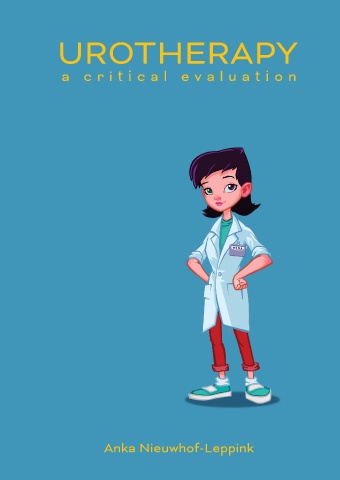
Anka Nieuwhof Leppink
Universiteit Utrecht
Publication date: 19 november 2020
University: Universiteit Utrecht
ISBN: 978-90-393-7281-4
Urotherapy
Summary
The aim of this thesis was to study specific urotherapy as treatment of functional incontinence in children, in order to improve of care for incontinent children. Daytime urinary incontinence is a common problem in school-aged children and severely affects quality of life. Urotherapy is an effective treatment for all forms of functional incontinence, it has a success rate of 56% within one year, compared to a spontaneous recovering rate 15% per year.
In Part I, What is functional incontinence and how to treat it, we described the etiology, definition, and treatment of daytime urinary incontinence. Chapter 2: Daytime incontinence in children and adolescents is a review on functional incontinence and its treatment from a urological, pediatric, and urotherapeutic point of view. Daytime urinary incontinence is common in the pediatric population and affects approximately 8% of 7-year-old children. Risk factors for incontinence can be genetic, demographic, environmental, behavioral, and physical. There are several subtypes of daytime incontinence, which are classified according to their relation to the storage and/or voiding phase of bladder function. These subtypes are overactive bladder, dysfunctional voiding, underactive bladder, voiding postponement, stress incontinence, giggle incontinence, and nocturnal enuresis. Treatment of functional incontinence is multidisciplinary and complex due to the intertwined causes of incontinence and an adequate diagnosis is needed to be successful. Diagnostic instruments are the medical history, bladder diaries, questionnaires, flowmetry, and ultrasonography. Urotherapy is the first treatment of choice for all types of functional incontinence. It combines education, instructions, demystification, behavioral modification, lifestyle advice regarding fluid intake, registration of voiding frequencies, voiding volumes and incontinence episodes, added with support and encouragement to children and their parents. Comorbid problems, like constipation, urinary tract infections, and behavioral problems should be treated before and during urotherapy. For some comorbidities and severe bladder overactivity, medication may be necessary. Although usually effective, urotherapy does not always resolve incontinence. More specific diagnostics, specific urotherapy and in special cases surgical treatment may be necessary.
In Part II, results of specific urotherapy, we evaluated the outcome of specific inpatient urotherapy for children with overactive bladder. Chapter 3: Central inhibition of refractory overactive bladder complaints, results of an inpatient training program concerns children with an overactive bladder (OAB), a subtype of incontinence that is characterized by symptoms of urgency, often combined with frequent urgency urinary incontinence or nocturnal enuresis. Approximately 20% of children with OAB are considered to be therapy resistant for urotherapy. In our hospital, we have developed inpatient urotherapy with cognitive and biofeedback training, for refractory incontinence. Essential part of this training is teaching the children central inhibition of bladder signals to suppress bladder overactivity. We evaluated the effect of inpatient urotherapy for children with OAB after failed urotherapy elsewhere. For 70 children, we evaluated the training results 6 months and 2 years after completion. Refractory OAB complaints were cured or improved in 74.3% of participating children 6 months after training. After 2 years, 70.5% of children were cured or improved according to International Children’s Continence Society (ICCS) criteria. A higher age during inpatient urotherapy was found to be a predictor for better training outcome.
In Part III, a critical appraisal of innovations in urotherapy we discussed current practices and innovations in urotherapy. In Chapter 4: Pelvic floor rehabilitation in children with functional LuTD: does it improve outcome? we compared specific urotherapy with and without pelvic floor rehabilitation by biofeedback with anal balloon expulsion (BABE). We included 52 children with functional incontinence and inadequate pelvic floor control. The group that received BABE prior to inpatient urotherapy consisted of 25 children, and the group that received BABE after inpatient urotherapy consisted of 27 children. There was no significant additional effect of BABE on specific inpatient urotherapy, based on treatment success according to ICCS criteria. Of the children that received BABE, 58% showed improvement on pelvic floor control. This implies that training pelvic floor control in combination with inpatient urotherapy does not influence treatment effectiveness on incontinence. Our results do not provide a conclusive answer to the effectiveness of pelvic floor physical therapy in the treatment of children with LUTD, since we specifically investigated BABE. Considering the invasive nature of BABE, the use of BABE to obtain continence should therefore be discouraged.
A potential new tool for urotherapy is described in Chapter 5: SENS-u: clinical evaluation of a full-bladder notification – a pilot study the feasibility of the SENS-U as a full-bladder notification system in active children during inpatient urotherapy is investigated. The SENS-U is a small, wireless ultrasonic sensor, which continuously monitors the bladder filling and provides a personalized notification when it is time to go to the toilet. As soon as the personalized threshold (almost full bladder, 90%) is reached, the SENS-U provides a signal. Fifteen children participated one day each and in total 41 notifications were sent by the SENS-U. In some cases, children voided before the threshold to get a signal was reached. Children responded positively to the notification of the SENS-U every time, except once when a child was distracted. The SENS-U provided a notification at a median bladder filling of 92.9%. The SENS-U was able to monitor the natural bladder filling, during regular physical activity in children as required.
The contribution of apps to adherence to urotherapy is studied in Chapter 6: Does a serious game increase intrinsic motivation in children receiving urotherapy? In this chapter, we investigate whether a bladder training app improves intrinsic motivation to comply with urotherapy, which is a key determinant of a successful outcome. A serious game could make the training more appealing and rewarding. We included 50 treatment refractory incontinent children that were allowed to choose between receiving specific inpatient urotherapy with or without the application of a serious game. Children who received standard bladder training with the addition of a serious game did not differ in terms of intrinsic motivation from children who underwent standard bladder training only. Results of the motivation questionnaire showed that all children were highly motivated to train. Training results were equal in both groups, with 80% good or improved according to ICCS criteria. Incontinence related quality of life improved accordingly. Most children found it attractive to combine bladder training with a serious game. Children indicated that certain aspects of the game could be improved to increase its motivational strength. However, as it is now, our serious game has no added value in urotherapy.
In we discussed the multifactorial etiology of incontinence and the importance of a multidisciplinary treatment approach. Different aspects of urotherapy such as pelvic floor rehabilitation, biofeedback, and technological tools are considered. We conclude that specific urotherapy is a successful treatment for children with functional incontinence. It addresses all aspects of incontinence, requires expert knowledge, and leads to the best clinical outcome. Urotherapy has become the gold standard for treatment of functional incontinence, although it is still not a standardized treatment. The ultimate goal is to develop urotherapy into an evidence-based specialization within the multidisciplinary treatment of incontinence.
See also these dissertations

Anastasia Galkina
Dear Diary: Advances in Experience Sampling Methodology Studies
16 april 2026
Universiteit Maastricht
Open Ebook
Shereen Osman
Plant-Derived and Inspired Synthetic Molecules with Dual-Spectrum Activity
7 mei 2026
Erasmus Universiteit Rotterdam
Open Ebook




Janine de Wit
Managing water excess and deficit in agriculture
29 mei 2026
Wageningen University
Open Ebook
We print for the following universities