Maria Victoria Iriarte Barbosa
Transmission Dynamics and Emergency Control in an FMDV-Free Country with Pasture-Based Livestock Production Systems
9 juli 2026
Maria Victoria Iriarte Barbosa
Wageningen University
Open Ebook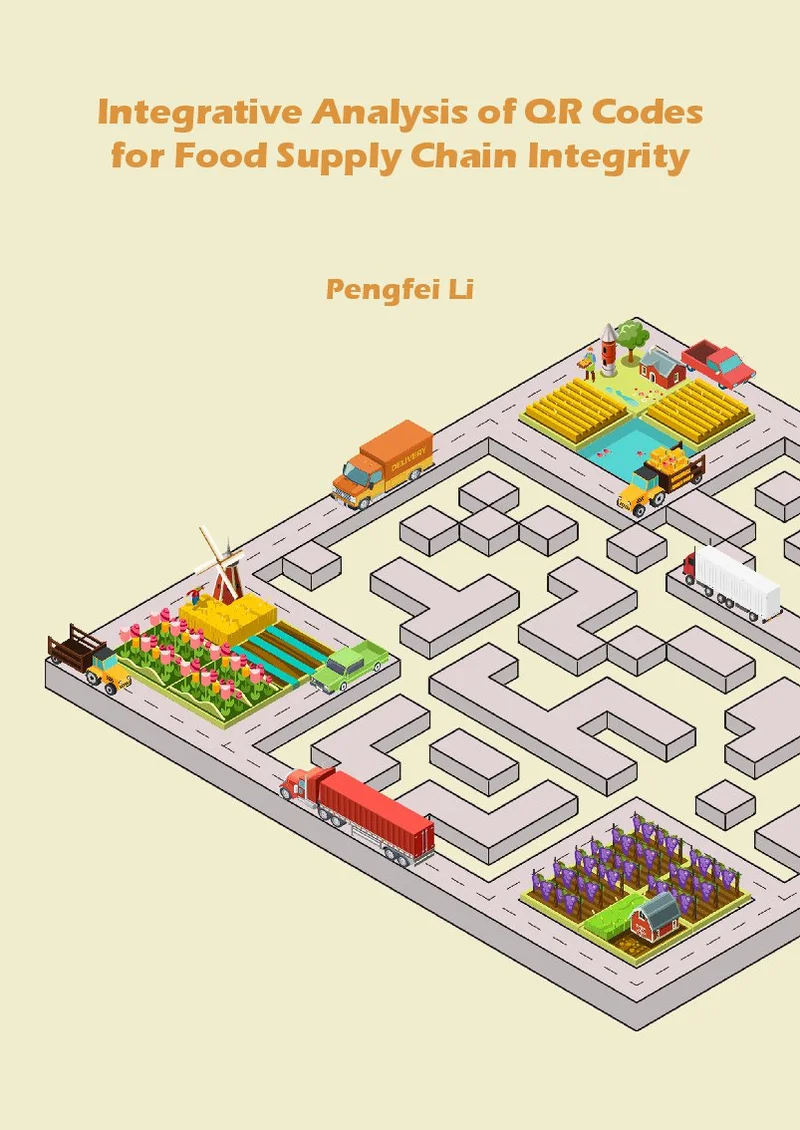
Share this project
Summary
Quick response (QR) codes are increasingly used on food packaging, serving as a digital tool to convey diverse information to consumers. Due to its several advantages, including small size, being consumer-friendly, and enabling access to digital information, QR codes have the potential to contribute to food authentication and supply chain integrity. However, the widespread and effective implementation of this technology for enhancing food supply chain integrity depends not only on the positive adoption by food supply chains but also on the engagement and acceptance of consumers as users. Its further application is shaped by multiple factors. Thus, understanding the perceptions of the food supply chain actors and the behavioral intention to use from consumers is key to the wide adoption, as such insights can help uncover the full potential in food authenticity and propose tailored solutions to promote the adoption of QR codes for food authenticity.
To understand the current applications of QR codes in the food industry, a review (Chapter 2) was conducted, providing a brief overview of the QR code configuration and the technical principles of information transmission. Its advantages were highlighted through comparisons with other digital technologies. The applications of QR codes in the food industry were summarized into four main areas: traceability, quality evaluation, anti-counterfeiting, and marketing. Moreover, the limitations and challenges were discussed from several aspects, including insufficient consumer engagement, high technical and marginal costs, information overload, and technical barriers.
To explore the supply chain actors' perception of identification devices, the wine supply chain was selected as the study object, and the interviews were conducted with grape growers, winemakers, bottlers, and distributors from Italy and India to explore the drivers, barriers, and strategies influencing the implementation of identification technology in two diverse supply chains (Chapter 3). The drivers for implementing identification technologies are efficient traceability, consumer trust, regulatory compliance, brand enhancement, ease of use, counterfeiting risks, counterfeiting monitoring, and keeping competitive; the barriers include implementation costs, traditional mindset, antiquated production lines, lacking technicians, forged devices, no counterfeiting, low visibility, and unequal returns; the strategies are collaboration enhancement, cost optimization, regulatory support, multi-technology integration, simplified systems, raising awareness, and training programs.
To uncover the factors that influence consumers' behavioral intention to use the authentication QR codes, a questionnaire with multiple scale items was developed (Chapter 4). The data from consumers recruited in the UK and China were used to test the proposed models. The results indicates that perceived usefulness and perceived ease of use were identified as the factors significantly influencing Chinese and British consumers' attitudes, while attitude is the most significant factor of behavioral intention. Attitude also significantly influenced authenticity awareness, and facilitating conditions significantly affected the perceived ease of use.
To investigate consumers' willingness to pay for special attributes, 377 consumer studies published between 2000-2024 were collected to conduct a global meta-analysis (Chapter 5). The findings showed that the overall consumers’ WTP for special food attributes is 28%, and the presence of special food attributes is associated with an increase in food prices in most cases (87%). There is a significant difference in consumers’ WTP across information carriers, while the consumers are willing to pay an extra 23% premium for the food attributes conveyed by the barcodes (including QR codes).
To develop a strategy for food fraud detection, a spatial-temporal analysis of consumers scanning food packaging QR codes (i.e., QR codes on the package of single food products are the same in a batch and different in different batches) is proposed in Chapter 5 as a promising approach to counterfeiting detection. A feasibility analysis of this approach was elaborated in detail. The spatial-temporal scanning data related to counterfeiting, including date, time, and coordinates (longitudes and latitudes), were selected as the essential variables in the model. The normal spatial-temporal patterns of a batch of food with the same QR codes are analyzed, and the changes caused by four types of counterfeiting are identified to establish the relationship between counterfeiting and spatial-temporal anomalies in scanning. Potential approaches for counterfeiting detection based on spatial-temporal patterns are proposed through a conceptual analysis.
The general discussion in Chapter 7 reviewed all the findings from Chapters 2-6 and offered suggestions and potential directions for future research.
In conclusion, this thesis highlights the significant role of QR codes in enhancing food supply chain integrity. Through a combination of literature review, interviews, surveys, and meta-analysis, factors influencing technology adoption from supply chain actors’ and consumers’ perspectives were identified, providing strategic insights to promote wider and more effective use of QR code technology in the food supply chain. Moreover, this thesis also proposed a novel spatial-temporal approach for detecting food fraud based on the data of consumers’ scanning QR codes, introducing innovative possibilities for enhancing authenticity monitoring and ultimately fighting food fraud.
Maria Victoria Iriarte Barbosa