Isaura Wayop
Enhancing antimicrobial stewardship in veterinary medicine
4 juli 2025
Universiteit Utrecht
Open Ebook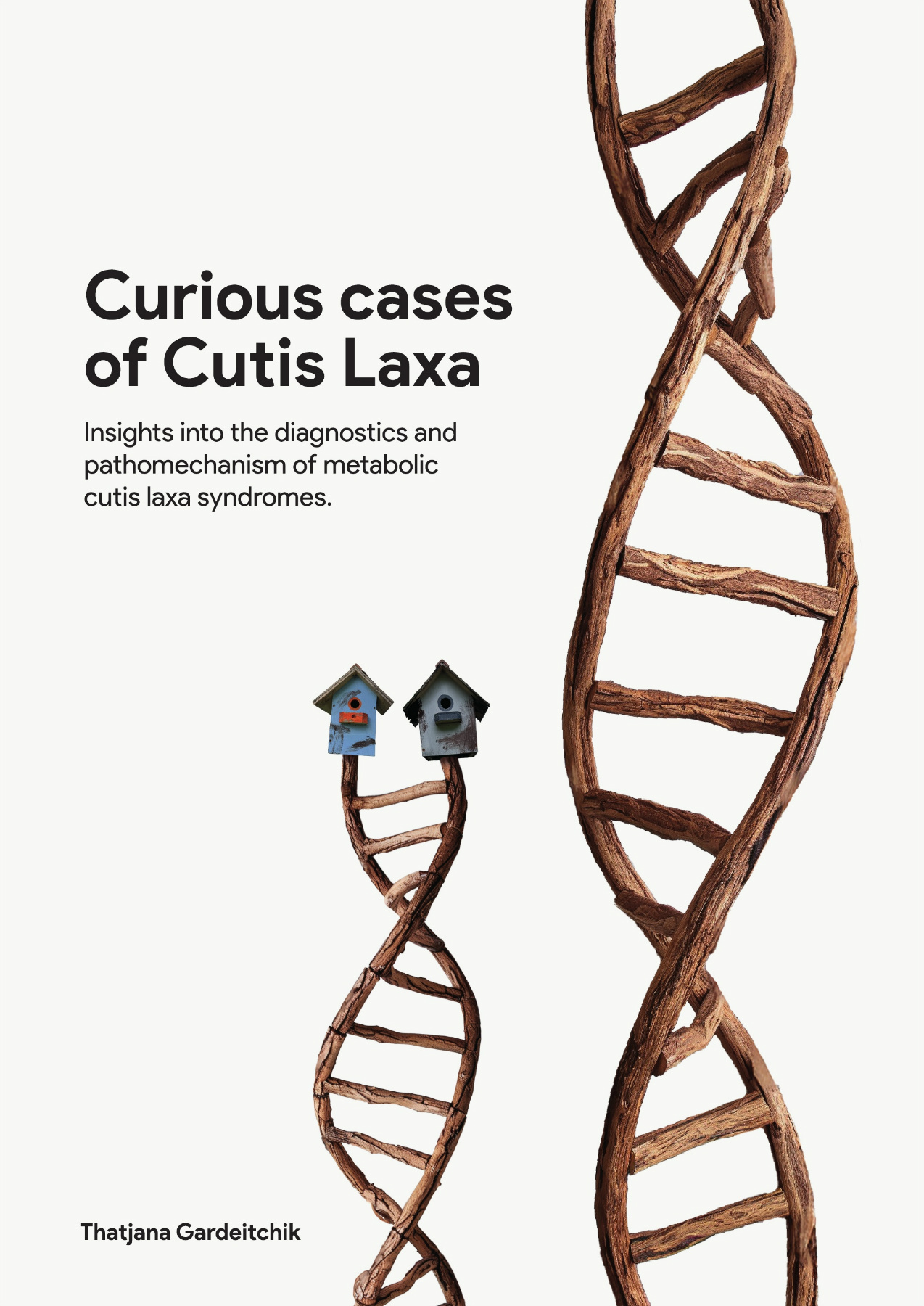
Share this project
Summary
This research thesis had a threefold aim: to further define the metabolic cutis laxa phenotype, to identify new molecular causes of cutis laxa and to gain a deeper understanding of the divergent pathomechanisms involved in these syndromes. The general introduction provides essential background on skin histology and elasticity, as well as an overview of inherited cutis laxa syndromes. The thesis is further divided into two main parts.
The first part, “Diagnosis and Clinical Features” (comprising chapters 1, 2 and 3), delves into the clinical aspects of various cutis laxa syndromes. It aims to further delineate the phenotype of these known cutis laxa syndromes. Chapter 1 focuses on the neurological features of these syndromes, demonstrating how these features can aid in distinguishing between different disorders. A cohort of 26 patients referred for autosomal recessive cutis laxa (ARCL) evaluation is studied, emphasizing the significance of neurological assessment, neuroimaging and metabolic investigations in the diagnosis. Results underscore the discriminative nature of central nervous system and metabolic abnormalities in this genetically diverse patient group.
Chapter 2 narrows the focus to autosomal recessive cutis laxa type 2B, associated with PYCRN mutations. The chapter examines 33 patients from 27 families with PYCRN-related disease. It highlights the challenges in differential diagnosis due to the diverse initial clinical presentations. Key distinctive hallmarks of PYCRN-related disease include intrauterine growth retardation, a characteristic triangular facial appearance, psychomotor retardation and hypotonia. Corneal clouding, cataracts, athetoid movements and finger contractures were relatively rare features with a high predictive value.
Chapter 3 describes a patient with Beckwith Wiedemann syndrome and severe cutis laxa. The chapter presents our proposal, along with supportive evidence, that the skin wrinkling observed in a subset of Beckwith Wiedemann syndrome patients is linked to a duplication of HRAS.
The second part, “Solving the Unsolved” (comprising chapters 4, 5 and 6), reveals the identification of novel recessive metabolic cutis laxa syndromes. Chapter 4 outlines two new congenital disorders of glycosylation, ATPSVNE-CDG and ATPSNAN-CDG, which present with cutis laxa and multiple associated features. Both genes involved, ATPSVNE and ATPSVNAN, encode subunits of the Golgi V-ATPase complex. These patients displayed varying degrees of glycosylation abnormalities in their plasma. The application of complexome profiling revealed disturbances in the assembly or stability of the V-ATPase complex in our patients. Abnormal vesicular trafficking was also evident, as indicated by delayed retrograde transport following brefeldin A treatment and anomalous swelling and fragmentation of the Golgi apparatus. This chapter thereby underlines the critical role of the V-ATPase complex in elastic fiber maturation and trafficking.
In Chapter 5, a new mitochondrial disease phenotype is defined, characterized by sensorineural deafness, hypoglycemia, lactic acidemia, 2-oxoglutaric aciduria, developmental delay and dysfunction of multiple OXPHOS-complexes. In two patients we identified mutations in the gene encoding mitochondrial ribosomal protein S2, MRPS2, which had not previously been linked to disease. Notably, one of these patients exhibited wrinkly skin as a distinctive clinical feature. While dermatological symptoms in individuals with mutations in MRP genes had typically been limited to redundant neck skin, this discovery suggests an additional connection between disturbed mitochondrial metabolism and elastin abnormalities.
Chapter 6 presents a patient with a complex neurological phenotype and cutis laxa due to a novel defect in PI4K2A encoding the enzyme phosphatidylinositol 4-kinase 2-alpha. A homozygous missense mutation in the PI4K2A gene is found to reduce the activity of this enzyme which catalyzes the phosphorylation of phosphatidylinositol yielding phosphatidylinositol 4-phosphate. To further elucidate this novel metabolic defect, we employed a range of techniques, including lipidomics, complexome profiling and functional studies. Although neurological involvement is common in these disorders, cutis laxa has not been reported previously in metabolic defects affecting cellular signaling.
The studies detailed in this thesis demonstrate the substantial advancements in both technical and bioinformatics aspects of genetic analysis. Furthermore, the growing availability of functional analysis has enabled the identification of additional molecular defects underlying cutis laxa, ultimately leading to molecular diagnoses for more cutis laxa patients. Nonetheless, in a subset of patients the underlying defect remains elusive.
In the concluding chapter, we reflect on disease-specific factors that contribute to the challenges of providing all cutis laxa patients with a molecular diagnosis. These challenges arise from the heterogeneity in both clinical features and genetic causes. To address this, we propose the integration of various novel, high-throughput genetic methods with modern analytical techniques, which can continually enhance our diagnostic capabilities. To further improve this diagnostic process it is crucial to collect comprehensive clinical, histological and metabolic information from patients to facilitate accurate phenotypical grouping. We emphasize the necessity of international collaboration to amass data from patients, clinicians and laboratory research.
The novel syndromes unveiled in this thesis expand the clinical and molecular spectrum of metabolic cutis laxa syndromes. They further establish the connection between defective extracellular matrix assembly and inborn errors of metabolism. In the latter part of the concluding chapter, we reflect on the current limited understanding of the way inborn errors of metabolism result in elastin abnormalities. We propose that the phenotypic variability observed in cutis laxa syndromes likely arises from various metabolic defects affecting different aspects of extracellular matrix maturation. We reference multiple studies that have contributed to a deeper understanding of the altered formation of elastic fibers. However, due to small sample sizes and the use of diverse experimental methods, drawing universal conclusions remains challenging. We are optimistic that the emergence of new techniques for visualizing elastin abnormalities, especially over time, will enable us to gain a more intricate understanding of elastic fiber anomalies. This, in turn, is likely to provide further insights into the underlying pathomechanisms in cutis laxa syndromes.
While this thesis has made significant strides in unraveling aspects of the curious cutis laxa puzzle, many more discoveries await. A more comprehensive understanding of the condition will undoubtedly pave the way for the development of therapies, which is currently lacking for patients who can only access supportive treatment strategies.
Elasticiteit is het vermogen van een materiaal of weefsel om na vervorming terug te keren naar de oorspronkelijke toestand. Elastine geeft de huid (en andere weefsels), samen met gerelateerde eiwitten, haar elasticiteit. Cutis laxa is een zeldzame aandoening waarbij patiënten een losse, hangende, niet-elastische huid hebben. Cutis laxa heeft niet-erfelijke oorzaken, zoals auto-immuunaandoeningen, maar er zijn ook een meerdere, erfelijke oorzaken.