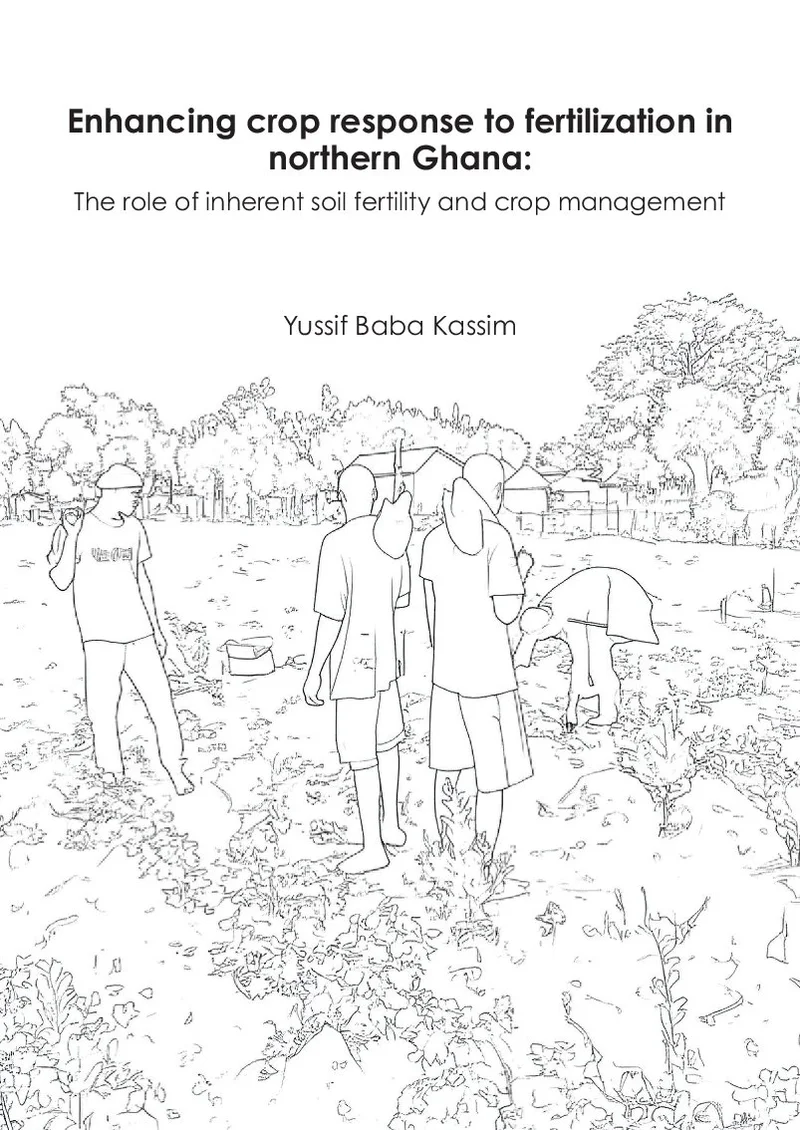
Yussif Baba Kassim
Enhancing crop response to fertilization in northern Ghana
4 september 2026
Wageningen University
Open Ebook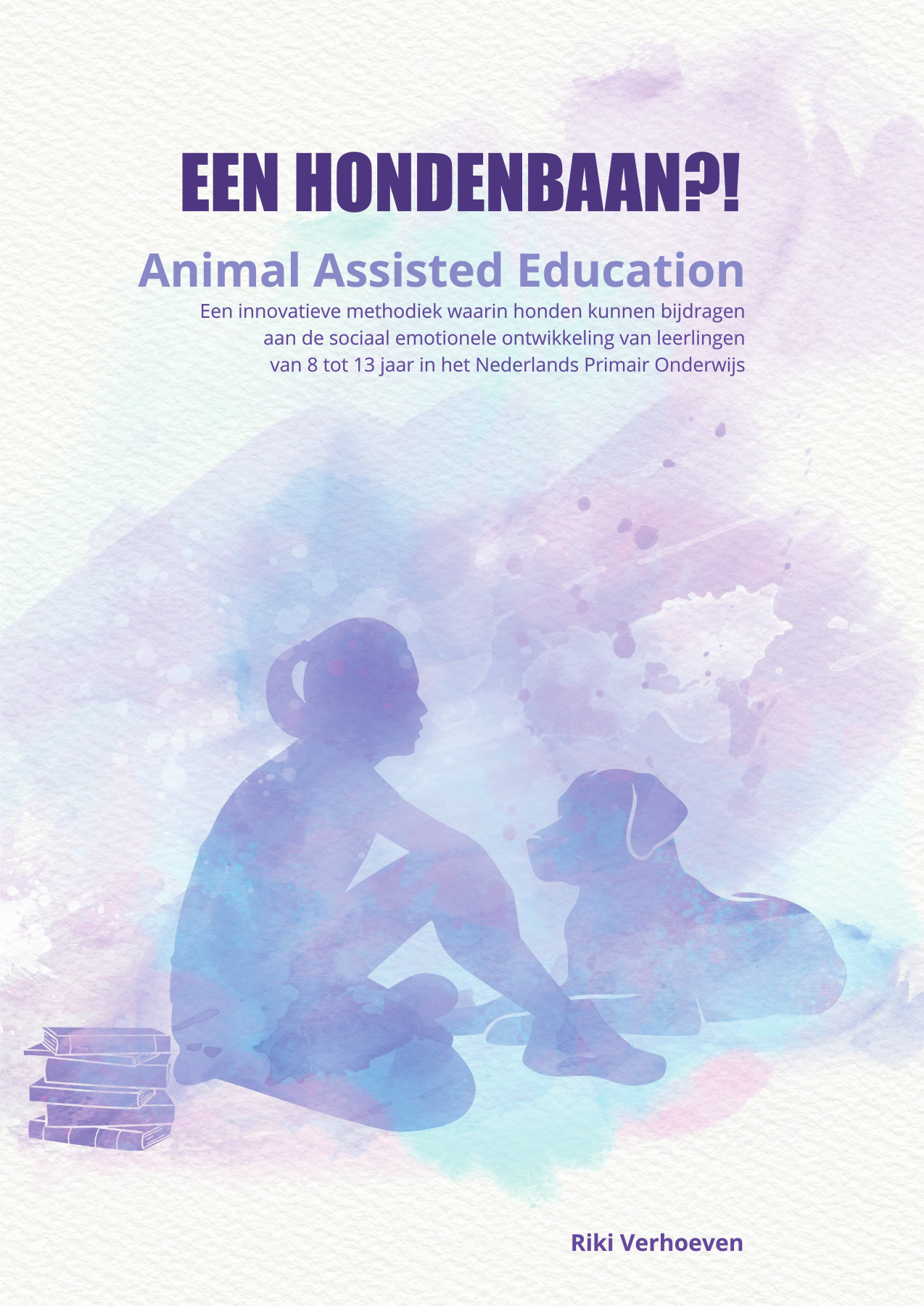
Share this project
Summary
This dissertation focuses on whether Animal Assisted Education (AAE) can help support students with special educational needs within the framework of Tailored Education. As a start to this dissertation, literature review (chapters 2 and 3) was conducted to explore and define AAE. A literature review (Chapter 3) was conducted according to PRISMA guidelines (Liberati et al., 2009). In addition, a mixed-method study (Tashakorri & Teddlie, 1998) was designed that utilized quantitative and qualitative research to examine the effects of AAE on the social emotional development of students who attended the DOG project. The exploratory study consisted of two parts: questionnaires and observations (Chapter 4). The questionnaires were part of the VISEON instrument (Cito Group, 2014), which measures the social emotional development of elementary school students. As a theoretical basis in developing the teacher list, Viseon relied on the Big Five personality structure (Kohnstamm, 1993). The scales were developed using the One Parameter Logistic Model (OPLM) (Verhelst & Verstralen, 1994). Through observations, we examined development of nonverbal and verbal communication during sessions in which students worked with dogs. Finally, parents and teachers were interviewed (Chapter 5). A semi-structured questionnaire was prepared in advance, and the interviews were coded from the grounded theory method (Denzin & Lincoln, 2017; Glaser & Strauss, 2017; Szàsz, 2002). The coding of the interviews was conducted in three steps, open, axial and selective coding (Boeije, 2014; Maso & Smaling, 1998).
In the Antrozoology research area of human-animal interactions, a framework of Enactive Antrozoology has been proposed by Verheggen et al. (2017). This theoretical framework elaborates on the idea that interactions between humans and animals are embodied and interact through verbal and nonverbal communication. It is well known that physical contact is necessary for children to develop, including in education (Bowlby, 1988; Moberg, 2010; van Manen, 1991, 2014). Very limited research had been done in the field of Animal Assisted Education worldwide. Gee et al. (2017) launched a preliminary theoretical model for AAE. In this model, motivation, engagement, self-regulation and social interaction appear to be a bridge to achieve social emotional development and learning.
Findings from the literature review (Chapters 2 and 3)
Three mechanisms of action in AAE are identified in the literature, which are possible levers for the functioning of AAE and contribute to further conceptual knowledge development of AAE. First, Play: as a playful and natural form of interaction, play acts as an effective way to influence social emotional development in a positive and relaxed way, which we can identify in several included studies. A second possible mechanism of action involves mutual embodied attunement. The role of nonverbal communication and body language between child and animal provide opportunities to contribute to children’s development. Six studies from the literature review traced this mechanism of action. Self Determination Theory (SDT) is a third possible mechanism of action. The presence of animals in education can increase motivation tolerance, self-confidence and enjoyment in students, according to several studies.
Findings from exploratory research (Chapters 4 and 5)
To explore whether AAE contributes to the emotional and social development of children between the ages of 8 and 13 who participated in the DOG project, qualitative and quantitative methods were used. After the project ended, positive changes were observed in the students who participated in the intervention. Participants showed a significant increase in self-confidence, which was evident not only in their interactions with peers, but also in the way they behaved toward teachers. Their social relationships improved noticeably, contributing to a more positive and relaxed group dynamic. In addition, there were significant improvements in their communication skills. For example, the students spoke with more confidence, better voice volume and clearer articulation. Their interaction with the dog made them more dynamic and open in their behavior.
Teachers also reported significant advances. They noticed that students performed better in areas such as work ethic, social behavior and emotional stability. The intervention helped them better present themselves, set boundaries and resolve conflicts peacefully. Students reported greater self-confidence, a more positive self-image and improved relationships with classmates, including better communication and greater appreciation for others. Teachers found that the dog played a crucial role in supporting students. The presence of the animal helped children calm down, express emotions and process situations better. Teachers also appreciated working with the dog-assisted teacher, who gave them practical tips for further guidance. Parents confirmed these positive effects. They saw their children becoming more assertive, social and communicative. The playful approach of the project was particularly appreciated, with parents describing the intervention as accessible and light. They saw the guidance of the dog-assisted teacher as an important part of its success.
Conclusions
The following questions were asked at the beginning of the study:
A) Can AAE contribute to supporting students with special educational needs within the framework of Appropriate Education?
The study shows that AAE can help support students with special educational needs. It strengthens social emotional skills such as self-regulation, social integration and emotion regulation, while also promoting self-confidence and motivation. AAE’s playful and experiential approach creates a safe learning environment in which students can develop naturally. This makes AAE a valuable intervention for Tailored Education.
B) What theoretical backgrounds, mechanisms of action and effects are described?
In the literature review, we found:
Play: The play element supports social emotional and cognitive skills, such as emotion regulation, memory and planning.
Mutual behavioral attunement: The mechanism of mutual embodied attunement emphasizes the role of nonverbal communication and synchronization between humans and animals.
Self Determination Theory (SDT): Animals in educational environments enhance intrinsic motivation, self-confidence and enjoyment of learning.
C) From exploratory research, what effects does AAE have and what perceptions do parents and teachers have about it?
The DOG project showed significant improvements in self-confidence, social relationships, work attitude and communication skills of participating students. In addition, it strengthened motivation and social interactions in students with additional educational needs. Parents noted that their children became more assertive, social and communicative. They appreciated the playful nature and accessibility of the intervention. Teachers saw improvements in emotion regulation, conflict management and social interaction. They also appreciated the collaboration with the dog-assisted teacher and the professionalization opportunities the project provided.
Discussion and limitations
The literature review on Animal Assisted Education (AAE) highlights both the potential and limitations of this field. While findings point to promising mechanisms of action, there remains a significant gap in consistent theoretical frameworks and empirical evidence. This raises the question of how AAE can be more effectively integrated into educational practices and better understood in terms of underlying processes.
One of the key insights is the identification of possible mechanisms of action that may explain the functioning of AAE. First, the power of play (Gray, 2013; Huizinga, 2017; Martens, 2019; Smith & Roopnarine, 2019). Play is playful and natural and offers opportunities to positively stimulate social emotional development (Connell et al., 2019; Barber & Proops, 2019; Bassette & Taber-Doughty, 2016; Dicé et al., 2017; Malti & Noam, 2026; Stevenson et al., 2015). This is consistent with existing research that emphasizes the importance of play as an educational tool (Brelsford et al., 2017; Connell et al., 2019; Groothoff et al., 2010; Gee et al., 2017; Gray, 2013; Smith & Roopnarine, 2018). At the same time, the question remains how the game element in AAE can be specifically used to achieve maximum results in diverse learning environments.
A second possible mechanism of action involves mutual embodied attunement - a process of synchronization between humans and animals (Albuquerque et al., 2016; Fugazza et al., 2016; Stern, 1985; Verheggen et al., 2017). The role of nonverbal communication and body language provide opportunities to contribute to children’s development. Yet there is still little empirical research that systematically examines this mechanism in the context of AAE. Better understanding how these interactions contribute to social emotional development and arriving at a specific model for AAE would be a valuable step in further development of the field. Studies by Correale et al. (2017), Dicé et al. (2017) McDonald et al. (2017), Schretzmayer et al. (2017), Stevenson et al. (2015) and Trammell (2017), support the role of mutual embodied attunement.
Self Determination Theory (SDT) (de Brabander & Martens, 2014; Maslow, 1986; McLelland, 2009; Ryan & Deci, 2002) provides an explanatory model for the role of motivation as a mechanism of action. The presence of animals in education can increase motivation (Levinson et al., 2017), tolerance, self-confidence and enjoyment in students (Gee et al., 2017). The included study by Bassette and Taber-Doughty (2016) establishes a relationship to the SDT.
Motivation is surprisingly cited in eleven of the eighteen studies in the literature review where we can ask how play, mutual embodied attunement and motivation are interrelated and reinforced. In addition, there is a dearth of empirical research on how these mechanisms of action reinforce each other. For example, although play seems a natural and effective way to promote social emotional skills, it remains unclear how it can be used specifically to achieve maximum impact. The mechanism of reciprocal behavioral attunement, in which nonverbal communication between humans and animals is central, is theoretically well established, but there is a lack of practical knowledge on how it can be optimally applied in AAE. The precise impact of child-animal interactions on intrinsic motivation and learning pleasure requires further elaboration.
Investing in research and professionalization of AAE programs can help make this promising intervention more widely and effectively used. Current results suggest that AAE can make a valuable contribution to education, but further validation and practical innovation are essential to realize its full potential. The findings of the exploratory research on the DOG project highlight the potential of AAE to have significant positive effects on the social emotional development of students, particularly those with additional educational needs. The increase in self-confidence and improved communication skills highlight the power of the intervention to have impact on multiple levels. These results are consistent with previous studies indicating the effectiveness of AAE in promoting motivation, social interaction and emotional stability (Brelsford et al., 2017; Gee et al., 2017). In addition, collaboration between teachers and the dog-assisted teacher proved essential for maximizing the effects of the intervention.
Restrictions
Although promising, we are aware of the relatively small sample size and limited generalizability of our results. Although the DOG project showed significant short-term effects, such as improvements in self-confidence and social interactions, the extent to which these results are sustained beyond the end of the intervention is unclear. Longitudinal research may help to better understand the sustainability of outcomes and the contributing factors. The voice of a crucial group, the students themselves, has been limited. The applicability of AAE also poses a challenge. The DOG project focused on students with additional educational needs, but the question remains how AAE can be adapted to other target groups or broader educational contexts. Without standardized protocols, it is difficult to ensure consistency and effectiveness when implemented on a larger scale.
The positive experiences of both teachers and parents highlight the value of AAE as an innovative and effective complement to traditional educational practices. To realize the full potential of this intervention, further professionalization of AAE programs is needed, as well as policy support to sustainably facilitate implementation in different educational contexts. The DOG project thus provides a valuable foundation for the further development of AAE within education.
Future prospects and innovation
AAE provides unique opportunities to enrich education and promote inclusiveness. Through playful interactions and physical engagement with animals, a safe learning environment is created in which students are motivated to develop social and emotional skills. To realize the full potential of AAE, further professionalization, empirical research and standardized protocols are necessary. By combining scientific insights with practical experience, AAE can become firmly established within education. This requires sustainable implementation and broad support, safeguarding the interests of both students and animals. AAE is a valuable and innovative intervention that contributes to students’ social emotional and academic development. Its game elements and behavioral alignment make it an attractive addition to traditional education, especially for students with special needs. At the same time, current limitations - such as the lack of long-term studies and professional standards - highlight the need for further research and development. With a focused approach, AAE can become a sustainable and powerful tool within the inclusive education of the future.
Recommendations
The following recommendations are made:
Strengthen the empirical foundation
Prioritize longitudinal research: Develop studies that measure the long-term effects of AAE on social emotional and academic growth.
Focus research on mechanisms of operation: Analyze the specific influence of game elements and reciprocal behavioral alignment on learning outcomes.
Professionalize AAE practitioners
Develop standardized protocols: Create uniform guidelines for applying AAE in different educational settings to ensure consistency and safety.
Implement training and certification: Introduce training and certification programs for teachers and supervisors, focusing on both pedagogy and animal welfare.
Provide support to schools: Facilitate partnerships between schools, AAE specialists and outside agencies to share knowledge and expertise.
Increase the inclusiveness and accessibility of AAE
Explore variation in response: Study how students with different backgrounds and experiences with animals respond to AAE and adjust interventions accordingly.
Guarantee accessibility: Make sure AAE is appropriate for all students, regardless of their previous experience with animals.
Encourage inclusive policies: Promote the use of AAE as part of appropriate education to support students with diverse needs.
Involve students as active participants
Research learner experiences: Prioritize studies that explore students’ perceptions and experiences with AAE.
Use feedback for improvement: Integrate student input into the design and implementation of AAE programs.
Integrate AAE sustainably into education
Develop an integrated approach: Combine AAE with existing teaching methods and tailor interventions to the specific needs of schools and students.
Promote cooperation with parents: Encourage parent participation and inform them about the benefits and opportunities of AAE.
Guarantee animal welfare: Provide clear guidelines to protect animal welfare within AAE interventions.
By investing in scientific foundation, professionalization, inclusiveness and collaboration, AAE can develop into a widely applicable and sustainable intervention within education. Leveraging its unique mechanisms of operation, such as play and behavioral alignment, not only provides opportunities for students with special needs, but also contributes to a more inclusive and innovative educational culture.