Jan Erik Doornweerd
Digital phenotyping of individual broilers in group-housing
4 september 2026
Wageningen University
Open Ebook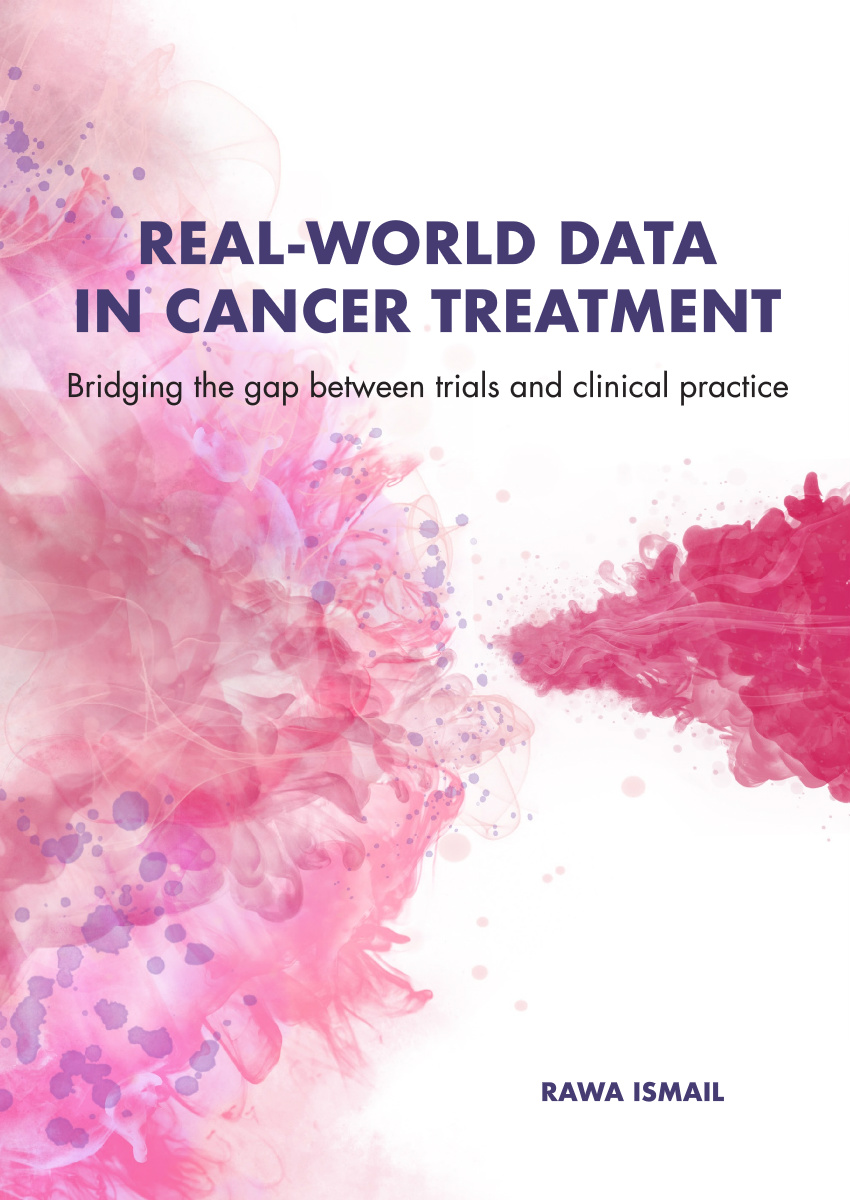
Share this project
Summary
The treatment landscape for patients with certain types of cancer (advanced melanoma, lung cancer, and advanced breast cancer) has dramatically changed in recent years with the important breakthrough in medical treatments[1,2]. Randomized controlled trials (RCTs) are considered the golden standard to determine the efficacy of new treatments[3,4]. The different aspects of a RCT and the processes used (randomization, blinding, and long follow-up) minimize the risk of confounding and information- and selection bias that could influence the results. This improves the internal validity of clinical trials, enabling the estimation of new treatments’ valid treatment effects. The strict in- and exclusion criteria used in a RCT cause a significant difference between patients enrolled in RCTs and the heterogeneous patient population treated in routine clinical practice, which lowers the external validity of RCTs[5,6]. To treat patients in daily clinical practice effectively and to be able to give patients realistic treatment expectations, it is necessary to estimate the real-world effectiveness of therapies based on patients’ characteristics.
An issue in the field of cancer is the rising health care costs[7]. Novel treatments are often expensive[8]. Reimbursement of systemic therapies is usually based on the trial data collected for market approval. Since a broader population in clinical practice will be treated with these therapies, information on the real-world effectiveness of treatments is necessary for daily clinical practice, health technology assessment bodies (HTA’s), and insurers.
In recent years, real-world data (RWD) has gained the interest of different stakeholders in cancer care. The RWD used in this thesis are data collected in a non-experimental setting. The rapid changes in treatment options for patients with cancer and the rising healthcare costs cause a need for RWD. The studies in this thesis aimed to investigate how the real-world population of patients with cancer differs from the trial population and how real-world data can be used in daily clinical practice to improve cancer care.
Part I: The use of quality registries to generate real-world data
In part I, we focused on quality registries and new methods to collect RWD from existing data sources without causing an extra registration burden. In chapter 2, we describe the initiation of the DICA Medicines program and present the first RWD results. This program uses multiple existing real-world data sources to provide valuable insights into cancer care without causing an extra registration burden.
Chapter 3 describes the initiation and first results of the Dutch Lung Cancer Audit for Lung Oncology (DLCA-L). The DLCA-L started in 2016, collecting RWD on all lung cancer patients diagnoses and systemic treatment in the Netherlands. Quality indicators were developed, which led to improvement in in-hospital cancer care. An example of a quality indicator is brain imaging at diagnosis of stage III NSCLC patients, which increased from 80% in 2017 to 90% in 2019, and thus hospital variation was reduced. The DLCA-L has also been very valuable in monitoring immunotherapy use in the Netherlands[9].
Part II: Methods to compare real-world and clinical trial outcomes
In part II, we discuss appropriate methods to investigate the differences between real-world and clinical trial patients. Chapter 4 described whether data from a quality registry could provide comparable data as post-approval clinical trials. For advanced melanoma patients, no direct comparisons between real-world and trial patients existed. We, therefore, conducted a study on advanced melanoma patients with brain metastases that were treated with BRAF-MEK inhibitors. We used data from the Dutch Melanoma Treatment Registry (DMTR) for the real-world population and data from four post-approval clinical trials derived from the Medicines Evaluation Board. Two methods were used to compare the two groups: a Cox hazard regression model and propensity score matching. Both methods showed no difference between the groups when matching on or adjusting for patient- and tumor characteristics. This study showed that registries could be a complementary data source to post-approval clinical trials to establish information on clinical outcomes in specific subpopulations[10]. In chapter 5 we aimed to explore the additional benefit of a comparison from pivotal trial data with patient-level data (PLD), focusing on nivolumab treatment in stage IV NSCLC patients. Previous studies used reported outcomes from pivotal trials, but any observed differences could only be limitedly explored further for causation because of the unavailability of patient-level data from trial participants[11]. This study showed that analyzing PLD from both real-world and trial patients together can lead to better insight in potential factors responsible for a gap in outcomes between these two settings.
Part III: Differences in outcomes between real-world and trial patients with melanoma
It is important to quantify and understand the differences in real-world population outcomes and the outcomes presented in phase III clinical trials to improve clinical decisions based on RWD. Chapter 6 focuses on ineligible advanced melanoma patients and their real-world outcomes. Ineligible patients were defined as patients who met one or multiple exclusion criteria of the phase III clinical trials. Since ineligible patients are excluded from phase III trials, this real-world information is significant for clinical practice. A total of 40% of the systemically treated advanced melanoma patients would have been considered ineligible for phase III clinical trials. Ineligible patients had a poorer median overall survival (mOS) compared to eligible patients (8.8 versus 23 months), but the 3-year OS probability was still 22%. This study concluded that the prognosis of ineligible patients with advanced melanoma in real-world was very heterogeneous and highly dependent on lactate dehydrogenase (LDH) value, Eastern Cooperative Oncology Group Performance Score (ECOG PS), and symptomatic brain metastases[12].
Chapter 7 reports the real-world outcomes of adjuvant-treated resected stage III/IV melanoma patients. This study shows treatment patterns, relapse, and toxicity rates beyond the clinical trial setting. The recurrence-free survival (RFS) at 12 months was 70.6% (95% CI, 66.9-74.6), similar to the trial RFS rates. However, adjuvant anti-PD-1 treatment in daily practice showed slightly higher toxicity rates (18% versus 14%) compared to trials. Sixty-one percent of patients prematurely discontinued anti-PD-1 therapy[13].
In chapter 8, we investigated the real-world survival of advanced melanoma patients treated with BRAF-MEK inhibitors and identified characteristics of long-term survivors with advanced melanoma. Recently, 5-year survival outcomes of advanced melanoma patients treated with BRAF-MEK therapies in RCTs were published[14–16]. These results are favourable, but the real-world results remained unknown. The median progression-free survival (mPFS) and mOS of real-world patients were respectively 8.0 (95% CI, 6.8-9.4) and 11.7 (95% CI, 10.3-13.5) months. Two-year survival was reached by 28% of the patients, 22% reached 3-year survival, and 19% reached 4-year survival. Long-term survival of real-world patients treated with first-line BRAF-MEK inhibitors is significantly lower than that of trial patients, which is probably explained by poorer baseline characteristics of patients treated in daily practice.
Part IV: The value of real-world data in clinical practice
In part IV, two studies are described in which RWD were used to create valuable evidence that can be used in clinical practice. Chapter 9 focuses on a different patient population, patients with advanced breast cancer treated with palbociclib. This study aimed to provide insights into the real-world use of palbociclib, dose reductions, and drug effectiveness in (older) patients with advanced breast cancer. Dose reductions occurred in 33% of all patients (n=598), which is similar to the PALOMA-3 trial[17]. Patients with dose reductions had no poorer outcomes compared to patients not requiring a dose reduction. Older patients treated with palbociclib had more frequent dose reductions, but this did not appear to affect OS (20.7 vs. 26.7 months, p=0.051)[18].
Another value of quality registries is the availability of RWD in extraordinary settings. To investigate the effects of the SARS-COV-2 pandemic on regular lung cancer care in the Netherlands, we studied in chapter 10 every patient with lung cancer registered in the DLCA-L. We observed a major decline in the number of non-small cell lung cancer (NSCLC) and small-cell lung cancer (SCLC) patients diagnosed during the first wave of the COVID-19 pandemic compared to the same period in 2018 and 2019. Furthermore, NSCLC patients diagnosed during the first wave of the pandemic presented with significantly worse ECOG PS ≥2 (26% vs. 20%, p-value < 0.001), and more patients presented with metastatic disease compared to the control period (49% vs. 43%, p-value <0.001)[19]. We fear that the impact of the COVID pandemic on lung cancer care will remain visible in upcoming years and that delayed lung cancer diagnosis may lead to a different victim group of COVID-19. In chapter 11 a general discussion on the studies in this thesis is presented. The main findings, relevant literature, the relevance of our findings, limitations of the studies and future perspectives are discussed.