Susan Boonman
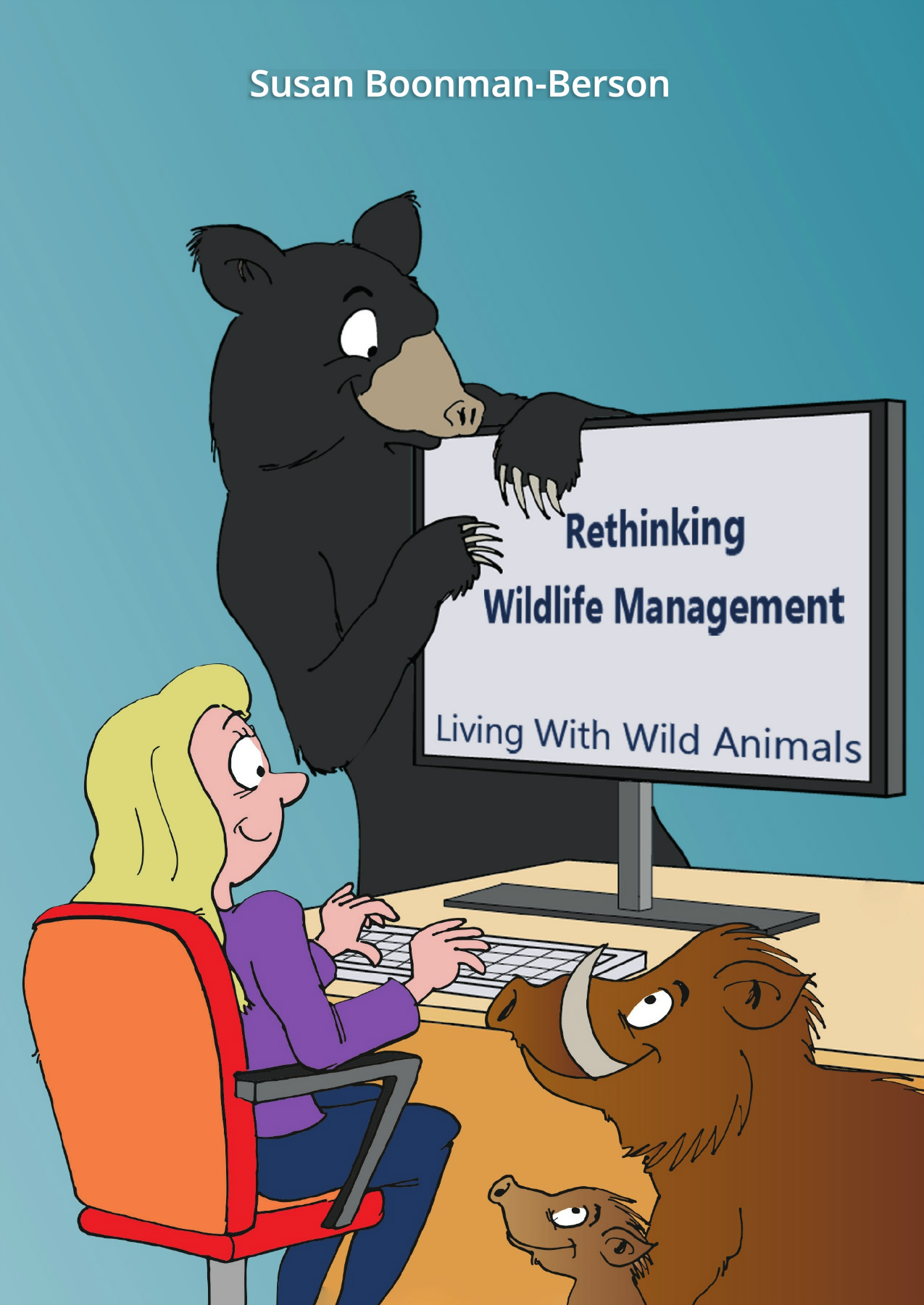


Rethinking Wildlife Management
Worldwide conflicts between humans and wild animals continue to increase. These conflicts are inherently complex and wildlife management faces many difficulties in attempting to anticipate and control them. Managing such conflicts involves the use of and reliance on spaces, data, and categories in deciding which wildlife management strategies to implement. However, these factors are not self-evident and therefore often highly contested. The employed wildlife management strategies are typically based on rigid spaces, data and categories and are focused on controlling wild animals and separating them from humans. Cohabitation between humans and wild animals is discussed as a suggested alternative to intense control of wild animals. Its focus is on a dynamic approach to spaces, data and categories, which has the potential to generate cohabitation strategies that require the use of flexible and dynamic boundaries. This dynamic approach embraces an inclusive process that shifts focus from either humans or wild animals to a process that focusses on the interactions between them and the landscape where these interactions take place. The emphasis is on the ‘co’ in co-habitation, reflecting the mutuality involved in these interactions, including mutual adjustments and mutual learning by both humans and wild animals. Such a mutual approach to understanding human-wild animal interactions relies on in-depth knowledge of both the interactions and the complex of activities between human, wild animal and landscape that are involved. This research seeks to advance insight into wildlife management practices that are confronted by human-wildlife conflicts and explore ways in which cohabitation might be achieved. The analytical focus is therefore on the relations between humans, wild animals, and the landscape in which they dwell. Specifically, the focus is on examining which spaces, data and categories articulated in wildlife management practices could contribute to bringing about cohabitation between humans and wild animals. Accordingly, the following set of research questions guide this research: How can wildlife management practices achieve cohabitation between humans and wild animals? 1. What is the role of space, data and categories in wildlife management? 2. Which cohabitation strategies can be identified in wildlife management practices? 3. In what ways do the acquired insights contribute to a better understanding of managing human-wildlife interactions? Worldwide conflicts between humans and wild animals continue to increase. These conflicts are inherently complex and wildlife management faces many difficulties in attempting to anticipate and control them. Managing such conflicts involves the use of and reliance on spaces, data, and categories in deciding which wildlife management strategies to implement. However, these factors are not self-evident and therefore often highly contested. The employed wildlife management strategies are typically based on rigid spaces, data and categories and are focused on controlling wild animals and separating them from humans. Cohabitation between humans and wild animals is discussed as a suggested alternative to intense control of wild animals. Its focus is on a dynamic approach to spaces, data and categories, which has the potential to generate cohabitation strategies that require the use of flexible and dynamic boundaries. This dynamic approach embraces an inclusive process that shifts focus from either humans or wild animals to a process that focusses on the interactions between them and the landscape where these interactions take place. The emphasis is on the ‘co’ in co-habitation, reflecting the mutuality involved in these interactions, including mutual adjustments and mutual learning by both humans and wild animals. Such a mutual approach to understanding human-wild animal interactions relies on in-depth knowledge of both the interactions and the complex of activities between human, wild animal and landscape that are involved. This research seeks to advance insight into wildlife management practices that are confronted by human-wildlife conflicts and explore ways in which cohabitation might be achieved. The analytical focus is therefore on the relations between humans, wild animals, and the landscape in which they dwell. Specifically, the focus is on examining which spaces, data and categories articulated in wildlife management practices could contribute to bringing about cohabitation between humans and wild animals. Accordingly, the following set of research questions guide this research: How can wildlife management practices achieve cohabitation between humans and wild animals? 1. What is the role of space, data and categories in wildlife management? 2. Which cohabitation strategies can be identified in wildlife management practices? 3. In what ways do the acquired insights contribute to a better understanding of managing human-wildlife interactions? To answer these research questions an interpretive multispecies research approach endeavour involving humans, wild animals and landscape. It introduces the concept has been employed in order to address the various ways humans and wild animals of multi-sensory writing and reading to analyse these dynamic, and interactive respond to each other as they roam in the landscape. The research consists of a spatial interactions. Based on the study of black bear management, this chapter
| Publicatiedatum | 21 september 2018 |
| Universiteit | Wageningen University |
| Auteur | Susan Boonman |
| ISBN nummer | 978-94-6343-474-4 |
| DOI nummer | 10.18174/455279 |