Sid Penders
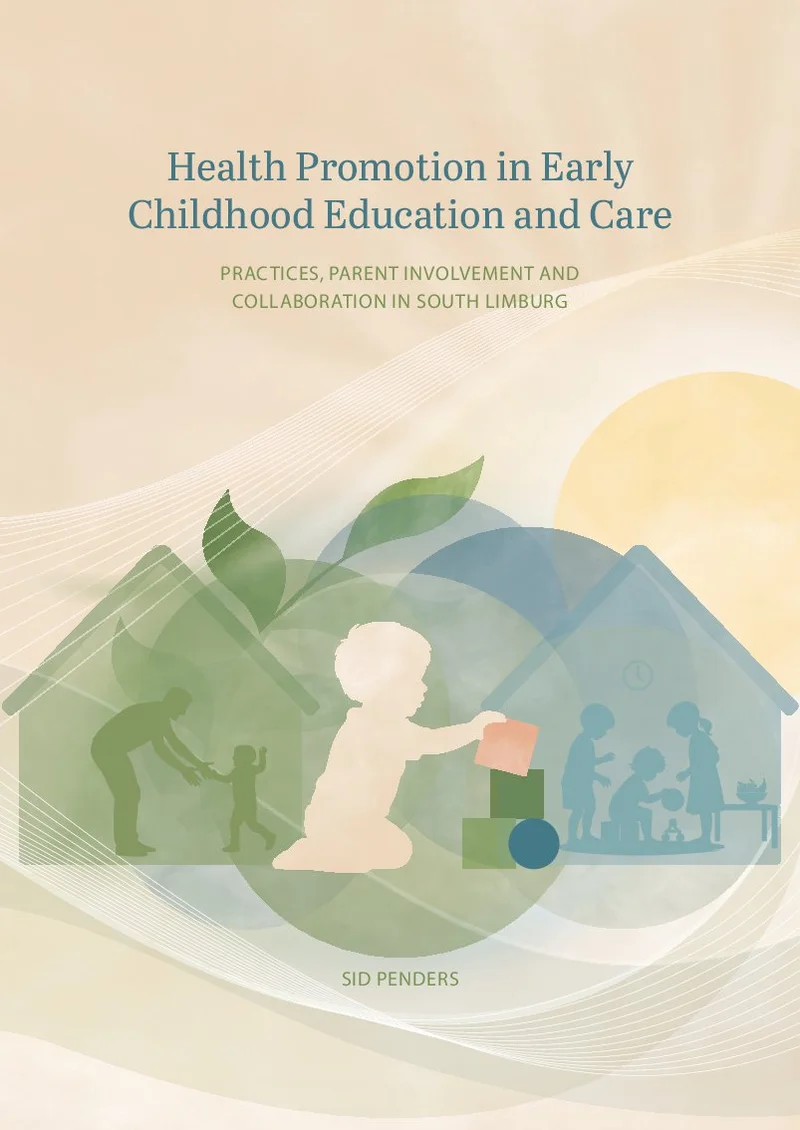


Health Promotion in Early Childhood Education and Care
Growing up healthy in South Limburg is not self-evident. Despite the Netherlands’ generally high standard of living, substantial regional and socio-economic inequalities persist, resulting in unequal opportunities for children’s healthy development. South Limburg is characterised by persistent health deprivation compared to national averages, reflected in lower life expectancy, poorer self-reported health, and higher rates of child poverty and developmental delays. These disparities often emerge early in life during the critical early childhood period when biological, cognitive, and social foundations for lifelong health are established. Addressing these inequalities requires early, integrated, and structural action. In response, the sixteen municipalities of South Limburg and their regional partners have initiated Trendbreuk (“Breaking the Trend”), a collective strategy aiming to reduce regional health deprivation by 25% by 2030. Within this life-course approach, the early years (0–4) are identified as a key window for preventive action. The Early Childhood Education and Care setting plays a crucial role in shaping lifelong health behaviours with staff practices, knowledge, and attitudes being key determinants of children’s engagement in healthy behaviours. At the national level, the Healthy Childcare approach offers a framework for systematically integrating health promotion within ECEC organisations. Yet, despite its potential, the extent and quality of implementation vary considerably between organisations. Moreover, existing initiatives often target isolated health domains, while limited attention is given to creating coherence between home and ECEC environments or strengthening collaboration across professional sectors. This research gap underscores the need for this dissertation: to better understand how the ECEC setting in South Limburg can contribute to reducing early-life health inequalities through the implementation of health topics, meaningful parent involvement and interprofessional collaboration. Accordingly, the overall aim of this dissertation as presented in Chapter 1 was to explore how ECEC can effectively promote young children’s health in South Limburg by addressing three interrelated questions: 1. To what extent and how are health promotion policies, practices and interventions related to the Healthy Childcare topics implemented within ECEC organisations in South Limburg, and how do ECEC staff perceive the implementation? 2. What are parents’ needs, preferences, and experiences regarding parent involvement and communication by ECEC organisations? 3. How is inter-organisational collaboration in relation to the ECEC setting experienced and perceived by the members of the Learning Community? And what are perceived facilitators and barriers regarding the dissemination and implementation of shared knowledge and best practices within the Learning Community and on the organisational level? By examining these questions, the dissertation contributes to a more comprehensive understanding of how early childhood environments and the partnerships within and around them can be leveraged to promote health from the very start of life. Ultimately, this work aims to support policymakers, ECEC professionals, and researchers in developing more coherent, collaborative and effective approaches to promoting young children’s health in South Limburg and beyond. The study presented in Chapter 2 explores the embedding of health promotion within ECEC settings in South Limburg, in terms of both policies, practices and evidence-based interventions that are implemented. Recognising the crucial role of early childhood environments in shaping lifelong health behaviours, the study aimed to map existing health promotion efforts across multiple topics and identify areas for improvement. Unlike earlier studies, which often focused solely on nutrition and physical activity, this research adopts a broader perspective by also considering topics such as media use and green environments. Conducted in South Limburg, a region of the Netherlands, the study compared data collected at two time points (in 2020 and 2022) to assess potential changes over time. A quantitative design was employed, with an online questionnaire being administered to ECEC staff across ECEC locations. The survey investigated both the presence of health-related policies and the extent to which these policies embedded into daily routines and activities across four health-related domains: nutrition, physical activity, media use and green environments. A total of 123 ECEC locations participated in 2020, increasing to 141 in 2022. Descriptive analyses mapped the implementation of policies and practices, while Pearson’s chi-square tests examined differences between the two measurement points. The results showed that health promotion efforts are most strongly established in the domains of nutrition and physical activity. There was a noticeable increase in the implementation of practices in these areas across the two measurement years, suggesting a growing awareness of and focus on healthy lifestyle in ECEC. In contrast, media use and green environments received less attention, with fewer ECEC locations reporting structured policies or systematic practices related to these topics. The findings also reveal a discrepancy between formal policies and their implementation in daily routines, indicating that while many organisations have relevant policy in place, they are not always translated into practice. The lack of structured interventions and policy guidance for media use and green environments underscores the need for future research and practice to adopt a broader, integrated approach to health promotion within ECEC settings. Chapter 3 investigated the implementation of a broad range of health promotion practices by ECEC staff in the Netherlands, focusing on topics beyond nutrition and physical activity, including green environment, media education, daily routines, sexual development, sun protection, hygiene, and smoke-free environments. A sequential explanatory mixed methods design was used. Quantitative data were collected through structured observations at 16 ECEC locations in South Limburg using the Healthy Childcare observation tool, which covered the nine health topics described above. Inter-rater reliability was strong (Cohen’s kappa = 0.85). In addition, qualitative data were obtained through semi-structured interviews with 10 ECEC staff across seven locations, guided by the Measurement Instrument for Determinants of Innovations (MIDI) framework. The interviews explored staff perceptions regarding the health topics, individual roles in implementation, organisational context, and socio-political support. Quantitative data were analysed descriptively, and thematic analysis of qualitative interviews was conducted to identify determinants influencing implementation, while remaining open to new insights beyond the MIDI framework. Nutrition practices used were generally positive. For example, staff rarely used food as a reward or punishment, and they consistently provided praise that emphasised healthy eating behaviours. However, children were rarely involved in food preparation, which may limit potential benefits for dietary intake and food acceptance. Physical activity was provided regularly, but staff involvement was limited, potentially reducing activity levels, particularly for girls. Screen time was low in ECEC settings, although children’s total daily exposure at home exceeded recommendations. Attention to green environments and sun protection was limited, with barriers including maintenance and resource constraints. Hygiene-related practices and smoke-free environments were well implemented, reflecting existing policies and guidelines. No practices were observed related to sexual development, with staff perceiving it as not applicable for this age group. The study highlights the need for integrated approaches that connect health topics, staff training, policy development and parental involvement to improve health promotion in ECEC settings. Chapter 4 examined parents’ perceptions and experiences regarding the promotion of healthy behaviours in young children (aged 0–4 years) at home and in the ECEC setting in South Limburg, the Netherlands. The home and ECEC environments are considered interdependent, as practices in one setting can influence behaviours in the other. Earlier research has shown that inconsistent practices between parents and ECEC staff were identified as a potential barrier to fostering healthy behaviours, highlighting the importance of collaboration between both parties. A sequential explanatory mixed methods design was employed. Quantitative data were collected via an online questionnaire completed by 811 parents, addressing the importance of and involvement in a broad range of health topics, including nutrition, physical activity, media use, green environment, sleep, hygiene, and social-emotional development. Qualitative data were collected through semi-structured online interviews with 14 parents to explore these issues in greater depth. Questionnaire and interview data were analysed using descriptive statistics and thematic analysis. At home, parents generally prioritised nutrition, physical activity, spending time in nature, social and emotional development, sun protection and physical safety. Media use, sexual development and substance use were considered less relevant for this age group. In the ECEC setting, parents rated social-emotional development, physical safety, and physical activity as the most important topics. Physical activity and nature were considered important, with outdoor play being particularly valued. As for communication with ECEC, parents preferred indirect communication channels such as newsletters and portals, but also expressed interest in being more directly involved through meetings, workshops, or decision-making processes. Overall, parents were satisfied with current ECEC practices, but they also identified areas where improvements could be made, such as enhancing the focus on nature, physical activity, and direct engagement. Promoting health-related practices effectively in the ECEC setting and at home requires alignment between parents and staff. Direct parental involvement was in earlier research shown to improve children's health outcomes, and ECEC organisations can support this by offering workshops, facilitating structured interactions, and establishing clear communication channels. Developing formal health policies helps staff and parents maintain consistent health practices. Training ECEC staff in communication and parental engagement strategies is essential in order to address diverse parental preferences, ensure inclusivity and foster meaningful collaboration. Incorporating parental involvement into organisational policies can reinforce a culture of continuous education and collaboration, ultimately strengthening health promotion for young children. Addressing complex health challenges in the ECEC setting requires strong (inter-organisational) collaboration between ECEC professionals, health promotion experts and other stakeholders. Learning communities (LCs) provide a structured way to foster such collaboration, enabling knowledge exchange, professional growth, and dissemination of best practices across organisational boundaries. Therefore, Chapter 5 examined factors influencing the LCs operation and impact at three levels: (1) LC level, member participation and learning processes; (2) organisational level, implementation of shared knowledge within individual ECEC organisations; and (3) inter-organisational level, collaboration between ECEC organisations and other local stakeholders. A mixed methods sequential explanatory design was employed. Data collection included individual interviews, focus groups, systematic observations of LC meetings, and evaluation questionnaires for LC members. Interviews and focus groups explored motivations, experiences and perceived facilitators or barriers at the LC level and organisational levels. Observations assessed group dynamics and knowledge exchange. An inter-organisational network questionnaire captured collaborations between ECEC organisations and other stakeholders. Qualitative data were analysed using thematic coding and frameworks for evaluating group processes, while quantitative data were analysed using descriptive statistics and network visualisations. At the LC level, members shared a common goal of improving children’s health, with nutrition and physical activity as primary topics of interest. Subgroup work and a co-created magazine facilitated knowledge exchange, though translating ideas into concrete actions was initially challenging. The multidisciplinary composition of the LC enriched discussions, but its expansion reduced relational depth and cohesion. The coordinator was essential in maintaining engagement, setting agendas, and facilitating collaboration. Overall, the LC offered a safe, stimulating environment fostering trust, open communication, and professional learning. At the organisational level, knowledge transfer and implementation varied with structure, size, leadership support and culture of the participating organisations. Participation strengthened professionalisation, alignment with organisational goals and practical improvements in health promotion, while barriers included limited autonomy and resistance to change. At the inter-organisational level, existing partnerships with schools, municipalities and health professionals were maintained, with the LC improving collaboration quality, mutual understanding, and visibility of ECEC contributions. In conclusion, the study in Chapter 5 showed that LCs can effectively enhance professional learning, collaboration and cross-sector partnerships in ECEC. Sustained impact requires attention to group cohesion, facilitation, organisational support and strategic integration of LC-derived insights. Chapter 6 summarised the main findings and discussed the theoretical and methodological considerations. The findings reveal a strong foundation for health promotion, with topics like nutrition, physical activity, hygiene, and smoke-free environments thriving, thanks to robust national programmes and evidence-based interventions. While less established topics, such as green environments, media use, sun protection and sexual development are still emerging. this presents an opportunity for ECEC organisations to start paying more attention towards these health topics through targeted training and using innovative tools, in order to improve the health of children on a wider scale. Observations highlight the potential to bridge gaps between reported and actual practices, with solutions like increased time allocation, budget support and intensified staff engagement paving the way for even greater success. Parental involvement emerged as crucial but varied: while some parents are satisfied with indirect communication, others seek direct engagement through workshops, meetings, or joint activities. These findings highlight the need for flexible, culturally sensitive approaches that align practices between home and ECEC settings. The research was guided by multiple theoretical frameworks, including the Measurement Instrument for Determinants of Innovations (MIDI), the Learning Communities in the Social Domain Framework and the Interprofessional Team Collaboration Framework, which together supported the analysis of implementation processes, organisational dynamics, and collaborative learning. Methodologically, the study employed mixed methods designs and practice-based research combining questionnaires, interviews, observations and focus groups. This enabled co-creation of knowledge, responsiveness to stakeholder needs and practical relevance, while triangulation of methods strengthened validity and revealed discrepancies between perceived and actual practices. Overall, the dissertation underscores that sustainable health promotion in ECEC requires an integrated approach, combining evidence-based policies, staff development, flexible parental engagement and long-term collaboration to enhance children’s health and well-being.
| Publicatiedatum | 14 oktober 2026 |
| Universiteit | Universiteit Maastricht |
| Auteur | Sid Penders |
| ISBN nummer | 978-94-6534-646-5 |