Juan Sanchez
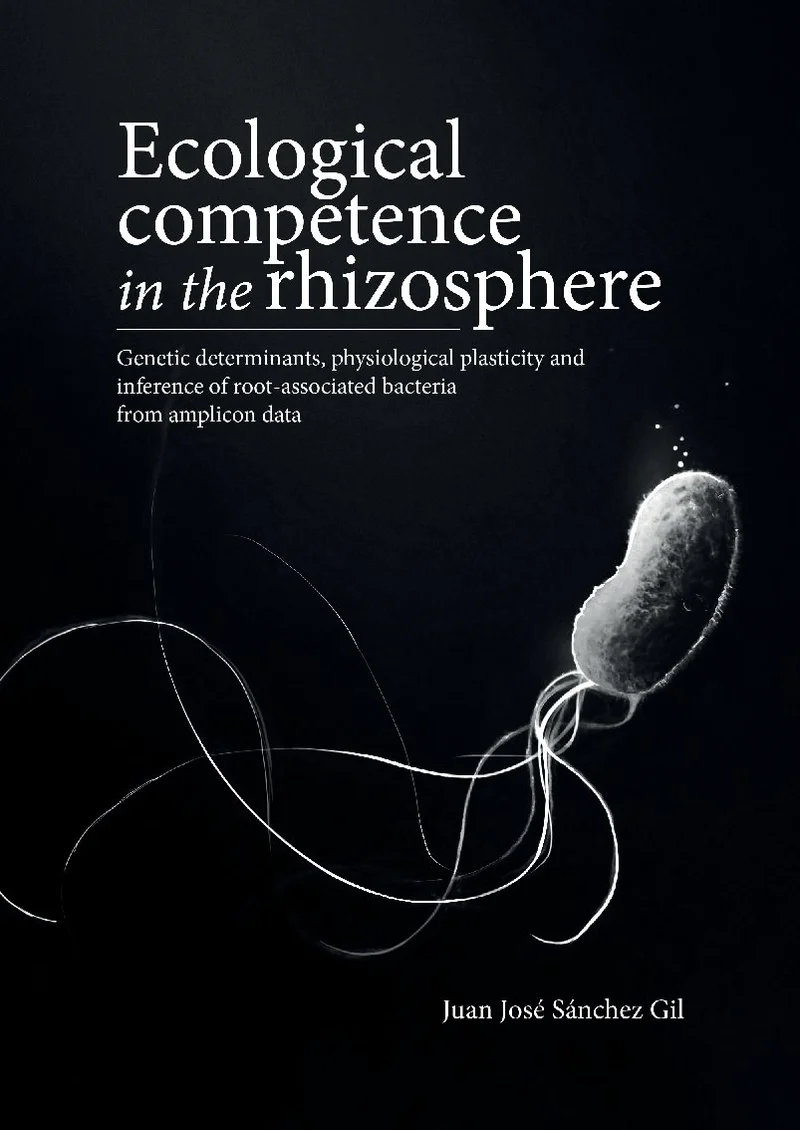


Ecological competence in the rhizosphere
Bioinoculant success as an ecological problem Modern agriculture increasingly requires biological solutions to enhance crop productivity and resilience while reducing reliance on synthetic inputs. The widespread use of mineral fertilizers and pesticides has contributed to soil degradation, biodiversity loss, and environmental pollution, while also offering limited robustness against increasingly variable climatic conditions. In this context, microbial bioinoculants – beneficial microorganisms applied to plants or soils – have emerged as a promising strategy, supported by extensive experimental evidence demonstrating their capacity to promote plant growth, improve nutrient acquisition, and enhance resistance to biotic and abiotic stress. However, despite this apparent potential, bioinoculant performance remains highly inconsistent in natural soils and field conditions, and even well-characterised strains with reproducible effects in controlled environments often fail to deliver reliable benefits under realistic agricultural settings. This inconsistency stems from the fact that bioinoculation is fundamentally an ecological process. Introduced microbes must establish, persist, and function within soils that are already densely populated by resident microbial communities. The rhizosphere, in particular, is a highly competitive and dynamic environment shaped by fluctuating resources, microbial interactions, and active host regulation. As a result, bioinoculant success depends not only on intrinsic genetic traits, but also on the capacity of the microbe to sense, respond to, and remain compatible with local biotic and abiotic conditions. Crucially, plants do not interact with individual microbes in isolation, but rather shape and are shaped by entire microbial communities. Through immune surveillance, metabolic filtering, and spatial structuring of the root environment, plant hosts exert strong selective pressures on microbial colonisation and activity. In this sense, the resident microbiome itself acts as a key regulator of microbial success, constraining which organisms can establish and which microbial functions are expressed. These interactions generate feedback loops in which microbial behaviour both responds to and influences host physiological state, leading to outcomes that can vary substantially among individual plants, even under otherwise uniform conditions. Framing bioinoculant performance as an ecological invasion problem therefore provides a conceptual frame for understanding why beneficial effects are often conditional and context-dependent. Rather than reflecting inconsistent potential, variable outcomes emerge from differences in host physiology, microbial community structure, and local environmental constraints. As reviewed in Chapter 1, this ecological perspective sets the stage for the experimental chapters of this thesis, which investigate how genetic determinants, physiological plasticity, and ecological context jointly shape the success or failure of root-associated bacteria. Transcriptional heterogeneity across microbial colonisation events Chapter 2 of this thesis addresses bioinoculant variability at the level of individual plant–microbe interactions. Using Arabidopsis thaliana grown in natural soil, inoculation with the well-characterised plant growth-promoting bacterium Pseudomonas simiae WCS417 (hereafter WCS417) resulted in a reproducible yet heterogeneous plant population. While the overall population benefited, individual plants diverged into distinct phenotypic classes ranging from strong growth promotion to no benefit or even reduced growth. By combining strain-resolved metagenomics and metatranscriptomics, this chapter shows that WCS417 adopts distinct transcriptional programs that correlate with host phenotype. In bulk soil, WCS417 predominantly expresses stress- and competition-related genes, consistent with a survival-oriented state. In the rhizosphere of small, poorly performing plants, the bacterium exhibits signatures of envelope stress and limited metabolic engagement. In contrast, in the rhizosphere of big plants, WCS417 transcriptional activity suggests a growth-active and exploratory state characterised by high expression of ribosomal genes, respiratory pathways, and motility functions. Importantly, plant transcription mirrors these microbial states. Small plants show markers of nutrient limitation and oxidative stress, whereas big plants exhibit transcriptional profiles consistent with a more permissive and resource-rich rhizosphere. Together, these results reveal that bioinoculant efficacy is conditional, emerging only in specific host–microbe configurations, and that microbial function is best understood as a dynamic physiological response rather than a fixed trait. Genetic determinants of rhizosphere competence In Chapter 3, the focus shifts from variability among individual colonisation events to variability observed among different bioinoculant strains. Specifically, this chapter asks which microbial traits are associated with enhanced rhizosphere competence, defined here as the ability to reach and maintain higher population densities on plant roots in natural soil. To address this question, we compared a group of Pseudomonas isolates for their ability to colonise Arabidopsis roots and performed genomic comparisons across strains exhibiting different levels of colonisation. This analysis identifies the conserved iol gene cluster as a genetic feature consistently enriched in the most competent root colonisers. Experimental assays show that the iol locus contributes to bacterial performance during rhizosphere colonisation. Loss of the locus reduces competitive fitness in soil, indicating that iol⁺ strains are better able to establish and maintain populations in the rhizosphere. In addition, iol⁺ strains exhibit phenotypes relevant to colonisation dynamics, including enhanced swimming motility and higher production of fluorescent siderophores in response to inositol, whereas Δiol mutant cells display reduced motility and altered physiological responses under the same conditions. Together, these results link the presence of the iol locus to behavioural traits associated with movement, exploration, and population expansion in heterogeneous environments. Beyond targeted assays, analyses of genome-wide fitness and expression datasets reveal that iol genes contribute to bacterial performance across a range of host-associated and stress-related conditions. Fitness contributions associated with the locus are observed across multiple environments and are not restricted to growth on inositol alone. Consistent with this, iol gene expression varies across environments and is detected during colonisation of plant and insect hosts, but not in non-colonisation contexts, supporting a role for the locus in host-associated growth. Inferring ecological units from amplicon data Understanding microbial ecology ultimately depends on how biological units are defined and represented in community data. Ecological interactions, population dynamics, and host–microbe associations are all inferred at the level of discrete microbial entities, yet most high-throughput surveys rely on marker-gene amplicon sequencing that does not directly observe organisms. Chapter 4 addresses this foundational issue by examining how meaningful microbial units can be inferred from 16S rRNA amplicon sequencing data. Amplicon datasets capture sequence variants rather than organisms, and intragenomic variation, shared variants across related taxa, and technical artefacts often decouple sequence similarity from biological identity. As a result, commonly used OTU-based representations can obscure the ecological structure of microbial communities and complicate downstream ecological interpretation. To address this problem, this chapter introduces ASVNet, a theoretical framework that integrates sequence similarity with co-abundance patterns across samples to infer empirical operational taxonomic units (eOTUs). Rather than treating sequence variants as independent entities or clustering them solely by similarity, ASVNet uses sample-to-sample covariation as ecological information to identify groups of variants that behave as coherent biological units. Benchmarking using synthetic communities and complex soil datasets shows that ASVNet reconstructs microbial clusters that more closely correspond to underlying biological entities than conventional similarity-based clustering. By leveraging ecological structure embedded in abundance variation, ASVNet captures organism-level signals that are otherwise fragmented or lost, enabling more biologically grounded ecological inference from amplicon sequencing data. General synthesis and implications This thesis advances a unifying view of bioinoculant performance as an emergent property of genetic potential, physiological plasticity, and ecological context. It shows that beneficial microbes do not act uniformly across hosts or environments, but instead occupy distinct physiological states shaped by local conditions and host feedbacks. Traits such as growth promotion, colonisation, and persistence are therefore conditional outcomes rather than intrinsic guarantees. By integrating molecular biology, microbial ecology, and computational biology, this work argues that improving bioinoculant reliability will require moving beyond static trait screening toward context-aware diagnostics that capture microbial activity in situ. More broadly, the thesis highlights the importance of studying microbes as dynamic ecological agents embedded in complex systems, providing conceptual and practical foundations for the development of more predictable and resilient microbiome-based solutions in agriculture.
| Publicatiedatum | 25 september 2026 |
| Universiteit | Universiteit Utrecht |
| Auteur | Juan Sanchez |
| Order nummer | 19430 |
| ISBN nummer | 978-94-6534-562-8 |