James Adams
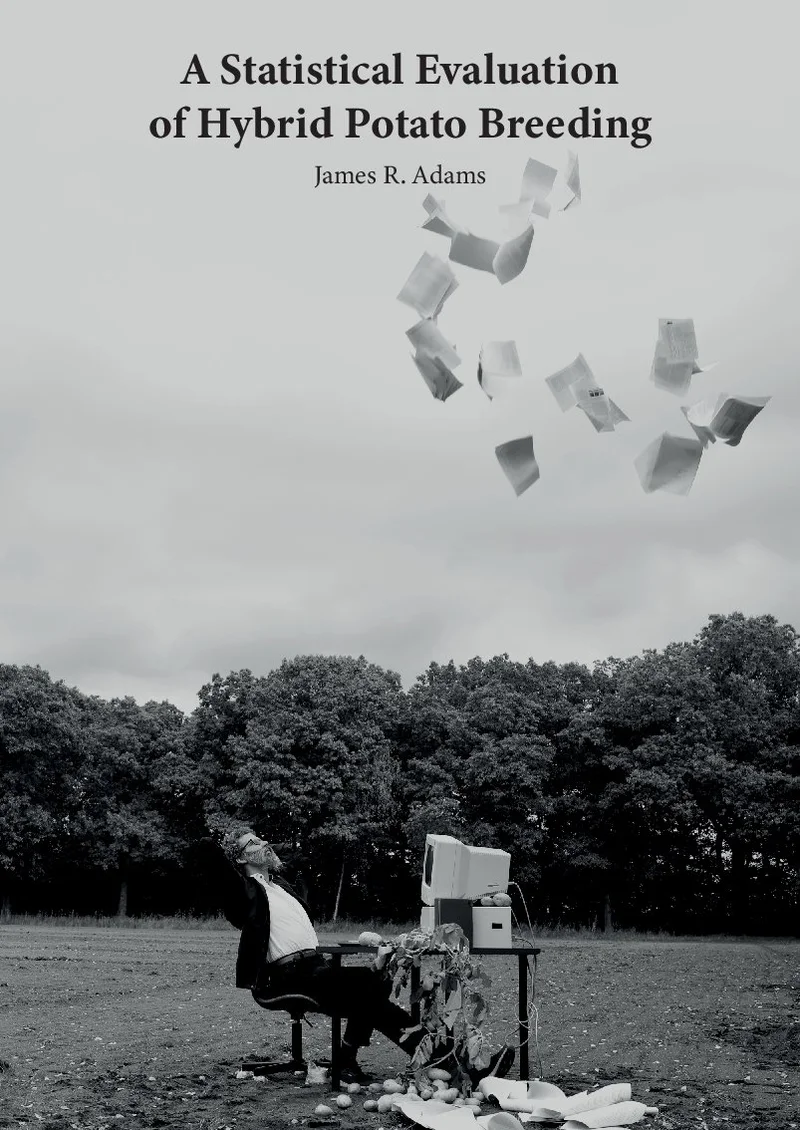


A Statistical Evaluation of Hybrid Potato Breeding
Potato (Solanum tuberosum L.) currently stands as the world’s third most important food crop after rice and wheat. Potato provides essential nutrition and calories to billions of people globally. Its tubers are prized not only for their versatility in culinary applications but also for their nutritional value, offering a rich source of carbohydrates, vitamins, minerals, and antioxidants. Beyond its role as a staple food, potato serves as a critical raw material for industrial applications including starch production, processed foods, and bio-based materials. Despite its essential role in international food security, genetic improvement of potato faces formidable challenges and is constrained by multiple biological and market-related factors. The crop’s tetraploid nature, clonal propagation system, and complex genetic architecture complicate breeding efforts and negatively affect innovation. Furthermore, potato’s susceptibility to numerous pests and diseases, coupled with its sensitivity to environmental stresses, necessitates continuous genetic innovation. These realities coupled with long breeding cycles characteristic of clonally propagated crops hamper the creation of novel potato varieties. Hybrid and diploid breeding systems have been proposed as a potential solution which could circumvent some of the issues facing traditional clonal breeding. Hybrid breeding systems are inherently true seed based which allow for faster propagation and multiplication rates in a breeding pipeline. True potato seed (TPS) can be leveraged in replicated early yield and multi-environmental trialling resulting in higher quality evaluations of important traits such as yield. This in turn increases the accuracy and potentially the speed of selection earlier in the breeding cycle. The use of TPS further enables the utilization of methodologies such as quantitative trait locus (QTL) mapping and genomic prediction (GP) which depend on high quality phenotypic data. The adoption of TPS transforms the traditional potato breeding schema into a data-driven program. However, this is all contingent on several genetic assumptions in how hybrid potato behaves. That includes a sufficient level of heterotic vigour, high heritabilities among complex traits, and consistent uniformity in the F1 hybrids. Characterising these factors are crucial for any implementation of hybrid potato. My thesis assesses these questions in the following form: In Chapter 1 I begin with a brief introduction of the evolutionary and recent cultivated history of potato. This is followed by a justification for genetic improvement in potato lay out current popular breeding methods for clonal potato. This includes an examination of specific factors of potato’s biology which directly inform breeding; factors such as potato’s tetraploidy, obligate clonal propagation, and deleterious mutation load. I then focus on hybrid breeding methodology and propose where it could potentially augment genetic gain. However, to properly evaluate whether hybrid breeding is possible in potato, a proper quantitative evaluation must be made using extant material. This chapter concludes by describing this knowledge gap and the aims of this thesis. A central component of hybrid breeding is the ability to conduct multi-environmental trials (MET) and the capacity to retrieve accurate estimates of merit (e.g. best linear unbiased predictor) with suitable heritabilities to warrant use as a selection criteria in a breeding program. Chapter 2 examines this core premise for the first time in hybrid potato utilizing METs from an active breeding program. I and my coauthors begin with a thorough description of the trial data as it is one of the largest hybrid potato METs published to date. We showcased a two-step statistical evaluation of the MET where intra-trial effects were first estimated and fitted for all observations. This was followed by a secondary multi-trial model where the spatially-resolved yield data was used to estimate multiple genetical parameters, namely general and specific combining ability (GCA & SCA respectively). We found that modelling yield on GCA of the parents was sufficient for all yield components studied. All traits had significant SCA effects indicative of non-additive genetic effects which could not be captured by parental effects alone. We also examined the genetic architecture of these yield components via a multivariate linear mixed model methodology. This procedure allowed us to delineate these genetic correlations into additive and non-additive components. These results identified average tuber volume as a potentially useful trait for long-term yield gains in a hybrid potato program. Because the trial data from Chapter 2 was sufficient for estimating genetic parameters for hybrid potato, it was natural to extend the use of this trial data to other applications as well. Hybrid breeding is often improved through the use predictive methodologies such as genomic prediction which can increase selection accuracy, offer pre-selection capabilities, and shorten breeding cycles. Because of this, examining the current capacity of genomic prediction methods in potato dataset is critical for any hybrid program going forward. To this end, Chapter 3 built on the two-step phenotypical modelling approach of Chapter 2 through the incorporation of molecular marker information. To assess the quality of the molecular marker data, we conducted a thorough marker filtering analysis along with an examination of population structure among the parental lines. We found moderate population structure among the parental lines indicative of minor parental grouping, but no proper pool structure. We then created two genomic models mirroring the structure of the GCA and GCA+SCA models from Chapter 2. While the full GCA+SCA model should be selected on the basis of the likelihood ratio test and similar criteria, there was little gain in model performance through the incorporation of the SCA dominance matrix for the yield components considered. The results of Chapter 3 confirm that breeding values for parental lines had suitable accuracy for multiple yield components and could be predicted from a genomic GCA model. However, while genomic selection is undeniably efficient for the prediction of complex traits, high density molecular marker sampling are often the largest expense and logistical bottleneck when genomic selection is used. This makes genomic selection cost prohibitive especially in scenarios where pre-selection is done with thousands of potential candidates. In such environments, marker-assisted selection (MAS) becomes much more interesting for large pre-selection panels. To investigate the utility of MAS for complex traits in hybrid potato, we consider a few selection scenarios in Chapter 4. Specifically, we examine the selection efficiency of a MAS strategy using previously identified QTL for several yield components versus a genome-wide selection schema. While we found that the MAS schema was less efficient than genome-wide selection, this was not guaranteed when cost was integrated into the selection efficiency statistic. One of the major findings of this chapter is that MAS is not only possible for complex traits in hybrid potato, but potentially favourable if a program is sensitive to genotyping costs. Both Chapter’s 3 & 4 utilized a mid-density panel of biallelic SNPs which is standard both in genetic theory as well as for most marker-based applications in crop plants. All this said, there has been much interest in the use of multi-allelic marker information for popular genomic analyses including genomic prediction applications. This is especially true in potato where the genomic diversity is cited as a justification for incorporating multiallelic information in genomic models. Chapter 5, my final experimental chapter, examined the utility of multiallelic molecular marker information for genome-wide predictive models. We examined multiple forms of multiallelic marker information, namely, identity-by-state (IBS) marker haplotags and estimated founder origin identity-by-descent (IBD) variants. Using a traditional cross validation methodology, we tested both forms of multiallelic marker data against biallelic SNP information for a profile of yield components. Interestingly, there was no gain in model performance using the haplotag markerset with a clear decrease in performance using the founder IBDs as model predictors. We outline a few potential reasons for these results and offer alternative applications outside the prediction of GEBVs. A major finding was that multiallelic marker information have little merit in the genomic prediction of yield in potato. I conclude this thesis with a general discussion and retrospective in Chapter 6. I take the time to examine the implications of these results for future hybrid potato breeding and locate questions which are still unaddressed at this point in time.
| Publicatiedatum | 22 oktober 2026 |
| Universiteit | Wageningen University |
| Auteur | James Adams |
| ISBN nummer | 978-94-6534-731-8 |
| DOI nummer | 10.18174/681079 |