Amaury Monard
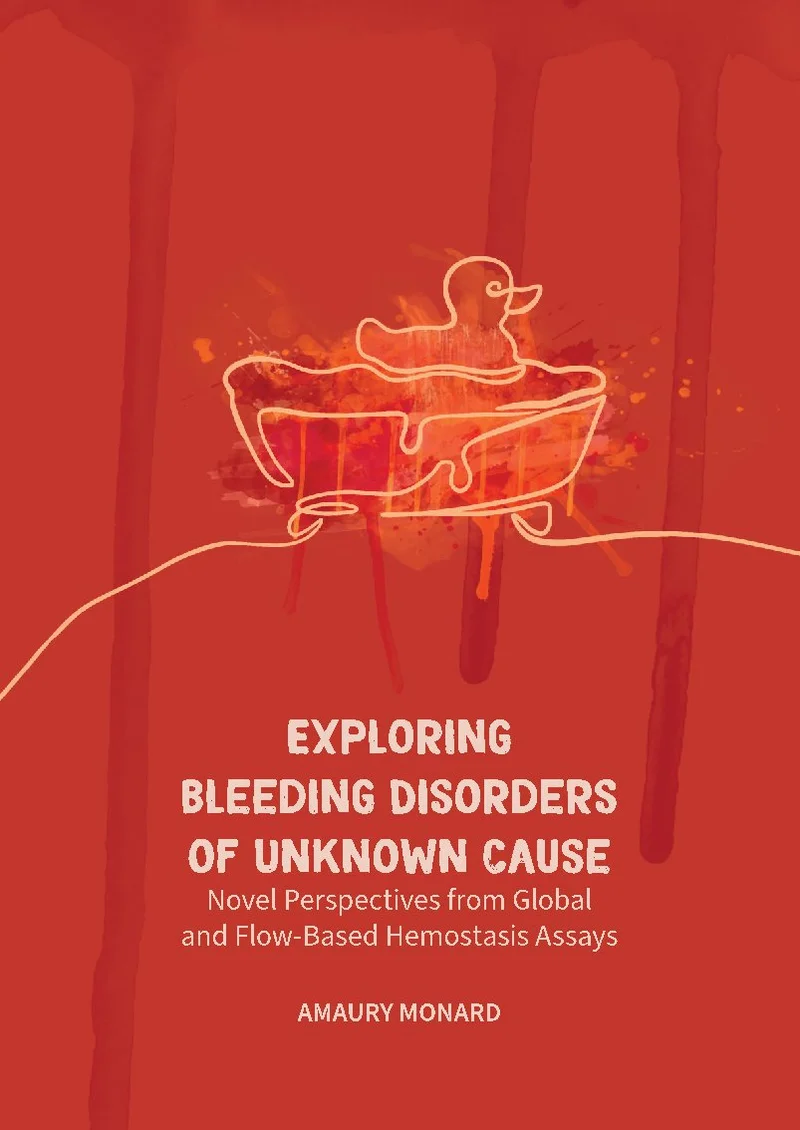


Exploring Bleeding Disorders of Unknown Cause
The majority of individuals who present to a hemostasis specialist with clinically relevant bleeding tendencies do not receive a definitive diagnosis of a coagulation disorder following comprehensive clinical and laboratory evaluation. In such cases, the condition is referred to as a bleeding disorder of unknown cause (BDUC). Two main criteria must be met to establish a diagnosis of BDUC: (1) the presence of a clinically significant bleeding tendency, determined either by an elevated bleeding score and/or the clinician’s judgment, and (2) the absence of abnormalities in a standard panel of laboratory tests. Additionally, it is essential to exclude alternative causes of increased bleeding, such as thyroid or liver disorders. These criteria result in a heterogeneous patient population, with bleeding phenotypes ranging from mild to severe. The clinical presentation of BDUC strongly overlaps with that of other mild bleeding disorders, such as von Willebrand disease and mild platelet function disorders. The lack of an identifiable cause contributes to uncertainty for both patients and clinicians, particularly because evidence-based guidelines for management and follow-up are lacking. Current diagnostic methods are insufficient, highlighting the need for more advanced laboratory techniques. The aim of this thesis was twofold: first, to characterize the heterogeneous BDUC population (Part I), and second, to explore potential underlying mechanisms that may explain the bleeding tendency in these patients using advanced diagnostic approaches (Part II). Chapter 1 provides an overview of the theoretical background of hemostasis, which forms the context for this thesis. The diagnostic pathway followed by patients presenting with increased bleeding tendencies is described, which for the majority of patients results in a BDUC diagnosis. Furthermore, advanced laboratory techniques with potential added value for this patient group are discussed. Based on this background, specific objectives were formulated and addressed in the subsequent chapters. Chapter 2 presents an illustrated review of current knowledge and knowledge gaps regarding BDUC. Known patient characteristics are summarized, along with the capabilities and limitations of bleeding assessment tools and other instruments used to quantify bleeding tendency. The major knowledge gaps identified relate to the definition of BDUC, underlying bleeding mechanisms, diagnostic processes, treatment and follow-up, patient-reported outcomes, and care pathways. For each of these domains, the available literature is summarized and visually presented, followed by recommendations for future research. Chapter 3 addresses some of the knowledge gaps identified in Chapter 2. Given the relatively recent introduction of the BDUC concept, considerable variation exists in the criteria applied for diagnosis, investigation, and management, both in literature and in clinical practice. A national survey among hemostasis experts from all Dutch hemophilia treatment centers was conducted to map current clinical practice. This was complemented by an international survey, allowing a comparison between Dutch practice and international recommendations. The results indicate that Dutch practice largely aligns with international guidance but also reveals some differences. The national findings may complement international recommendations and together form a basis for the development of uniform guidelines for BDUC care. Chapter 4 describes a scoping review on the clinical applicability of the Total Thrombus-formation Analysis System (T-TAS), a laboratory assay that simulates blood flow conditions. As this test may be relevant for BDUC, a review was conducted of studies applying T-TAS in various clinical contexts, including bleeding disorders. The results show that T-TAS can detect severe forms of von Willebrand disease and platelet function disorders, but it is insufficiently sensitive for milder forms. The potential value of this test in BDUC therefore requires further investigation. Chapter 5 reports the application of the tPA-ROTEM assay in BDUC patients. This viscoelastic method measures the resistance generated during clot formation. Addition of tissue plasminogen activator (tPA) initiates fibrinolysis. Results demonstrated that a subset of BDUC patients exhibits hyperfibrinolysis, providing a plausible explanation for their bleeding tendency. These findings also support the rationale for the use of tranexamic acid, an antifibrinolytic drug widely applied in this patient group. Chapter 6 investigates the diagnostic value of the thrombin generation (TG) assay in BDUC. TG measures thrombin, which is ultimately converted to fibrin, the final product of secondary hemostasis. Although various reagents were used to assess sensitivity for subtle abnormalities, results were not convincingly indicative. Approximately one quarter of patients displayed one or more abnormalities; however, because this global hemostasis assay primarily reflects the end of the coagulation cascade, mild defects in earlier steps may be masked, and the precise cause remains unclear. The added diagnostic value of TG in BDUC thus appears limited. Chapter 7 focuses on the diagnostic value of multiple platelet function assays in patients suspected of having a platelet function disorder, excluding von Willebrand disease. Four platelet function tests were applied: (1) light transmission aggregometry (LTA), which measures platelet aggregation in response to different agonists; (2) platelet ADP content, which assesses ADP and ATP secretion from platelet granules as a measure of activation; (3) flow cytometric analysis of platelet receptor expression; and (4) the flow cytometry based platelet activation test (PACT), which evaluates platelet activation in response to various agonists. Results showed that LTA, the current gold standard, yielded most diagnoses. However, more specialized methods such as ADP content measurement and flow cytometry detected additional abnormalities in some patients with strong clinical suspicion not identified by LTA. Chapter 8 presents results from flow chamber experiments conducted in 47 BDUC patients. This assay more closely simulates in vivo conditions than conventional tests by using whole blood under controlled flow. Microscopic images of the flowing blood were recorded and subsequently analyzed. Abnormalities indicative of underlying platelet function defects, which went undetected by conventional techniques, were observed in more than half of the patients. Chapter 9 presents a case study of a family with the rare fibrinogen disorder hypodysfibrinogenemia, in which a novel genetic mutation was identified and confirmed with proteomics. Although these patients may exhibit both bleeding and thrombotic tendencies, standard laboratory tests primarily revealed a bleeding phenotype. Flow chamber experiments and TG additionally demonstrated a prothrombotic tendency, which ultimately informed adjustments to the treatment plan. Finally, Chapter 10 summarizes the main findings of this thesis in a general discussion and provides recommendations for future research. Application of advanced hemostasis assays in BDUC patients has generated new insights and indications of underlying bleeding mechanisms. However, larger-scale studies are required to confirm these findings and further elucidate their pathophysiological basis.
| Publicatiedatum | 25 september 2026 |
| Universiteit | Universiteit Maastricht |
| Auteur | Amaury Monard |
| Order nummer | 19259 |
| ISBN nummer | 978-94-6534-621-2 |