Inga Petersohn


From mother through milk:
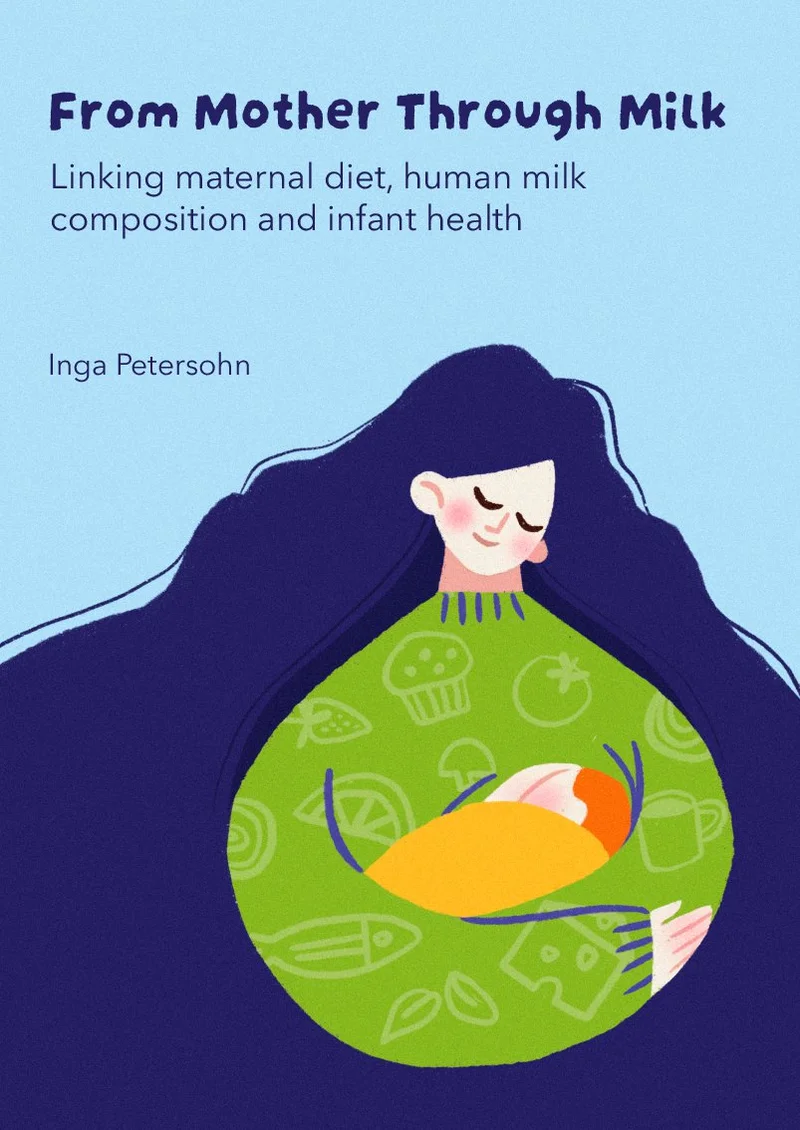
Human milk composition is influenced by many factors. Maternal diet appears to be one of the largest contributors to this variation, yet understanding on what elements of the maternal diet exactly affect human milk composition, and ultimately forms part of shaping infant health, is still limited. As a result, while dietary guidelines are well established for most life stages, clear and evidence based recommendations for the lactation period are still lacking. In addition, factors such as maternal ethnicity, which is often intertwined with lifestyle differences such as diet, further complicate the picture. This thesis, therefore, further explored the roles of maternal diet and ethnicity in human milk composition, drawing on both original data and existing literature, and to assess their potential implications for infant outcomes.
Chapter 2 summarizes the knowledge on the role of maternal ethnicity in human milk composition. In a systematic review, we examined how maternal ethnicity influences human milk composition, analyzing 33 cross-sectional studies with a total of 5,247 participants. Fatty acids were the most studied component and showed the greatest ethnic variation, with notable differences such as higher levels of polyunsaturated fatty acids in milk from Chinese and Japanese mothers. In contrast, most comparisons for proteins, carbohydrates, human milk oligosaccharides, and micronutrients showed no significant ethnic differences. The evidence base was limited due to methodological inconsistencies, lack of dietary control, and insufficient differentiation between ethnicity and environmental factors. Overall, more standardized research is needed to clarify the independent role of ethnicity in shaping milk composition.
In chapter 3 we conducted a systematic review to summarize the state of knowledge on maternal diet and human milk composition. The literature search resulted in 32 studies involving 7,138 participants, in which, similar to the conclusions of chapter 2, fatty acids remained the most studied component in human milk, with positive associations between maternal fish and polyunsaturated fatty acid intake and their levels in milk. Saturated fat intake was often negatively associated with other fatty acids in human milk. Evidence on carbohydrates, proteins, vitamins, and minerals was limited and showed inconsistent findings due to methodological variation. Overall, while research on dietary influences on milk fatty acids is growing, more standardized protocols and intervention studies are needed to clarify the role of maternal diet in shaping overall milk composition.
Chapter 4 describes the study design of the MELK study, which aimed to address the knowledge gaps identified in chapters 2 and 3. The MELK study aimed to recruit 120 lactating mothers in their second month postpartum, of three ethnicities (Caucasian, Chinese, and Turkish). Human milk samples were collected at two consecutive mornings and dietary data was collected by 24h food records on 4 independent days. Additional information on maternal and child characteristics was collected via questionnaires.
Chapter 5 used data of the MELK study and describes how maternal intake of macro- and micronutrients was associated with human milk fatty acid composition. Higher intake of polyunsaturated and trans fatty acids was associated with higher proportions of these fatty acids in milk, while most dietary non saturated fatty acids were inversely related to total saturated fatty acids in milk. Additionally, higher micronutrient intake was linked to increased proportions of milk polyunsaturated fatty acid levels and lower saturated and trans fatty acid levels. Dietary carbohydrates and fiber also showed positive associations with polyunsaturated fatty acids in milk. These findings highlight that not only fatty acid intake, but diet as a whole may play a role in shaping the fatty acid profile of human milk.
In chapter 6, the association between maternal dietary protein intake and milk protein composition was examined using data from the MoSa pilot study. Protein intake was assessed as total protein (g/day) and protein quality, expressed by the protein quality score, which captures the adequacy of essential amino acids relative to requirements. Milk total protein content was analyzed, as well as the content of α-lactalbumin, lactoferrin, αs1-caseine and β-caseine. Maternal protein intake was associated with both, total protein and individual proteins, interestingly, effects were larger in women with a low protein quality score. Thus, these findings indicate that one should not only rely on total protein intake and total milk protein, but also consider dietary protein quality and associations with individual proteins in human milk.
Chapter 7 draws a link from human milk oligosaccharide (HMO) composition to infant cognitive development as well as gastrointestinal complaints. Data from the MELK study was used and infant cognition was studied using the Ages and Stages Questionnaire (ASQ). Of the five cognitive domains (communication, gross motor, fine motor, problem solving and personal-social), only communication was significantly associated with HMOs, showing inverse associations with 2’-FL, 3’-GL, 3’-SL, 6’-SL, LNnT and LSTa. A sensitivity analysis revealed that these associations were mainly observed among secretor positive mothers. No associations were seen for HMO groups and cognitive development, and gastrointestinal complaints were also not associated with HMOs in breastfeeding. This chapter indicates that HMOs might be associated with infant cognitive development, however, the use of the ages and stages screening tool might limit the interpretation of our findings.
In chapter 8 methodological considerations for the different research chapters are discussed. This includes generalizability of results, sample size considerations and trade-offs in the chosen methods. This chapter concludes with recommendations for future research and implications of our findings.
| Publicatiedatum | 9 december 2026 |
| Universiteit | Wageningen University |
| Auteur | Inga Petersohn |
| DOI nummer | 10.18174/681533 |