Alberto Brini
A few statistical contributions for the analysis of high-dimensional data
20 september 2022
TU Eindhoven
Open Ebook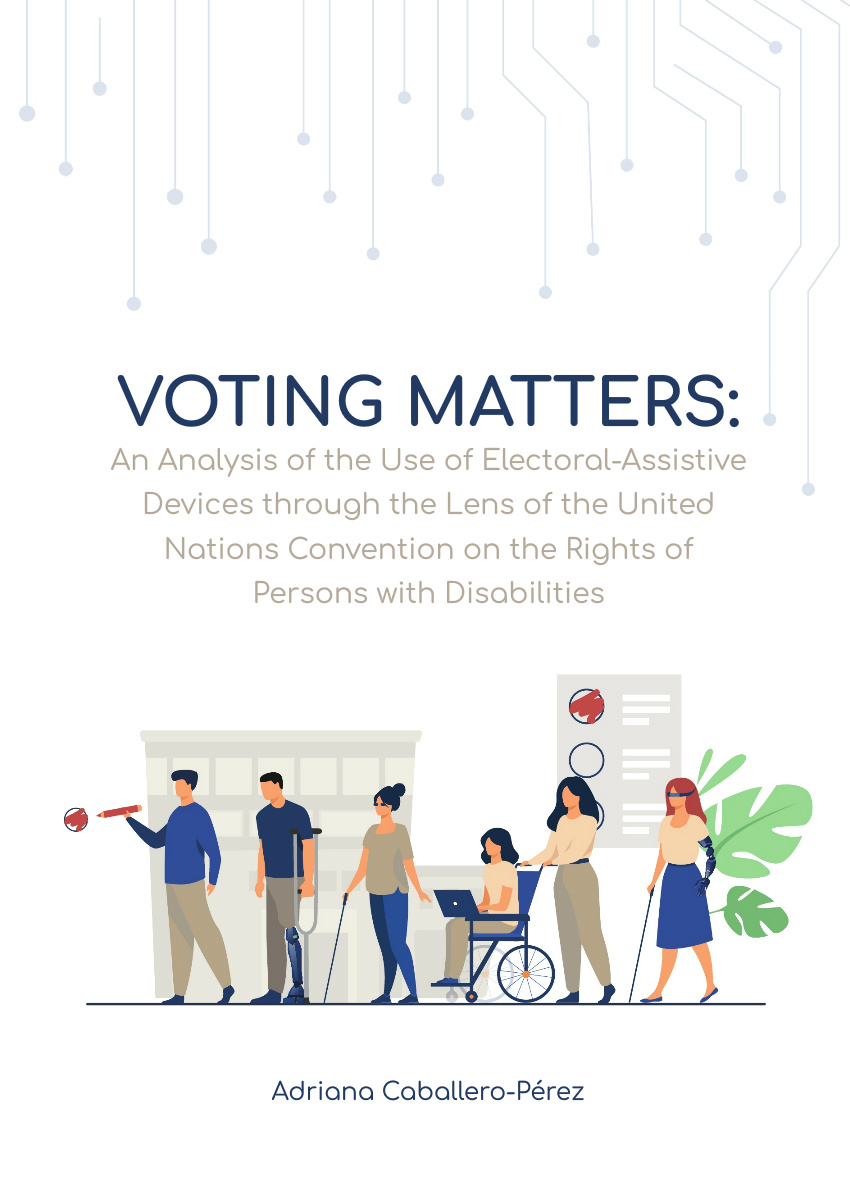
Share this project
Summary
Executive summary
The present work is part of a larger research project, the Disability Advocacy Research in Europe (DARE) programme. The goal of the DARE programme is to train the next generation of researchers in the field of disability rights to advance the rights of persons with disabilities as expressed in the Convention on the Rights of Persons with Disabilities (CRPD).
This study adopts an evidence-based approach and a mixed research design to explore the de facto realisation of the right to vote by persons with disabilities, or the ‘opportunity’ to enjoy this right on an equal basis with others. To date, this has been a relatively unexplored topic of research, but the study ‘Voting Matters’ aims to bridge this gap. The focus of the study is on exploring the link between the provision and use of electoral-assistive devices (e.g., easy-to-read voter education guides and tactile ballot guides) by voters with disabilities and the positive obligations of States Parties under international human rights instruments, and primarily Article 29(a) CRPD. This study, which is a contribution to the research in the field of political participation of persons with disabilities, has led to the following key findings.
This study demonstrates the use of assistive technology in elections as a measure for achieving greater accessibility in the voting environment. The study is pioneering in that it identifies available and emerging electoral-assistive devices that can be used to assist voters with disabilities throughout the electoral cycle.
The legal interpretation of relevant international human rights law provisions, and primarily Article 29(a) CRPD, revealed that anti-discrimination prohibitions applicable in the context of voting are only effective when implemented alongside equality measures. One of these measures is the provision of electoral-assistive devices, which remove flaws in the voting environment that make certain aspects inaccessible for those with disabilities.
After having comprehensively interpreted Article 29(a) CRPD, this study moves from investigating the ‘law in books’ to studying the ‘law in action’: mainly, the ‘CRPD in action’. It analyses how Article 29(a) CRPD has been implemented through law, policy, and practice in England and Spain. The analysis is based on the experiences of a small sample of voters with disabilities and election officials. The study demonstrated that implementation of Article 29(a) CRPD can be enhanced or constrained not only by national legislation and policy instruments but also by the practices of relevant social actors. These practices include people’s understanding of disability itself.
The study concludes that addressing the voids in law, policy, and national electoral system practices identified in this research would increase the chance of Article 29(a) CRPD’s successful implementation in England and Spain. Therefore, this study contributes to our greater understanding of how Article 29(a) CRPD has been implemented in practice in these two countries. Nevertheless, the issues raised by this study’s interpretative data analysis may also prove relevant to other countries.