Isaura Wayop
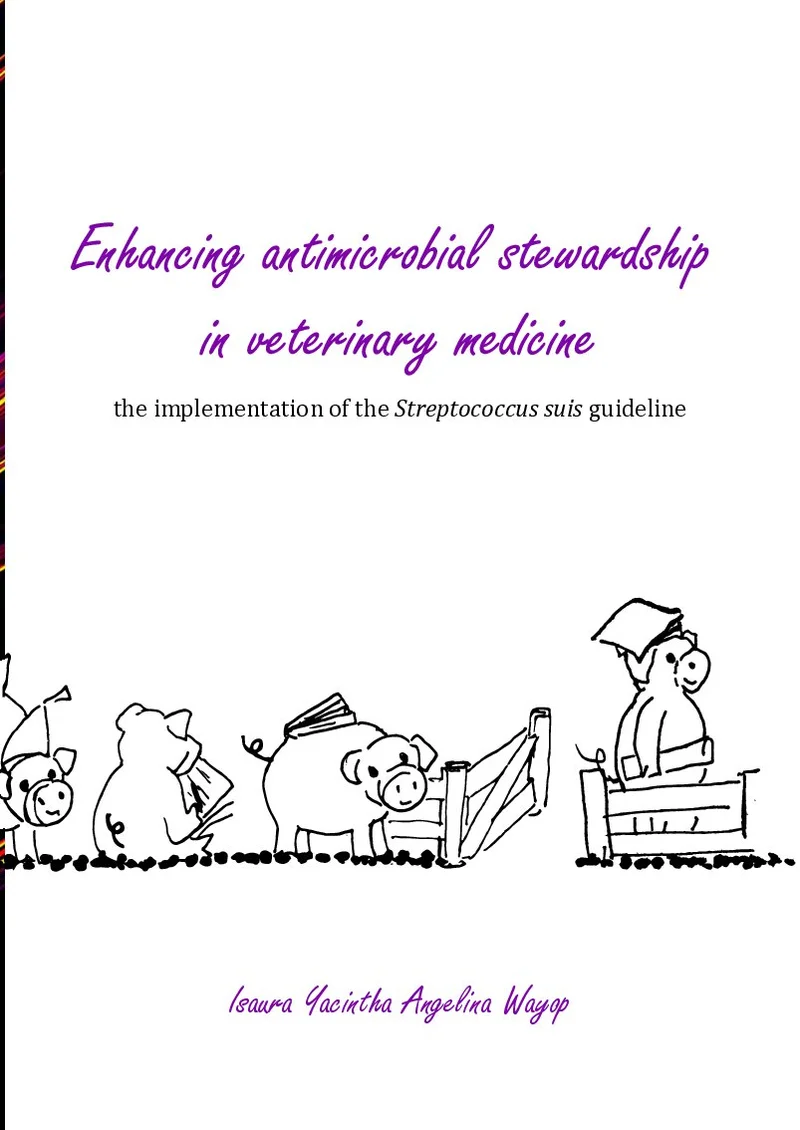
Enhancing antimicrobial stewardship in veterinary medicine
4 juli 2025
Universiteit Utrecht
Open Ebook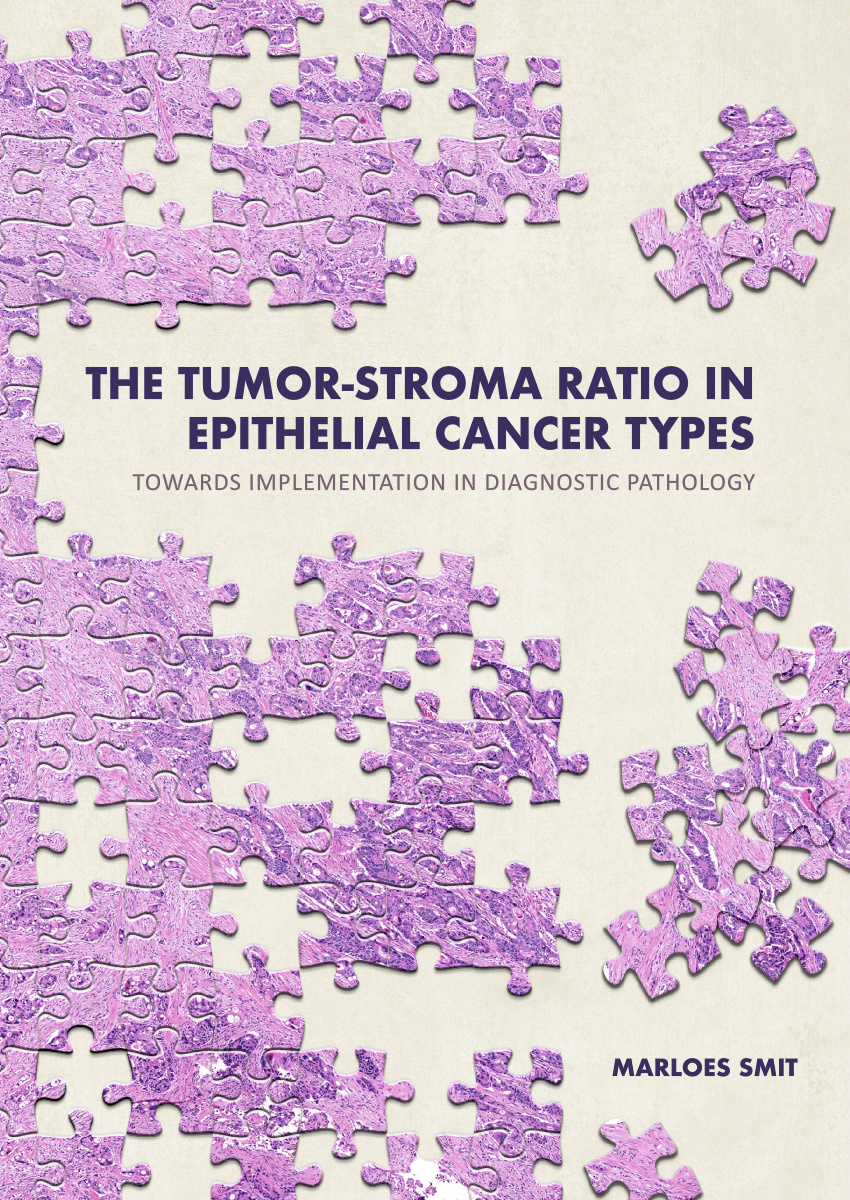
Share this project
Summary
This thesis describes the steps necessary for the addition of the tumor-stroma ratio (TSR) into clinical practice as high-risk factor besides the TNM classification. The route from laboratory biomarker development to clinical implementation is followed. During this process, the relationship of the TSR to other available biomarkers for prognostic information for breast and colon cancer patients is investigated. Additionally, the prognostic value of the TSR in lung cancer is studied. This roadmap to implementation of the TSR is also applicable for the other cancer types for which the prognostic value of the TSR has been proven.
Introduction of a new biomarker
Requirements for the introduction of a new biomarker in a clinical setting are robustness, reproducibility and validation. Validation is preferably proven in a prospective and multicenter setting with quality control (1-3). The published UNITED study protocol in Chapter 2 describes in detail the path to fulfill these requirements essential for introduction of the TSR in routine diagnostics (4). A call on pathologists to participate in this UNITED study is found in Chapter 3 (5).
In Chapter 4, the results of the reproducibility study of scoring of the TSR by international pathologists using an E-learning module are presented (6). This chapter shows significant progress in scoring TSR from the training to the test set, and no fallback was observed after a two-month washout period. Thus, the scoring method of the TSR through the E-learning is a simple to learn and reproducible method. Although frequent mistakes are made, e.g. scoring the TSR at the invasive front of the tumor instead of choosing the area with the highest stromal percentage. Due to the E-learning, awareness of misinterpretations of the scorings protocol give us the possibility to modulate specific adjustments to the instructions. As is also seen in other specializations in the hospital, it can be concluded that an E-learning module is a sufficient and efficient method for learning and introducing new techniques into daily practice (7-9).
Automation of the tumor-stroma ratio
Pathology for routine diagnostics is becoming increasingly digitized and automated. In Chapter 5, it is investigated whether the TSR scoring can be (semi-)automated. Furthermore, the quality of scoring TSR by deep learning algorithms is assessed, as well as the possibilities for use of the (semi-)automated method in daily practice to support pathologists in decision making. The output of the semi-automated TSR scoring method was found to be substantially correlated with the microscopic assessment. This semi-automated algorithm quantifies the stroma percentage in an area selected by the pathologist, which is helpful in challenging cases, e.g. tumors with an amount of stroma around the cut-off value of 50%. The TSR score (stroma percentage) and area selected by the fully automated scoring algorithm was significantly correlated with the TSR scored through conventional microscopy. However, in some cases, a suboptimal area was selected by the algorithm which would not have been chosen by eye, e.g. with a high amount of other tissue.
Image processing and therefore artificial intelligence algorithms are sensitive to varying staining intensities of hematoxylin & eosin (H&E) stained tissue sections, necessitating the process of stain normalization (10). Moreover, the algorithm is not capable of registering tissue context and only recognizes cells and colors through training. Partly, this can be tackled to train the algorithm on a wider variety and higher number of cases, i.e. in the thousands. However, human intellectual processing is still essential to determine tissue context and better interpret the results. A semi-automated method could thus aid pathologists in daily practice by quantifying the exact percentage of stroma. This workflow starts with the algorithm first showing a heatmap of the amount of stroma and three spots with the highest stroma density. The pathologist then selects the optimal spot, and the algorithm calculates the exact amount of stroma. Lastly, this stromal percentage is included for the tumor classification and risk stratification in clinical decision making.
Much research has been performed in the field of automation and artificial intelligence quantifying the amount of tumor stroma. Zhao et al. (11) for instance, proved the prognostic value of the amount of stroma, scored on whole slide images in colorectal cancer. In Chapter 6, our view towards this study is given in a short commentary (12). The most important remark is the difference in scoring method; where van Pelt et al. (13) determined that the TSR through conventional microscopy is best scored on a single stroma hotspot, Zhao et al. used the overall tumor stroma percentage scored on whole slide images. Thus, the question arises whether it is still necessary to score the TSR in one hotspot or if the amount of stroma should be measured on the whole tumor slide. This could lead to different stromal percentages and outcome, thus the difference between these two methods is of clinical relevance. More research is necessary however to answer these questions.
Biomarkers in colon cancer
Research in colon cancer biomarkers is not only focusing on the prognostic value, but also on the predictive value and the biology of the tumors. In Chapter 7, the prognostic value is studied for two important biomarkers: the TSR and tumor budding. Recently, it is recommended by the ESMO guidelines to score and report tumor budding as a high-risk factor in stage I and II colon cancer, supporting clinical decision making on additional resection after biopsy or polyp removal (14). The TSR however, is still only used in the research setting. The study showed the independent prognostic value of TSR for disease-free survival (DFS), but no independent prognostic effect was observed for overall survival (OS). Furthermore, in univariate analysis tumor budding was significantly correlated with OS and DFS, but in multivariate analysis this prognostic effect was no longer observed. However, an association was shown between TSR and tumor budding, validating earlier published research (15, 16). In Chapter 7, we also investigated the reproducibility of the TSR and tumor budding, we concluded the TSR was easier to reproduce. Both findings could be interpreted as the fact that the TSR is a strong competitor to tumor budding as a prognostic factor, and it would be of interest to use the TSR as biomarker in addition to already known clinically implemented high-risk factors.
Other cancer types and related biomarkers
The TSR has also been proven of prognostic value in other cancer types, like breast cancer (17-19). Breast cancer is a highly prevalent cancer type, consisting of various subtypes with differences in prognosis and response to therapy. The MammaPrint® or 70-gene signature (70-GS) is a biomarker based on the risk of disease progression, and is already used in daily practice in several countries to assist oncologists in decision making for adjuvant therapy (20, 21). In multiple studies the TSR has also been proven to be an independent prognosticator in breast cancer, among other cancer types, with a high amount of stroma predicting worse disease outcomes (17-19). In Chapter 8, the association between the 70-GS and the TSR is investigated (22). Although an association was expected, because the 70-GS also includes stroma-related genes, this could not be confirmed. This result suggests that both biomarkers select different groups at risk for disease progression, and could be used complementary. However, the question arises is one of the biomarkers preferable over the other? Both biomarkers have an additional value and could therefore be useful in clinical decision making. From an economic perspective, genomic tests are quite expensive and take time, whereas the easy to learn TSR can be scored on H&E stained sections during routine pathology in 1-2 minutes. This reduces time and costs, contributing to easier risk stratification for women diagnosed with breast cancer.
In Chapter 9, the prognostic value of the TSR in squamous cell carcinoma (SqCC) of the lung is investigated. Current literature on the prognostic effect of the TSR in this cancer type is non-conclusive (23-26). Lung cancer is divided into small cell lung cancer and non-small cell lung cancer (NSCLC), where NSCLC mainly consists of adenocarcinomas and SqCCs (27). Lung cancer has a poor survival rate, thus, stratifying patients at risk for recurrence is clinically relevant for improved allocation of adjuvant therapy (28). We showed the TSR to be of independent prognostic value for 5-year OS and DFS in stage II lung SqCC (29). This result could, however, not be found in the tumor stages I and III of the investigated patient cohort. Following current guidelines, patients with stage II tumors are likely to receive adjuvant treatment. Our results indicate that these stage II patients diagnosed with a stroma-low tumor however, will not necessarily require adjuvant chemotherapy, since stroma-low tumors are less likely to progress, metastasize or cause recurrences later. The independent prognostic value of the TSR is previously studied in SqCC tumors of the oral cavity, including tongue, and these studies showed similar results as ours (30-33). Patients with a stroma-high tumor have a worse prognosis compared to patients with a stroma-low tumor. The prognostic value of the TSR in stage II lung SqCC should be validated in a larger, prospective cohort because the sample size in this study was relatively small.
Hurdles of implementation of a biomarker
In addition to the required criteria for implementation of a new biomarker, another, more personal factor, seems to be of influence. The TSR, discovered and developed by the department of Surgery at the Leiden University Medical Centre (LUMC), was found by serendipity. The TSR is an easy, quick to score, reproducible and inexpensive prognostic biomarker. But why is it that difficult to get it implemented in the daily routine of pathologists? The TSR seems harder to get implemented, compared to the tumor budding, for example. Not one reason is probably the cause, but it is more multifactorial. One of the potential factors of influence could be that the TSR appears counterintuitive. Higher stromal percentages in malignant tumors reflect worse patient outcomes, but it feels more logical that higher tumor epithelial percentages should cause this, since it is thought that the tumor cells cause the aggressiveness of a tumor, not the tumor-stroma. Other (histo)pathological parameters have a better argumentative: positive tumor margins or more tumor buds at the invasive front lead to a worse survival. Both factors express the expected tumor aggressiveness, whereas for the TSR, this is not the case.
Moreover, the exact mechanism behind the TSR with the extensive stromal cross-talk is not yet elucidated, making it even less logical and less likely to be accepted. Another argument is the absence of involvement of industry, complicating the implementation of the TSR. Company aiding in the production of a new biomarker also aim for the medical profession to use their new product, thus will advertise and lobby for this product. A single research group is not in the possession of the financial and logistic power to introduce a new biomarker, like this TSR scoring method. Ultimately, however, when pathologists are convinced of the prognostic value and ease of the TSR through previous published research, they will want to implement this biomarker in clinical decision making.
Future perspectives
Implementation
Since validation of the TSR in colorectal cancer and moreover in other cancer types. We are convinced that the TSR is a simple, cheap and effective prognostic biomarker which should be. The ultimate goal of our research is the implementation of the TSR as high-risk factor in addition to the TNM classification. Which means that the TSR will be implemented as biomarker in clinical practice of pathologists, leading to improved prediction of patients at risk for disease progression and/or recurrence. One of the requirements for new biomarkers is the preferably prospective validation of it in a multicenter setting. For this, the UNITED study has been designed. The study protocol has been approved since February 2018. A total of approximately 1500 patients with stage II and III colon cancer needs to be included. The inclusion phase is still ongoing in 2021. After the results of the prospective study will become available in a couple of years and the prognostic value of the TSR is confirmed, we expect that the TSR is ready to be added to the TNM classification.
Other tumor types and the TSR
The TSR has been proven to be an independent prognosticator in various (epithelial) cancer types. The scoring method is identical for every tumor type, as is the cut-off value for stroma-high and stroma-low. The UNITED study was developed to introduce the TSR in the clinic to support treatment decisions for patients with colon cancer. The question arises whether it is necessary to prospectively validate the prognostic value of the TSR in all other cancer types as the literature already describes as well? For the pathologist, scoring the TSR is a small amount of extra work, and the prognostic information could help the oncologist in clinical decision making for improved personalized treatment strategy. In our opinion, it is not necessary to validate prospectively the prognostic effect of the TSR in all different epithelial cancer types, if in one, well-established prospective study the prognostic effect is shown.
Artificial intelligence
As artificial intelligence is becoming increasingly applicable, it will likely gain a major role in daily practice. As shown in Chapter 5 and discussed in Chapter 6, deep learning algorithms can be used for scoring the TSR, but prior to implementation, algorithms should be trained and validated in a large multicenter setting with over thousands of cases. Not only validation is necessary, when scoring the TSR with a fully automated algorithm and no human interaction, the cut-off value of 50% should be reinvestigated. When scoring the TSR automatically, a continuous output will be provided. It should be investigated if using the continuous variable is equally able to select patients at risk for recurrence or disease progression compared to the categorized TSR.
Response to treatment and the microenvironment
The tumor stroma has a protective role towards the tumor in treatment regimens. The exact mechanism behind this however, is not yet fully understood. It is hypothesized for instance, that the architecture of the stromal compartment is of relevance (34, 35). The stromal (dis)organization could lead to impaired efficacy of treatment regimens at the tumor site. Development of new therapeutics penetrating the stroma, damaging it or even destroying this pathologic protective stromal layer, should be investigated. However, there are no biomarkers unequivocally proven to predict this. With the rise of new treatment strategies, such as immunotherapy, and the absence of literature on the predictive value of the TSR, it would be interesting to ascertain whether the TSR could predict the response to immunotherapy, for instance.
Prediction model
Various new biomarkers are currently being investigated for risk stratification in colon cancer patients. Although many have potential use, it is clear that not a single factor is in itself of influence on the cause of cancer development nor the prognosis and/or progression. All proven prognostic factors should be taken into account in clinical practice, in personalized treatment schedules and to aid in shared decision making. Prediction models are uniquely useable for this, and one is already available for breast cancer patients (36). Patient and tumor characteristics are entered in the model, which ultimately calculates patient overall and disease-free survival, along with prediction of added value of adjuvant therapy. To evaluate whether such a prediction model for colon cancer could be of assistance, adequate and cost effective, a validation and cost-effectiveness study should be performed.
Conclusion
The research presented in this thesis showed that the TSR is almost ready to be implemented in clinical practice of pathologists to select cancer patients at risk for disease progression or recurrence. The TSR is easy to learn, simple to use, well reproducible and low in costs. Furthermore, due to the improved risk stratification of cancer patients, the TSR can aid in more personalized treatment strategies, resulting in less over- and undertreatment and thus a reduction in costs. In the shared decision making setting, the frail, older patient with a stroma-low stage III colon carcinoma for instance, can be spared the burden of adjuvant chemotherapy. Whereas on the other hand, this might be of benefit to the younger and fitter patient with a stroma-high stage II colon carcinoma, who will not receive adjuvant chemotherapy following current guidelines. Finally, due to the large heterogeneity of cancer and upcoming research in prognosticators, selection of independent relevant factors should be taken into account in clinical decision making in addition to the TNM classification, as is possible through the use of a prediction model.