Yussif Baba Kassim
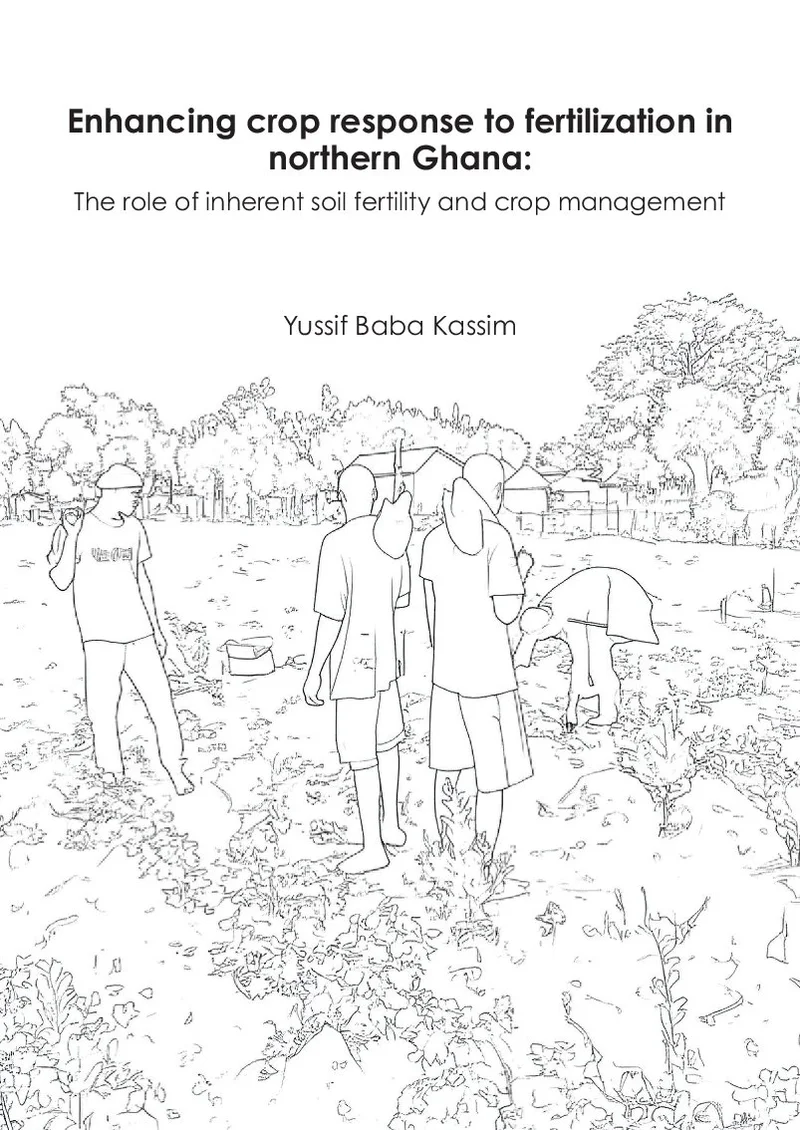
Enhancing crop response to fertilization in northern Ghana
4 september 2026
Wageningen University
Open Ebook
Share this project
Summary
Chlamydia gallinacea and Chlamydia psittaci are intracellular bacteria belonging to the Chlamydiaceae family and are a cause of avian chlamydiosis in poultry. C. psittaci was considered the predominant chlamydial species in poultry until Chlamydia gallinacea was discovered in 2009. C. psittaci occurs worldwide, is zoonotic and has a wide host range. Depending on the C. psittaci strain, host, age of the host and environmental factors (stress), infections in poultry can be asymptomatic or result in more severe issues, such as acute respiratory distress and mortality. Infections in humans can result in severe pneumonia. C. gallinacea is widespread in chickens, and infections do not seem to result in disease, but reduced weight gain has been observed in broilers. Studies about the pathogenic potential of C. gallinacea are still limited, and any zoonotic potential has yet to be determined.
Prior observations in poultry that contributed to the questions addressed in this thesis were as follows. It was unknown if C. gallinacea and C. psittaci also occur in Dutch poultry, however, since 2010, C. psittaci infections in chickens were reported in surrounding countries. Moreover, in 2012, a Dutch study reported a higher number of pneumonia cases in residents living near poultry farms. At the time, the cause of these pneumonia cases was unknown, but Chlamydia was proposed as potentially playing a role.
The aim of this study was to gain insight into the prevalence of Chlamydia in Dutch chickens and to investigate the pathogenic potential of C. gallinacea in chickens. Finally, it was investigated whether a previous C. gallinacea infection in chickens could protect against a C. psittaci infection.
Chapter 2 investigates the prevalence of Chlamydia in Dutch layers. C. gallinacea DNA was detected in pooled faecal samples on 71 of 151 layer farms, but C. psittaci DNA was not detected. No association between clinical signs (i.e. respiratory symptoms, nasal and ocular discharge, mortality) and the presence of C. gallinacea was found.
Chapter 3 describes two novel C. gallinacea strains (NL_G47 and NL_F725) that were isolated from the caeca of seemingly healthy chickens. Subsequent genomic analysis showed both strains were unique and possessed the hallmark genetic coding for known and potential virulence factors found in C. psittaci, albeit to a reduced number of orthologs or alleles. Whether these genetic differences contribute to phenotypic differences is unclear. Phenotypic analyses in embryonated specific pathogen free (SPF) eggs revealed C. gallinacea induced mortality, but to a lesser extent than C. psittaci.
Subsequent experiments with C. gallinacea strain NL_G47 in six-week-old SPF layers, detailed in Chapter 4, confirmed observations from field studies that C. gallinacea infections do not result in acute clinical disease. In this study, layers were orally inoculated, which resulted in throat and cloacal shedding, and infection of epithelial cells of the jejunum, ileum and caecum without signs of clinical disease, nor were there macroscopic or histologic signs of inflammation. On day 11 post inoculation, chlamydial antigen was co-localized within macrophages in the lamina propria and follicular dendritic cells in the caecal tonsil and, from day 7 onwards, a rise in antibody titre was shown.
After the finding in Chapter 2, that C. gallinacea was highly prevalent on Dutch layer farms, we hypothesize in Chapter 5 that the absence of C. psittaci could be explained by cross protection between C. gallinacea and C. psittaci. Chickens were therefore first inoculated with C. gallinacea NL_G47 and subsequently inoculated with either C. gallinacea NL_F72S or C. psittaci. The inoculations did not result in a difference in shedding or tissue dissemination pattern of C. psittaci between the groups. Thus, the absence of C. psittaci in the prevalence study could not be explained by cross protection from previous C. gallinacea infections. However, a prior C. gallinacea infection did partially protect against a new C. gallinacea infection based on the PCR results of cloacal shedding.
The last chapter (Chapter 6) discusses whether the results in laying hens can be translated to broilers or other poultry species. Furthermore, it addresses whether C. gallinacea should be considered a pathogen, and how the absence of C. psittaci should be interpreted regarding animal and public health. The current conclusion is that Chlamydia infections in Dutch chickens cannot be considered a One Health problem. Infections with C. gallinacea do not lead to clinical disease in chickens, and C. psittaci could not be detected in a prevalence study in layers. However, these results do not exclude the future introduction of C. psittaci in chickens, nor its occurrence in other poultry species. These questions would require further research. It is also intriguing that C. gallinacea is able to replicate intracellularly without causing visible signs of inflammation, a phenomenon that is observed in other Chlamydia and intracellular bacterial infections as well. This requires more fundamental research into host-pathogen interactions, which may help to better understand the grey area between health and disease.