Yussif Baba Kassim
Enhancing crop response to fertilization in northern Ghana
4 september 2026
Wageningen University
Open Ebook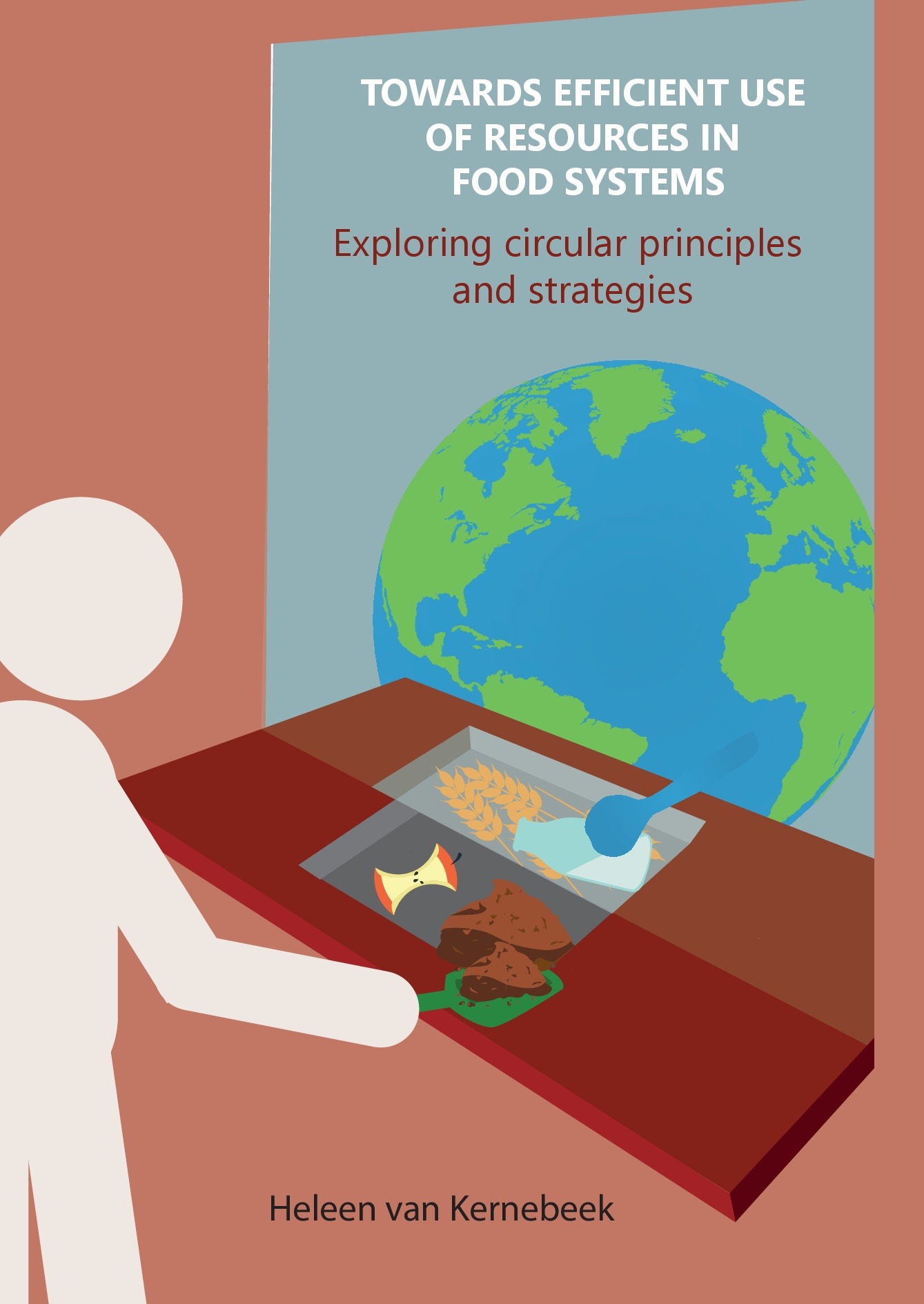
Share this project
Summary
It is generally acknowledged that we should use natural resources more efficiently in order to secure food availability for future populations. The availability of natural resources for food production, such as land, phosphate rock and fossil energy, is limited. At present, however, these resources are inefficiently used in the food system. The effect of several technical and consumption strategies such as preventing and recycling waste, recovering waste as bio-energy, and reducing consumption of animal-source food on resource use efficiency in food production has been assessed. So far, however, studies that have evaluated the effects of these strategies on the use of natural resources do not account for the nutritional quality of human diets, do not consider the food system as a whole, and do not account for the combined effects of strategies in the entire food system. The objective of this thesis was therefore to understand the combined effects of technical and consumption strategies, to reduce the use of natural resources in a food system.
To explore whether accounting for nutritional quality affects the comparison of the environmental impacts of human diets varying in their percentage of animal-source food products (ASFP), we reviewed 12 studies that used a life cycle assessment to quantify environmental impacts of human diets, including (average) daily diets or meals (Chapter 2). For each diet described in the reviewed studies, we expressed the global warming potential (GWP) and land use (LU), as provided by the review, in four functional units: per day, per daily protein intake uncapped or per daily protein intake capped to the recommended intake level of 57 g, and per composite nutrient score of a diet (NRD9.3) We concluded that the unit meal is unsuitable to compare the environmental impact of diets. Furthermore, diets that had higher percentages of ASFP were associated with higher GWPs and LU’s per gram protein capped, and per composite nutrient score of a diet (NRD9.3). Without capping protein to the recommended intake level, GWP and LU per gram of protein were generally lower for diets that had higher percentages of ASFP, showing the impact of the definition of the functional unit. The effect of using NRD9.3 rather than day as functional unit was small for GWP. For LU we found no effect.
Based on the outcomes of Chapter 2, we decided to further explore natural resources needed to feed a growing human population with diets differing in their percentage of animal protein (%PA). We focussed on land (Chapter 3), phosphorus (Chapter 4), and energy (Chapter 5), and used an integrated food systems approach. The food systems approach integrates all agro-ecological activities related to the production, processing, distribution and utilisation of food and related biomass, and the outcomes of these activities in terms of energy and protein provision to people and natural resource use. The material and nutrient flow model developed for this thesis is a conceptual representation of a food system that was parameterised with crop and animal production data from the Netherlands. The model included grain (wheat), root and tuber crops (potato, sugar beet), oil crops (rapeseed), legumes (brown bean), and animal-source food from ruminants (milk and meat) and monogastrics (pork). It was assumed there was no import and export of food and feed. The model was designed to produce sufficient energy and protein for a fixed population without exceeding the maximum intake level of sugar. Linear programming was used to minimise the use of resources for diets varying from 0% PA (i.e. a vegan diet) to diets containing 80% PA. The Dutch food system is not representative for many other food systems in the world. Yet, sensitivity analysis demonstrated that the principles included in the model also hold for other food systems.
Chapter 3 studied the relation between land use, the share of animal protein in the human diet, population size, and land availability and quality. Land is used most efficiently if people would derive ca. 12% of dietary protein from animals, especially from milk. The role of animals in such a diet is to convert co-products from crop production and the human food industry into protein-rich milk and meat. Below 12 %PA, inedible co-products were wasted (i.e., not used for food production), whereas above 12 %PA, crops had to be cultivated to feed livestock. Large populations (40 million or more) could be sustained only if a modest amount of animal protein was consumed. This results from the fact that at high population sizes, land unsuitable for crop production (peatland in our system) was necessary to meet dietary requirements of the population, and contributed to food production by providing animal protein without competing for land with crops. The optimal %PA in the human diet depended on population size and the relative share of land unsuitable for crop production.
In Chapter 4, the potential of preventing and recycling phosphorus (P) waste in a food system, in order to reduce the dependency on phosphate rock was assessed. In our baseline situation, in which 42% of crop waste is recycled, and humans consume 60% PA, about 60% of the P waste in this food system resulted from wasting P in human excreta. Therefore, recycling of human excreta showed most potential to reduce P waste, followed by prevention and finally recycling of agricultural waste. Fully recycling P could reduce mineral P input by 90%. The optimal amount of animal protein in the diet depended on whether P waste from animal products was fully prevented or recycled: if it was fully prevented or recycled, then a small amount of animal protein in the human diet resulted in the most sustainable use of P; but if it was not fully prevented or recycled, then the most sustainable use of P would result from a complete absence of animal protein in the human diet.
Chapter 5 assessed the potential of preventing waste, recycling waste as animal feed or fertiliser and recovering waste as bioenergy, via anaerobic digestion, to reduce energy input in the food system. Energy input was defined as the difference between energy that is used during activities in the food system, and energy that is recovered through anaerobic digestion. Energy input into the food system was reduced by anaerobic digestion and waste prevention as single interventions. If waste was not prevented, the effect of anaerobic digestion was strongest in situations where animals did not compete for food waste and human inedible crop products (at 0% PA, i.e. a vegan diet), and feed waste (i.e. at 80% PA) with anaerobic digestion. If waste was prevented, the relatively high potential to recover bio-energy from waste at 0 and 80% PA was lacking. In situations with anaerobic digestion and/or waste prevention, energy input continuously increased with increasing %PA, and, hence, a vegan diet was most energy efficient. In the baseline situation where none of these strategies were applied, however, energy input showed a minimum at about 15% PA. To reduce energy input to a food system, it is essential to account for the combined effects of waste prevention, anaerobic digestion and dietary shifts.
In Chapter 6, methodological choices and challenges are discussed. The discussion addressed the importance of accounting for combined effects of technical and consumption strategies for the total food system. This Chapter furthermore discussed the importance of reducing animal protein consumption in Western oriented countries to increase land, phosphorus and energy use efficiency in the food system. It was furthermore demonstrated that reduction in consumption of animal protein will lower the P-flow through the system, and, hence, will lower risks of large P losses.
It is furthermore emphasised that the modelling work in this thesis did not attempt to formulate healthy diets. Models aiming at formulating healthy diets should account for nutrient quality and bioavailability, and should include a wider range of crop and animal products compared to the selection of products included in this thesis. Moreover, besides the use of land, phosphorus and energy, also other environmental impacts, as well as social and economic impacts will have to be accounted for. It will require social and economic efforts from all actors to develop a food system that is able to supply the global population with safe and healthy food within environmental limits.