Isaura Wayop
Enhancing antimicrobial stewardship in veterinary medicine
4 juli 2025
Universiteit Utrecht
Open Ebook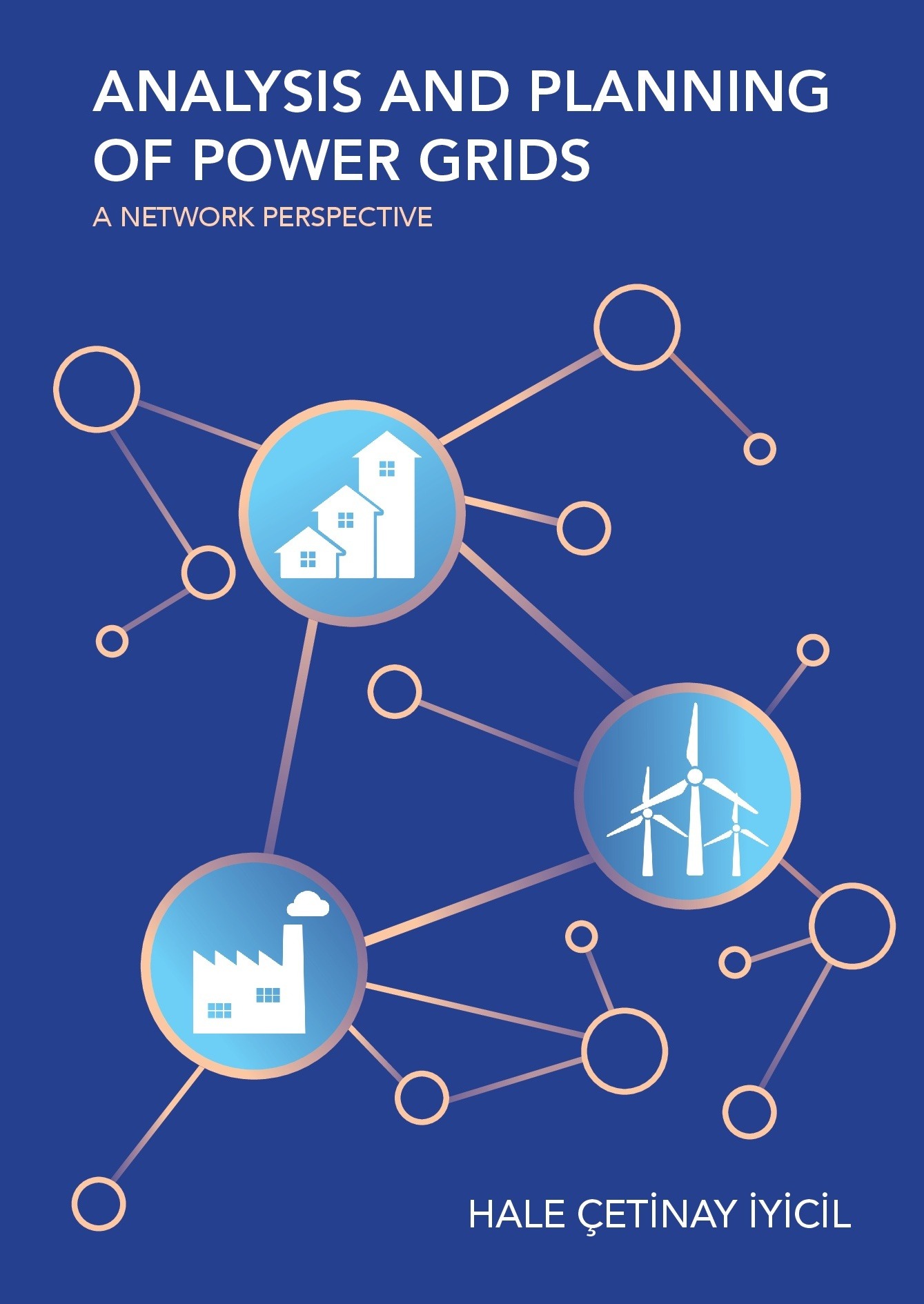
Share this project
Summary
Electric power has became an essential part of daily life: we plug our electronic devices in, switch our lights on, and expect to have power. As the availability of power is usually taken for granted in modern societies, we mostly feel annoyed at its absence and perceive the importance of power during outages which have severe effects on the public order.
Blackouts have had disastrous consequences for many countries (such as the U.S. and Canada [1], Turkey [2], India [3]) and they continue to occur frequently. In fact, the data from the North American Electrical Reliability Council show that blackouts happen on average every 15 days which leads an economic cost of in the order of tens of billion dollars per year [4]. Such examples demonstrate the necessity for careful analysis and planning of power grids, to ultimately increase the reliability of power grids.
In current practice, flow-based simulations play an essential role in both the security analyses and medium- and long-term planning of power grids. Given the generation and demand profiles, the steady-state analyses estimate the operation of power grids. Additionally, many countries require that the power grids should withstand the scheduled and unscheduled outages of its most critical lines or other components. In these contingency analyses, the component outages are also simulated to determine whether the power grids can still function properly under the failure and consequent loss of an element.
The power grids have evolved due to economic, environmental and human-caused factors. In addition to the contingency analysis, nowadays, the operation and planning of power grids are facing many other challenges (such as demand growth, targeted attacks, cascading failures, and renewable energy integration). Thus, many questions arise, including: which buses (nodes) to connect with a new line (link)? What are the impacts of malicious attacks on power grids? How may an initial failure result in a cascade of failures? How to prepare for the integration of renewable energy? Answering such questions requires developing new concepts and tools for analysing and planning of power grids.
Power grids are one of the largest and the most complex man-made systems on earth. The complex nature of power grids and its underlying structure make it possible to analyse power grids relying on network science [5, 6]. The applications of network science on power grids have shown the promising potential to capture the interdependencies between components and to understand the collective emergent behaviour of complex power grids [7, 8].
This thesis is motivated by the increasing need of reliable power grids and the merits of network science on the investigation of power grids. In this context, relying on network science, we model and analyse the power grid and its near-future challenges in terms of line removals/additions, malicious attacks, cascading failures, and renewable integration. We express the flow behaviour in power grids in terms of graph-related matrices (Chapter 2), so that we can model power grids as simple and weighted graphs, calculate the centrality of each node in power grids (Chapter 3) and investigate the operation in various graphs (Chapter 4). Furthermore, we provide tools to investigate the current and the near-future challenges of power grids such as link failure/addition (Chapter 2), critical asset identification and targeted attacks (Chapter 3), network expansion and performance analysis (Chapter 4), cascading failures (Chapter 5), and wind power integration (Chapter 6).
The developed concepts in this thesis provide for a better understanding of the operation of the power grid, with the ultimate goal of increasing its reliability. We demonstrate the applicability of our methodologies in the synthetic power grids, in the IEEE test power grids, and in the real-world power grids. The developed concepts extend the state of the art in the applications of network science on power grids and (i) can be the interest of researchers in the field, (ii) can support grid operators in analysing the vulnerability of their network to the current and the near-future challenges, and (iii) can assist decision makers and investors with the planning for the future trends in power grids.