Isaura Wayop
Enhancing antimicrobial stewardship in veterinary medicine
4 juli 2025
Universiteit Utrecht
Open Ebook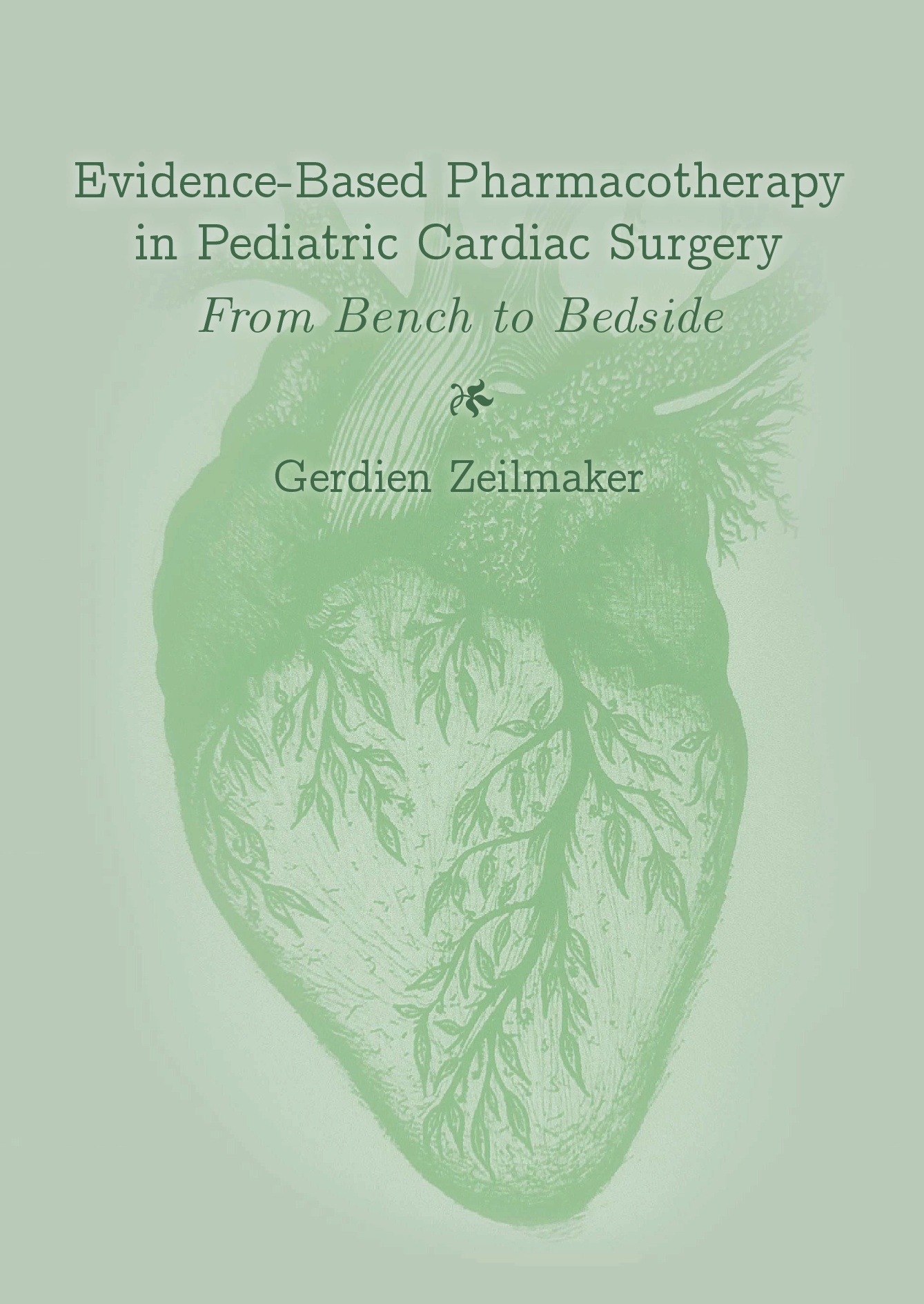
Share this project
Summary
Use of the cardiopulmonary bypass (CPB) is often necessary during pediatric cardiac surgery to replace the function of the heart and lungs. However, CPB may influence the concentration of drugs that are administered during and after surgery. There are several causes for these changes in drug concentration, such as hemodilution and absorption of drugs in the CPB system. Hemodilution occurs at the onset of CPB, when the total circulating volume increases to sometimes double of the patients own blood volume. Absorption of drugs in the CPB system is most likely dependent on type of CPB and type of drug. Both these changes could cause a decrease in drug concentration, leading to subtherapeutic and thus ineffective drug doses. Opposite to this, unexpected accumulation of drugs could lead to toxicity. In children, influence of CPB on plasma drug concentration has not been investigated.
The first part of this thesis investigates the influence of CPB on pharmacokinetic (PK) parameters of routinely used drugs. A clearer insight into the PK of drugs during and after cardiac surgery with the use of CPB could lead to more precise dosing in pediatric patients, preferably based on patient and procedure specific factors.
PK in children during the first days after cardiac surgery may continue to be different compared to children after non-cardiac surgery. Optimal pain treatment after cardiac surgery may therefore also be different in these children. There are no clear international guidelines on optimal pain treatment in children after cardiac surgery. Because of this, considerable variation in type and dose of analgesia remains in worldwide practice. Morphine is the drug of first choice in many hospitals even though morphine has several adverse drug effects, such as hypotension and respiratory depression. Moreover, the use of validated pharmacodynamic (PD) assessment tools to assess clinical efficacy of pain treatment is often not implemented in clinical practice. Several years ago it was shown that intravenous (IV) paracetamol was equally effective to morphine as primary analgesic in children after major abdominal surgery. Also, children who received IV paracetamol had less drug related adverse events. In children after cardiac surgery, who are often hemodynamically unstable and may be more prone to morphine related drug reactions, use of IV paracetamol may be preferable.
The second part of this thesis investigates the pain treatment in children after cardiac surgery with the use of the CPB. We aim to achieve a more uniform and evidence based approach towards pain treatment after pediatric cardiac surgery and to reduce morphine related adverse effects by decreasing the postoperative morphine consumption.
Chapter 2 gives an overview of PK in relation to pain treatment in several patient groups on the pediatric intensive care unit (PICU). General aspects of PK are described and PK changes in patients after cardiac surgery compared to patients after non-cardiac surgery are discussed.
The CPB-PHARM study and its sub studies are described in Chapter 3 to 5. Chapter 3 investigates the potential drug loss and recovery due to use of the cell saver system. The cell saver system is a autotransfusion system that is used to reduce blood loss during surgery. Drugs could be lost during surgery because of removal by the cell saver system. However, drugs could also be returned to the patient through the autotransfused blood. We describe the proceedings of the cell saver system and the measurements of drugs at different stages during the procedure and in the autotransfused blood. We measured cefazolin, a hydrophilic drug, and sufentanil, propofol and midazolam, lipophilic drugs. Cefazolin was washed out during the cell saver procedure and was not measurable in the autotransfused blood. Of the three lipophilic drugs we tested, only sufentanil reached a potentially clinically relevant concentration in the autotransfused blood. The discrepancy between sufentanil and the other lipophilic drugs, propofol and midazolam, is not well understood. Propofol binds to erythrocytes and measurements of drugs in plasma may therefore not be representative of the actual total bound concentration of propofol.
The in vitro experiments of the CPB-PHARM study are discussed in the Chapters 4 and 5. We have divided the measured drugs in antibiotics in Chapter 4 and anesthetic drugs and methylprednisolone in Chapter 5. Neonatal, infant and pediatric CPB systems, similar to the ones we use in clinical practice, were spiked with routinely used drugs. Blood samples were taken at several time points and after six hours the experiments were stopped. Propofol and sufentanil decreased substantially during the CPB runtime. Concentrations of midazolam and cefazolin remained relatively stable during the experiments. The measured concentrations of clindamycine and methylprednisolone remained stable as well, however, the first measured concentration showed great discrepancy with the theoretical starting concentration. This means that either, both drugs sequestered very rapidly in the CPB systems, or both drugs were not mixed with the priming fluid enough to reach an observed concentration similar to the theoretical concentration. Type of CPB system was of significant influence in drug recovery, possibly due to surface to volume ratio.
Chapter 6 discusses the only adult data in this thesis. The CefCheck study was designed because of the new Dutch guideline on peri-operative antibiotic prophylaxis in adults undergoing cardiac surgery, introducing a decrease in cefazolin dosing. Evidence for this change was driven by non-cardiac surgery. However, during cardiac surgery, use of the CPB system may lead to a decrease in plasma levels of cefazolin and sub-optimal antibiotic prophylaxis. Our data show that the plasma cefazolin concentration gradually drops at onset of CPB. We also found that the protein bound fraction of cefazolin is much more variable than previously described in literature.
In Chapter 7 the focus is shifted from routinely used drugs during the peri-operative period to pain treatment in the postoperative period. Our international survey showed a multitude of types and doses of analgesics used in children after cardiac surgery. Morphine is the drug of first choice, but dosing regimens differ substantially between hospitals. Validated assessment tools to determine and assess pharmacodynamics (PD) endpoints are often not used in the clinic. Without these tools, efficacy of pain treatment, and potential underdosing or overdosing are difficult to assess and correct.
In neonates and infants after major abdominal, non-cardiac surgery, pain treatment with IV (intravenous) paracetamol proved equally effective as morphine. Considering the hemodynamic undesirable effects of morphine, such as hypotension, IV paracetamol may also be preferable in children after cardiac surgery. We have designed the PACS (Pediatric Analgesia after Cardiac Surgery) study, a multi-center randomized controlled trial, to investigate this. Chapter 8 describes the PACS study protocol. 208 children, aged 0-3 years, were randomized to receive IV morphine or IV paracetamol after cardiac surgery with the use of CPB. The primary endpoint was a 30% reduction in cumulative morphine consumption during the first 48 hours after surgery.
Much time and effort of conducting a randomized controlled trial is in the design, preparation and logistics. However, this is rarely presented in literature and fellow researchers cannot use previous experience to their own advantage when designing a randomized controlled drug trial. We describe our experiences from the PACS study in Chapter 9. The main delay in our study timeline was due to pharmacy regulations, late withdrawal of a trial site, and negotiations with the judicial departments of the participating hospitals.