Share this project
Anais Notario Reinoso
Universiteit van Amsterdam
Publication date: 24 september 2026
University: Universiteit van Amsterdam
Wired for change
Summary
The neocortex confers mammals the ability to perceive, process, and integrate information from the environment, capacities that are essential for adaptation and survival. Such adaptation relies on fast synaptic signaling, a function largely supported by AMPA receptors (AMPARs), the principal drivers of rapid glutamatergic transmission. AMPARs are tetrameric receptors composed of four subunits, GluA1-GluA4, and have been implicated in key cognitive processes. In particular, GluA1-containing AMPARs have been extensively studied and are known to contribute to cortical and hippocampal synaptic plasticity, as well as to learning, memory, and social behavior. In contrast, the role of GluA3-containing AMPARs in synaptic transmission within sensory and association cortices, and their interaction with neuromodulatory systems, remains largely unexplored.
In the first part of this thesis, we investigated the contribution of GluA3-containing AMPARs to synaptic transmission and plasticity in the visual and prefrontal cortices, as well as their modulation by β-adrenergic signaling. Given the protracted maturation of the prefrontal cortex (PFC), we incorporated a developmental perspective into our analyses. To further deepen our understanding of PFC development, the second part of the thesis focused on the role of cannabinoid receptors (CBRs), which are key component of cortical maturation, in PFC maturation and explored potential interactions between endocannabinoid signaling and GluA3-containing AMPARs, both acutely and in the long term.
In Chapter 1, we establish the conceptual and historical framework that shaped this thesis. We begin with a brief overview of foundational milestones in neuroscience, from the formulation of the neuron doctrine by Santiago Ramón y Cajal to the identification of AMPA receptors and the recognition of the PFC as a central substrate of executive function and personality. We then outline the organization, function, and developmental trajectories of the two cortical regions examined in this work: the primary visual cortex and the prefrontal cortex. Next, we introduce the principal synaptic and neuromodulatory systems investigated throughout this thesis, given their relevance to synaptic physiology, including AMPA receptors (AMPARs), cannabinoid receptors (CBRs), and adrenergic signaling pathways. Finally, we discuss the importance of incorporating sex as a biological variable, particularly given the sexually dimorphic nature of the PFC and the sex-specific effects observed in the experimental chapters of this work.
In Chapter 2, we examined synaptic transmission in a primary sensory area, the visual cortex, and assessed the respective contributions of GluA1- and GluA3-containing AMPARs to basal synaptic transmission and plasticity. Using patch-clamp recordings, we demonstrated that both subunits contribute to excitatory transmission onto layer 2/3 pyramidal neurons, with GluA3-containing AMPARs playing a more prominent role than GluA1-containing receptors. To further probe subunit-specific plasticity mechanisms, we examined how β-adrenergic receptor activation modulates AMPAR-mediated synaptic responses. We found that β-adrenergic-induced potentiation was independent of subunit composition and occurred independently of protein kinase A (PKA), despite being active under basal conditions in these neurons. Finally, we investigated synaptic transmission in somatostatin-positive (SST) interneurons and showed that GluA3 does not contribute to basal excitatory transmission in these cells, nor is transmission potentiated by β-adrenergic signaling.
In Chapter 3, we extended this investigation to an association cortex, the mPFC. Here, we examined the contribution of GluA3-containing AMPARs to basal synaptic transmission in layer 2/3 pyramidal neurons, their modulation by β-adrenergic signaling, and the role of GluA3 in reversal learning. Incorporating a developmental perspective due to the protracted development of this brain region, we showed that GluA3-containing AMPARs play a significant role in mPFC-layer 2/3 synaptic transmission in an age-dependent manner. In addition, β-adrenergic signaling induced potentiation through a mechanism that appeared to have a presynaptic component and was not GluA3-specific. At the behavioral level, GluA3KO mice exhibited intact discrimination learning but displayed alterations in basal behavior and impairments in reversal learning, a well-established PFC-dependent function.
In Chapter 4, we further explored prefrontal cortical development by investigating the long-term consequences of adolescent cannabinoid receptor activation on adult mPFC physiology and behavior. We found that repeated CBRs activation during adolescence induced persistent, sex-specific alterations in layer 5 pyramidal neurons of the mPFC. Female mice exhibited changes in synaptic transmission, whereas intrinsic excitability was predominantly altered in males. Despite these neurophysiological changes, adolescent CBR activation did not impair social hierarchy or reversal learning in adulthood, two behaviors commonly associated with PFC function.
Finally, in Chapter 5, we integrated the conceptual threads of the previous chapters in a pilot study investigating potential interactions between GluA3-containing AMPARs and CBRs. Given that both systems have been associated with schizophrenia, we proposed a double-hit framework for susceptibility to the disorder, based on the interaction between genetic vulnerability and environmental exposure. To this end, we assessed the long-term consequences of adolescent CBR activation in a GluA3-deficient background. At the synaptic level, acute WIN exposure reduced inhibitory synaptic transmission onto layer 2/3 pyramidal neurons, and effect that was also observed in adult GluA3KO males following adolescent CBR activation. Behaviorally, GluA3KO mice did not show clear deficits in discrimination or reversal learning although preliminary data suggested a possible increased vulnerability in GluA3KO male mice, which displayed a tendency toward reduced reversal learning performance.
Finally, in Chapter 6, we integrate the findings of this thesis and contextualize them within the current literature. We begin by examining the electrophysiological principles of cortical synaptic transmission, synthesizing our results on the role of AMPARs across cortical regions and their modulation and interaction with β-adrenergic and cannabinoid receptors. We then bridge the gap between synapses and behavior by evaluating how alterations in synaptic receptors relate to behavioral outcomes. The second part of this chapter addresses broader conceptual themes that have shaped and influenced this work, including the consideration of sex as a biological variable and the operational definitions of key concepts such as medial prefrontal cortex (mPFC), adolescence, and animal models. Finally, we outline future directions that may help refine and extend the research questions initiated in this thesis.
Together, the work presented in this thesis aimed to provide a coherent framework for understanding cortical synaptic physiology across sensory and association cortices, highlighting both conserved principles and region-specific mechanisms. By focusing on the understudied GluA3 subunit, incorporating sex as a biological variable, and exploring interactions between glutamatergic, adrenergic, and endocannabinoid systems, this thesis aimed to open new perspectives and to lay the groundwork for future investigations into the complexity of cortical function.
See also these dissertations
Sjoerd Hermans
Introducing Real-World Data and Multi-state Modeling in Clinical Trials in Acute Leukemia
2 september 2026
Erasmus Universiteit Rotterdam
Open Ebook
Anirudh Gaurang Gudlavalleti
IMPACT OF COMMUNITY HEALTH WORKER TRAINING ON COMPETENCE OF TYPE 2 DIABETES SCREENING, MANAGEMENT, AND COMPLICATIONS IN RURAL INDIA
8 september 2026
Universiteit Maastricht
Open Ebook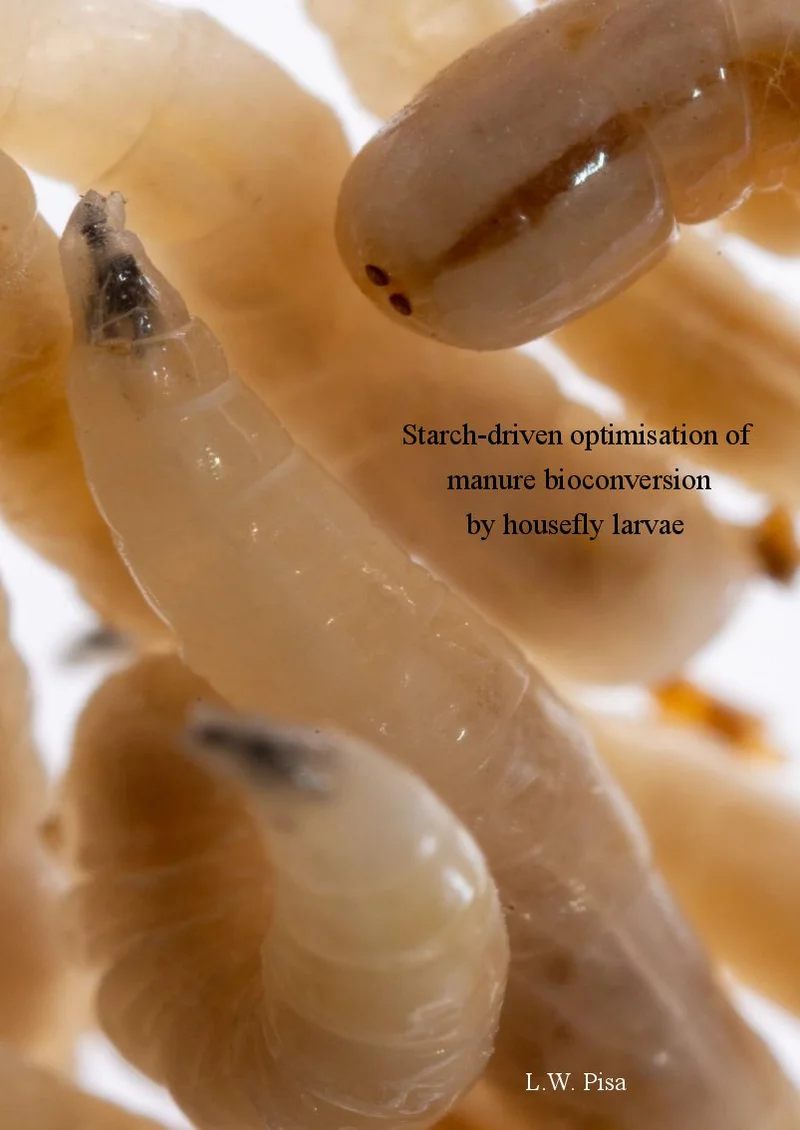
Lennard Pisa
Starch-driven optimisation of manure bioconversion by housefly larvae
25 augustus 2026
Wageningen University
Open Ebook


Oladipupo Shobowale
Determinants of HIV Testing and Care Pathways among African Migrants in the Netherlands
21 september 2026
Universiteit Maastricht
Open Ebook
Kirsten de Oude
Building Strength, Reducing Risks
24 november 2026
Erasmus Universiteit Rotterdam
Open Ebook
David Kottelenberg
Harmonic weed suppression: competitive dynamics and design of cereal-legume intercrops
18 september 2026
Wageningen University
Open Ebook
Natalia Korobova
Reconstruction and modelling of dynamic contrast-enhanced MRI
18 september 2026
Universiteit van Amsterdam
Open EbookWe print for the following universities