Xin Xin


Functional heterogeneity of extracellular vesicles in endothelial inflammation
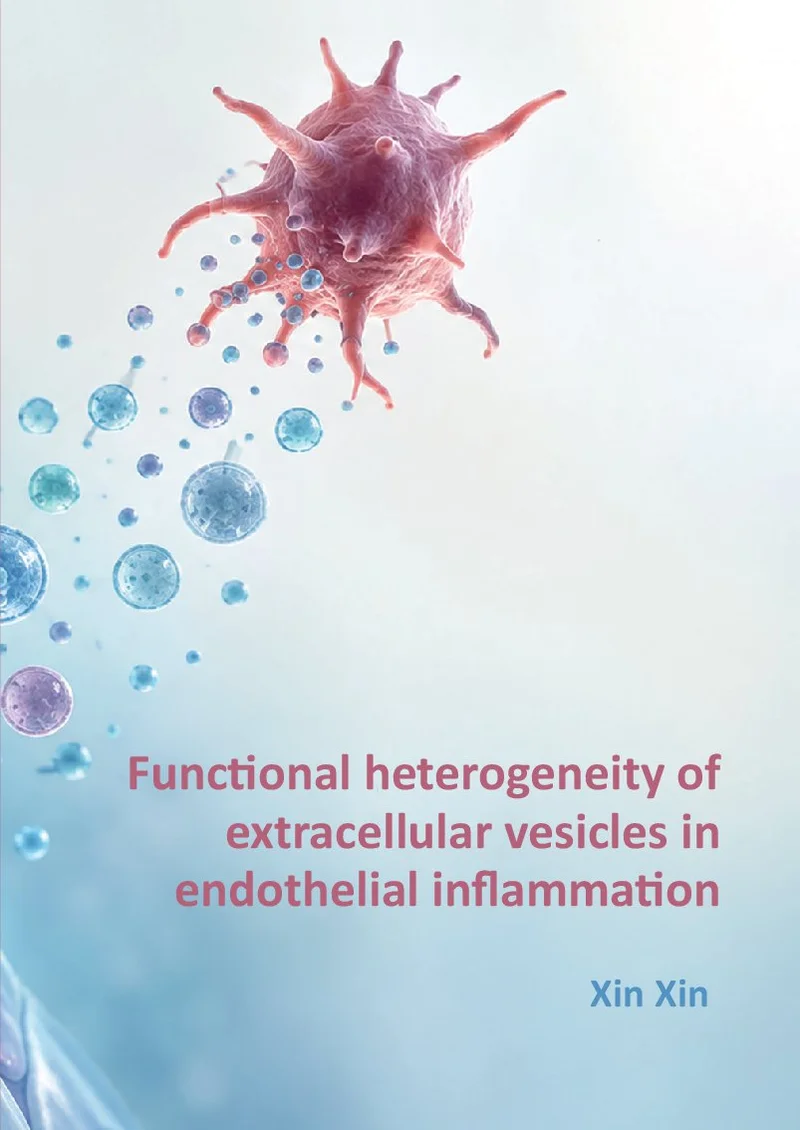
In this thesis, I focus on the role of extracellular vesicles (EVs) in endothelial and vascular inflammation and explores the functional heterogeneity of EVs and the methodological challenges associated with research on platelet-derived EV. Chapter 1 outlines the important roles of cardiovascular disease and endothelial inflammation in vascular lesions and reviews the research progress on EVs as mediators of intercellular communication in the context of vascular inflammation. Furthermore, this chapter summarizes EV heterogeneity, the status of platelet derived extracellular vesicles (P-EV) research, and the methodological challenges faced in EV research, and proposes the research objectives and overall framework of this thesis. Chapter 2 reviews the role of P-EV in various cardiovascular diseases (such as atherosclerosis, myocardial infarction, ischemia-reperfusion injury, and heart failure), with relation to its molecular cargo (nucleic acids, bioactive lipids, proteins) and aims to provide new insights in the pathophysiologic role of P-EV, and methods for preventing and treating cardiovascular diseases based on P-EV. To establish a stable and reproducible P-EV research system, Chapter 3 systematically evaluated the feasibility of using lyophilized platelets as a source of P-EVs and compared different EV fluorescent labeling methods. Additionally, this chapter analyzed the uptake and intracellular transport behavior of P-EV analogues in endothelial cells. The results showed that lyophilized platelets can generate P-EV analogues with similar characteristics and cellular uptake behavior to those of EVs derived from fresh platelets, and CFSE was found to be a reliable labeling method suitable for studies involving P-EV uptake. In Chapter 4, we systematically compared the effects of EVs secreted by different vascular and immune-related cells under resting and inflammatory conditions on endothelial cell activation. Our results showed that EVs derived from different cell types and under different inflammatory states exhibit distinct inflammatory cytokine profiles and functional characteristics. Among them, EVs derived from inflammatory monocytes showed the strongest pro-inflammatory effects, leading to increased Ca²⁺ signaling, elevated levels of ICAM-1 expression, and enhanced leukocyte recruitment. These results further support the concept of EV functional heterogeneity. In Chapter 5, we examined the effects of EV derived from peritoneal dialysis effluent (PDE-EVs) on endothelial inflammatory, considering different dialysis durations and the presence of heart failure with preserved ejection fraction (HFpEF). Our results showed that PDE-EVs were effectively internalized by endothelial cells, which resulted in a pro-inflammatory response. This was evidenced by an increase in ICAM-1 expression, elevated secretion of IL-6, and enhanced adhesion between monocytes and endothelial cells. We observed significant differences in these functional effects across different patient groups. Specifically, EVs from patients undergoing long-term peritoneal dialysis and experiencing HFpEF triggered the strongest inflammatory response. Importantly, there were no significant differences in the uptake of EVs among the groups, suggesting that the functional disparities may arise from variations in the specific components carried by the EVs. In conclusion, these findings imply that PDE-EVs play a regulatory role in the inflammatory response of endothelial cells.
| Publicatiedatum | 19 november 2026 |
| Universiteit | Universiteit Maastricht |
| Auteur | Xin Xin |
| ISBN nummer | 978-94-6534-730-1 |