Wieke van der Vossen-Wijmenga


Risk on the menu
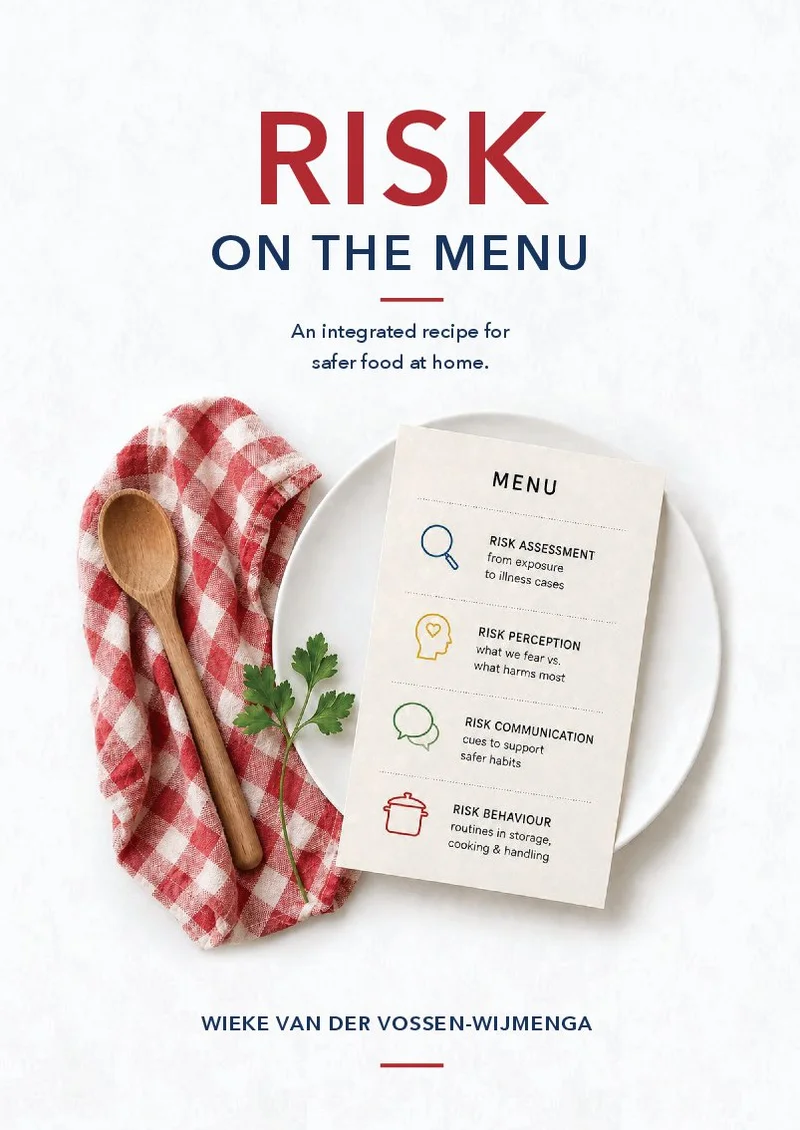
Access to sufficient, safe, and nutritious food is essential for sustaining life and promoting health. Ensuring food safety across the entire chain, from farm to fork, remains a major challenge. This thesis examined the role of consumers in microbiological food safety through an interdisciplinary approach that integrated consumer behavioural insights with Quantitative Microbiological Risk Assessment (QMRA), thereby bridging science and practice in the prevention of foodborne illness. Consumer surveys conducted from 2009 to 2024 revealed shifting perceptions of food-related risks. Consumers identified an unhealthy diet as the main food risk from 2018 onwards, whereas experts did so consistently and more strongly. Concerns about chemical risks, such as environmental contaminants, increased over time, particularly among consumers, who rated these risks higher than experts. Empirical studies on domestic food handling and storage identified critical food safety risk factors in the home environment. By incorporating these behavioural data into QMRA, the most influential determinants of risk for two key foodborne illnesses, listeriosis and campylobacteriosis, were identified and quantified. Complementary probabilistic modelling and sensitivity and scenario analyses enhanced the robustness of the assessments, and expressing outcomes in annual illness cases increased relevance for policy and risk management. While upstream reduction of initial contamination remains essential, consumer-level practices can substantially lower the number of illness cases. For listeriosis, limiting storage to less than 7 days or below 7 °C reduced predicted illness cases by more than 80 %, a finding particularly relevant for the elderly. For campylobacteriosis, thorough cooking of chicken emerged as the most effective home-based intervention, even despite high levels of self-reported compliance, with additional risk reduction achieved by preventing cross-contamination. To support these behaviours, the mandatory icon-based hygiene warning label on poultry packaging showed potential to encourage safer food-handling practices, particularly among higher-risk groups, and was perceived as more useful than the previous text-only version. Overall, this thesis demonstrated how an integrated, data-driven approach that connects risk perception, behaviour, and quantitative risk assessment can strengthen evidence-based risk communication and support more targeted food safety interventions, thereby contributing to improved food safety and public health.
| Publicatiedatum | 10 december 2026 |
| Universiteit | Wageningen University |
| Auteur | Wieke van der Vossen-Wijmenga |
| DOI nummer | 10.18174/682375 |