Chao Sun
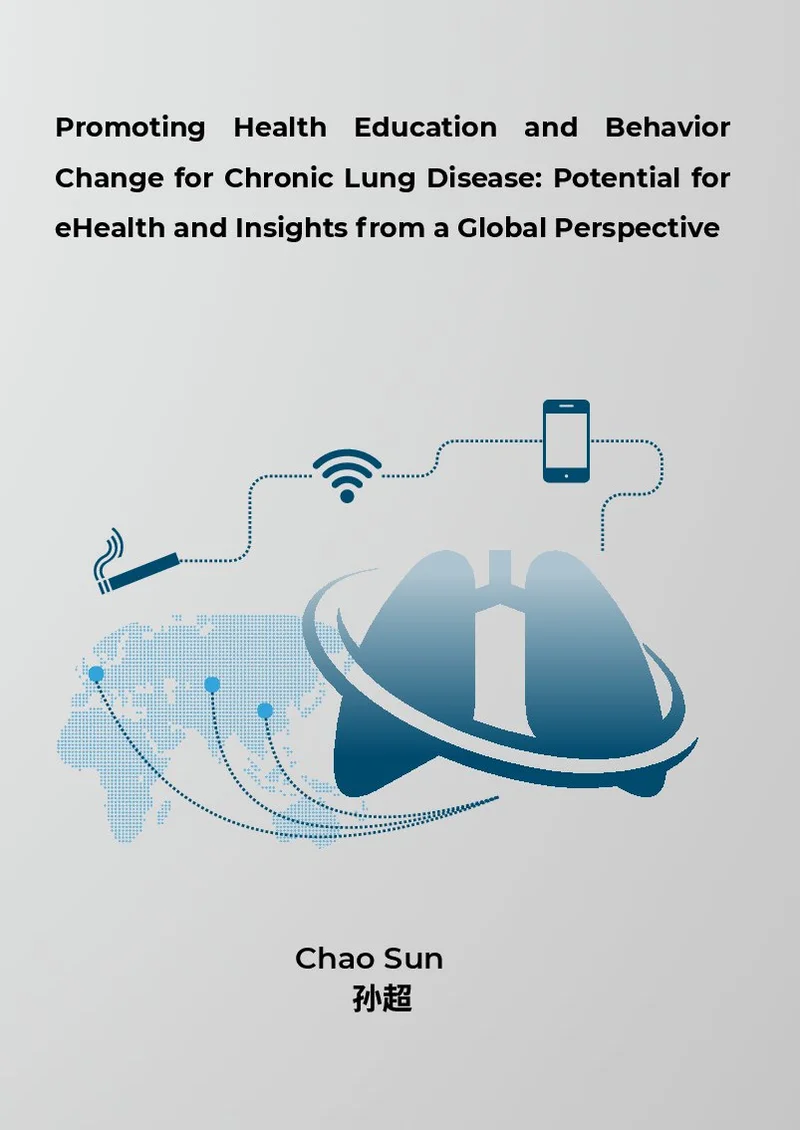


Promoting Health Education and Behavior Change for Chronic Lung Disease:Potential for eHealth and Insights from a Global Perspective
Chronic lung disease (CLD) poses a large health and economic burden worldwide and is unevenly distributed across regions and populations. Moreover, research funding is disproportionately concentrated in high- income countries (HICs). Given the burden of CLD, promoting health education and behavior change is essential to increase individuals’ understanding of CLD and support them in adopting healthy behaviors, such as seeking timely healthcare and adhering to prescribed medications. Across diverse global contexts, challenges such as limited awareness of CLD, prevalent and difficult-to-change risk behaviors and inappropriate CLD-related behaviors among individuals and healthcare professionals (HCPs), remain in translating health education into effective and sustained behavior change. With the increasing integration of information and communication technology in healthcare, eHealth seems to demonstrate potential in promoting health education and behavior change by increasing the accessibility and efficiency of healthcare delivery without time or geographical barriers. However, the effectiveness of eHealth might vary between contexts and individuals due to differences in healthcare systems, digital coverage, and individual characteristics such as eHealth literacy (eHL) level, which refers to individuals’ abilities to access, understand, appraise and apply online health information. Drawing on three countries with distinct socioeconomic, geographic and healthcare contexts, this thesis aimed to provide a global perspective on health education needs and behavioral challenges related to CLD, and to examine the potential of eHealth for supporting CLD health education and behavior change. Specifically, this thesis had the following three aims: 1) to explore beliefs, perceptions and behaviors related to CLD; 2) to assess eHL and its associated factors; 3) to evaluate the potential of eHealth for CLD health education and behavior change. Chapter 1 provided a general introduction about the global burden of CLD, importance and challenges of health education and behavior change for CLD, the potential of eHealth regarding CLD, and the three settings in which empirical studies were performed. Chapter 2 and Chapter 3 explored CLD-related beliefs, perceptions and behaviors among community members (CMs) and HCPs in Kyrgyzstan. Using a brief textual scene describing a typical CLD-like condition, and integrating data from questionnaires, interviews and focus groups, these two chapters provided context-specific insights into how local people perceived CLD and its causes, as well as how they responded to CLD- like conditions. Findings showed that CMs usually perceived CLD symptoms as acute, infectious conditions, and attributed them to cold and smoking. Despite awareness of the health risks, smoking remained prevalent among CMs, along with the widespread use of solid fuels for cooking and heating with limited ventilation due to resource constraints. A delayed help-seeking pattern was observed, such as the preference for traditional medicine, and self-medication before seeking formal care. CMs with longer duration of education, being unemployed, and living in the lowlands tended to have more negative illness perception scores, which meant that they perceived CLD as more threatening and burdensome. Among HCPs, challenges were noticed in differentiating CLD from other respiratory diseases, and HCPs provided restricted and experience- based helping behaviors due to lack of resources. For example, HCPs referred patients to better-equipped places, prescribed antibiotics (which reflected uncertainty in recognizing CLD and might not be always appropriate for CLD treatment) and rarely used guidelines. Physicians appeared to provide more helping behaviors for CLD than nurses. These findings suggest that CLD-related beliefs, perceptions and behaviors might vary in contexts, shaped by socio-economic, cultural, policy-related and health system factors. Chapter 4 investigated eHLand its associated factors in the Chinese general population. Online and offline surveys were used to improve inclusiveness and representativeness. The sample showed limited eHL and CLD knowledge on average, generally reported positive expectations to eHealth, perceiving it as easy to use and useful. While digital access was common overall, notable disparities were noticed between the elderly and those with a low socioeconomic position, and other groups. Younger age, higher education and income level, having digital access, more frequent eHealth use, and a more positive attitude towards eHealth were associated with higher eHL. This chapter highlights the need to improve eHL and CLD knowledge, as well as the digital access among the vulnerable population. The identified determinants of eHL provide a basis for designing tailored health education and eHealth interventions to meet the needs and preferences of different population groups. Chapter 5 provided an overview of existing literature on digital health education (DHE) for CLD, and reported delivery mediums, educational content, intervention mechanisms, and outcomes of DHE. The findings indicate an increasing publication trend in this field, but mostly in HICs. Websites and mobile applications were the most widely used mediums, mainly focusing on teaching people how to manage their health by themselves, yet intervention mechanisms were rarely mentioned. Most studies found that DHE helped improve patients’ understanding of CLD, health outcomes, lifestyle, mental and social well-being, while also being practical to use, well accepted by participants, and highly rated in terms of satisfaction. Only two studies reported cost- effectiveness, but neither provided a clear comparison of costs before and after DHE. This demonstrates the potential of eHealth in supporting CLD health education, while also revealing important gaps in the literature. In particular, there is a need for greater attention to low- and middle-income countries, intervention mechanisms and cost- effectiveness outcomes. Building on a cluster randomized trial in Dutch primary care, Chapter 6 examined whether illness perceptions and eHL affected effectiveness of a digital inhaler program among asthma patients, as well as how illness perceptions and eHL were related to demographics. In this trial, the intervention group used a digital inhaler program with self-monitoring and medication adherence reminders, while the control group used a passively monitored inhaler without feedback. Previously, the program proved to be effective in improving asthma control and medication adherence. Our study showed that illness perceptions and eHL did not affect the effectiveness. This implies the user- friendly program may achieve equivalent effectiveness across patients with different illness perceptions and eHL. This result might also be partly because the sample had generally high eHL levels. In addition, we found that people with younger age were more likely to have better eHL. These findings provide guidance for evaluating other factors to identify subgroups that benefit from eHealth interventions most or require additional support to use them, and highlight the potential equitable effectiveness of eHealth interventions in different groups. Chapter 7 presents the general discussion of this thesis. By integrating findings across diverse contexts and study designs, this thesis identified beliefs, perceptions and several behavioral challenges regarding CLD among CMs and HCPs, assessed eHL and its associated factors, and examined the potential for eHealth in supporting CLD health education and behavior change. Despite the demonstrated benefits of eHealth, those with limited digital access, low eHL and lower socioeconomic position might benefit less. These findings underscore the importance of tailoring health education to local needs and contexts, for example using existing resources and simple, locally easy-to- understand language, engaging key stakeholders such as community members, leaders, teachers, HCPs, policy-makers and designers, and applying behavior change techniques to promote effective and sustained behavior change. To address the digital divide and maximize the potential for eHealth, it is recommended to invest in digital infrastructure, engage end users in the development and evaluation of eHealth, incorporate established behavior change techniques, and provide technical support for populations with lower digital skills.
| Publicatiedatum | 28 oktober 2026 |
| Universiteit | Universiteit Leiden |
| Auteur | Chao Sun |
| Order nummer | 19533 |
| ISBN nummer | 978-94-6534-625-0 |